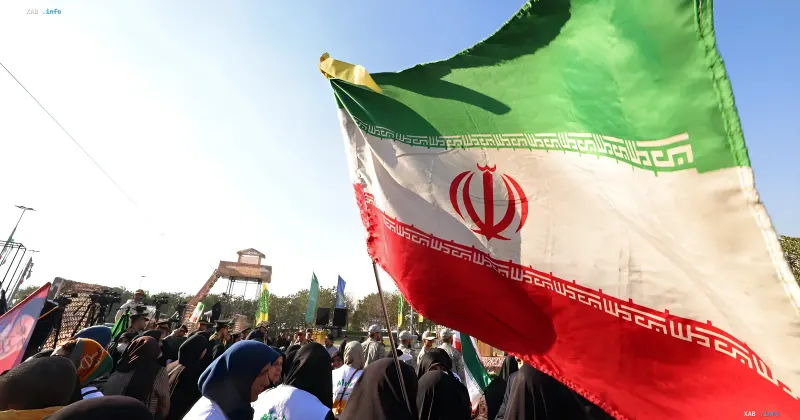
On November 11, 2026, amid the ongoing conflict between the US and Iran, mutually exclusive signals are simultaneously emanating from Washington, Tehran, and regional capitals: the American administration is declaring military victory and a refusal of further escalation, while Iranian leaders are vowing to expand the geography of strikes, and mediators from Pakistan and Qatar are attempting to prevent the parties from breaking reached agreements. Simultaneously, the economic consequences of the war are beginning to be felt in the daily lives of American households, who face forecasts of a sharp rise in heating expenses this winter.
Threats Against US Officials Become Systematic
According to CBS News, US Treasury Secretary Scott Bessent has become the latest high-ranking American official to be openly threatened or targeted by Iran. This is not an isolated incident: the publication asserts that the Iranian regime has been involved in a series of plots against top US officials since 2020, after President Trump ordered the liquidation of Iranian General Qasem Soleimani. US Director of National Intelligence Jay Clayton warned in October that Iran has "substantially increased attempts to target the lives of American personnel" abroad, and plans to assassinate US citizens in the Middle East region and other countries have reached "advanced stages."
Trump: 'We Achieved a Total Victory, Not a 93% Victory'
Speaking Wednesday at a Veterans Day event at Arlington National Cemetery in Virginia, President Trump stated that the US has already won the war with Iran, although the question of its conclusion remains open. "America did not start the war with Iran... Iran has been waging war against America since 1979," he said, adding that under his administration, "finally someone hit back" and "we won." Trump stressed that Washington is seeking "a total victory, not a 93% victory," and stated that it would take Iran "25 years to rebuild what we destroyed." At the same time, as he noted in a "60 Minutes" interview aired Sunday, he "sees no reason" for further escalation of the conflict.
Reaei Promises Strikes on US Bases in Europe
Head of Iran's security apparatus Mohsen Reaei, in an interview with the Lebanese television channel Al Mayadeen broadcast Wednesday, threatened strikes on American military bases outside the Middle East, including in Europe, if attacks against Iran are launched from them. "If American planes take off from an American military base, even located in a European country or in some remote region, to bomb Iran, we will hit those bases too," he stated, adding that Tehran could target "certain islands that they consider to be beyond the reach of our missiles." According to Fox News, Reaei also reported that Iran has handed Washington seven conditions and is awaiting a response, which he called insufficient. Secretary of State Marco Rubio, in turn, stated that the US is not preparing for a resumption of full-scale war and will stick to a campaign of economic pressure, which, he said, "will become even stronger."
Diplomatic Track: Pakistan and Qatar Call for Restraint
On the sidelines of the UN climate summit in Turkey, Pakistani Prime Minister Shehbaz Sharif met with Iranian President Masoud Pezeshkian and called for dialogue and restraint to reduce regional tensions, expressing "deep concern" over the protracted conflict. According to Sharif's office, he emphasized the need to build on the interim agreement reached between the US and Iran in June. Earlier, in August, Pezeshkian called this agreement the best way for Iran to exit a situation he described as "neither war nor peace." On Wednesday, Pezeshkian accused the US of waging war under the guise of containing Iran's nuclear ambitions, calling Washington's actions an attempt to "conduct diplomacy through military threats." Qatar, in turn, through its prime minister, urged the US and Iran not to wait for the "perfect moment" to conclude a deal to end the war.
Economic Consequences: Winter Heating to Rise by 70% for Some Households
A new forecast from the National Energy Assistance Directors Association indicates that average heating costs from all fuels this season will be $1,002, up 7.1% from last winter. However, the sharpest increase awaits households using heating oil—a popular heat source in the northeastern US, where prices have risen due to the war with Iran: they will face a bill of $2,977, or 70.2% more than a year earlier. According to the US Energy Information Administration, heating oil is the primary heating source for over 4 million households, 82% of which are concentrated in the northeast. Association Executive Director Mark Wolf warned that despite recent price drops, "families should not assume that prices will continue to fall."
Yemen: Coalition Shoots Down Three Cruise Missiles Over Riyadh
Against the backdrop of escalation in Iran, the Yemeni front of the conflict also continues. The Saudi-led coalition fighting Yemen's Houthis stated Wednesday that it shot down three cruise missiles fired at Riyadh, which has been under bombardment by the Iran-backed group for weeks. Air defense, according to the coalition, "intercepted and destroyed" all three missiles. The combination of these events—from threats against European bases to diplomatic attempts to freeze the conflict and rising heating bills—shows that the US-Iran war continues to impact both the geopolitical landscape and the daily lives of citizens.