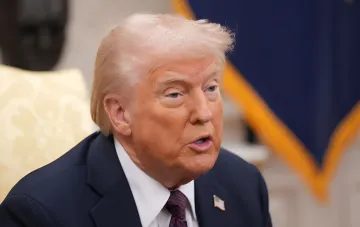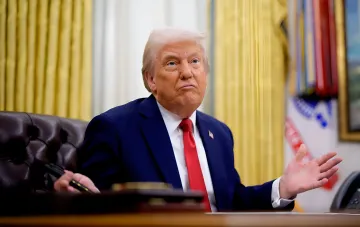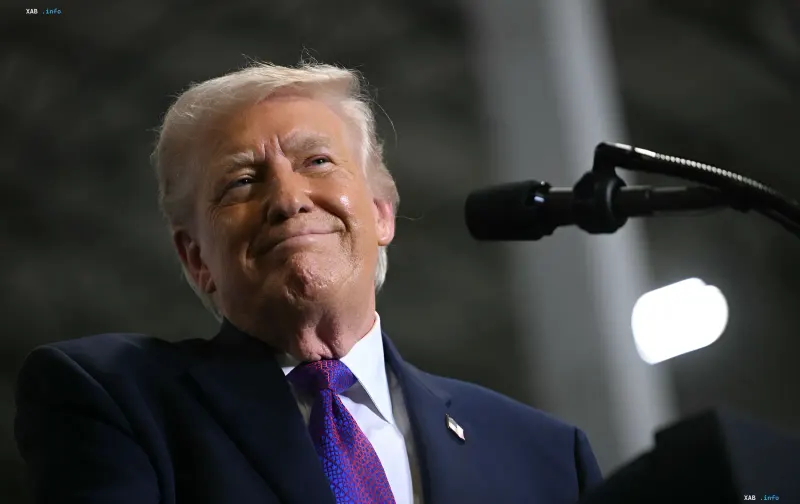
US President Donald Trump has stated that the scenario of new military actions against Iran is "highly unlikely." According to RBC-Ukraine, he wrote this in a post on Truth Social, and a similar assessment, voiced in an interview with CNN, was reported by NDTV World and Rosbalt. The statement comes amid ongoing negotiations on Tehran's nuclear program and the issue of shipping in the Strait of Hormuz, and follows recent mutual threats from Washington and Iran.
Dialogue with Doha and the position of Gulf nations
According to Trump, he held a conversation with the Prime Minister of Qatar, during which the parties discussed the situation with Iran. The White House head emphasized that a number of Middle Eastern countries are in favor of maintaining the status quo — that is, continuing, in his words, the "largest naval blockade in history" and the new "Iron Gates" operation. He included Qatar, Saudi Arabia, the UAE, Bahrain, Kuwait, and other regional countries in the list of states preferring such a scenario.
Operation 'Iron Gates': goal and format
As Trump explained, the "Iron Gates" mission is aimed at blocking channels for the supply of weapons, dual-use technologies, and sanctioned goods. According to him, supporting countries prefer to act "both on land and at sea," maintaining pressure on Tehran without moving to full-scale hostilities. At the same time, the US President added, everyone agrees that Iran cannot possess nuclear weapons, and this issue, in his words, is "non-negotiable."
De-escalation condition: agreement and the Strait of Hormuz
Trump warned that in case of changes in the development of events in the Middle East, the US is "ready to fight," but at the moment, the resumption of military actions is, in his estimation, unlikely. He stated that Israel and the entire Middle East are "protected from the Iranian danger and threats," and that there is a "positive dynamic toward ending this conflict" in the region. The decision on a possible resumption of strikes, as follows from his recent statements, depends on whether Tehran signs a "very strong agreement" and whether there is progress in opening the Strait of Hormuz.
Tehran's counter-ultimatum
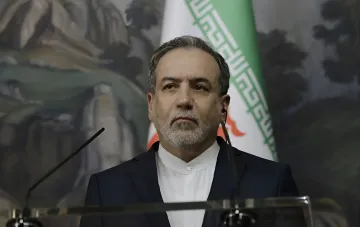
Reminding the previous rhetoric is important for the context: a day earlier, Trump stated that US forces would resume strikes on Iran if there were no progress in nuclear deal talks and the opening of the Strait of Hormuz, noting that the US military was on alert and that, according to him, 38 bridges in Iran were in the crosshairs. In response, Iranian Foreign Minister Abbas Araghchi effectively issued a counter-ultimatum, calling on the US to stop military actions on all fronts and stating that Tehran is giving Washington just two days to "think." According to NDTV World, Araghchi also reported that mediator visits had not taken place for several days, the reason being the reaction to the US election results.
External context: elections and negotiation dynamics
US media, according to NDTV World, speculated that hostilities could resume after the US midterm elections; previously, Trump admitted that the unpopular war with Iran partially influenced the Republican Party's defeat in the vote. Against this backdrop, his current assessment of the "unlikelihood" of new strikes and the focus on economic pressure as a tool to force the Iranian leadership to a peace agreement form Washington's main line for the coming days.