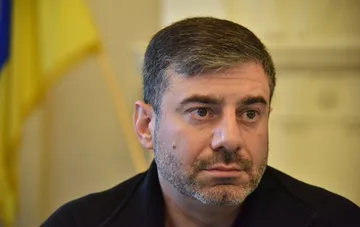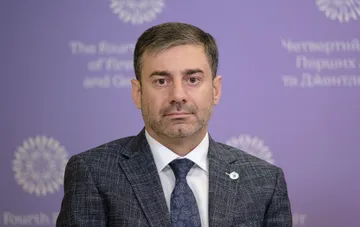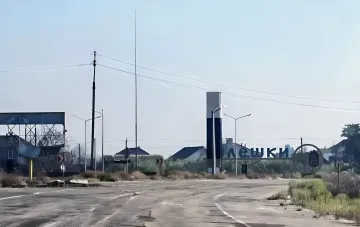
On the morning of October 29, 2026, a Ukrainian delegation led by Dmytro Lubinets, the Ukrainian Parliament Commissioner for Human Rights, set off toward the temporarily occupied town of Oleshky in the Kherson region to carry out a humanitarian mission. David Arakhamia, head of the Servant of the People faction, first reported the departure, which was later confirmed by the ombudsman himself. According to him, the mission involves delivering humanitarian aid to citizens remaining in the town and working to ensure the safe departure of those who wish to leave. The mission is being conducted as part of agreements reached with Yana Lantratova, the Human Rights Commissioner in Russia, with the assistance and coordination of US First Lady Melania Trump.
Delegation Route and Route Preparation
According to Ukrainian sources, the delegation has already arrived in Belarus, from where they will fly to Anapa, travel to Simferopol, and then proceed directly to Oleshky. Concurrently with the group's movement, demining operations are underway along the routes required for the humanitarian operation. A humanitarian cargo is also being prepared, with plans to deliver it to Oleshky on October 30, 2026. Thus, by the time the delegation arrives, logistics and security conditions for the convoys should be largely secured.
The Ceasefire and Its Early Results
As Lubinets emphasized, as of the morning of October 29, the ceasefire in the Oleshky area had held for 54 hours, having begun on October 27 at 03:00 Kyiv time, with no violations of the agreed terms recorded throughout the period. According to Belarusian media citing RBC-Ukraine, the local ceasefire is in effect until 22:59 on November 1, and the ceasefire zone has been expanded beyond the town to ensure the safety of humanitarian convoys. The ombudsman also noted that the cessation of hostilities in Oleshky has positively impacted neighboring Kherson: according to him, for the first time in a long while, residents are calmly walking the streets, enjoying the autumn sun, and urban life has become more active.
Evacuation Mechanism and Neutral Observers
The American TV channel Fox News has published fragments of the Oleshky truce agreement. According to these, residents wishing to travel to Ukrainian-controlled territory will first go to Anapa Airport (Krasnodar Krai, departing from Vityazevo Airport) and from there fly to Gomel (Belarus) on a Russian Ministry of Defense military transport plane. Accompanying the evacuees will be Ukrainian Ombudsman Dmytro Lubinets, two staff members from his Office, and two Ukrainian journalists; the accompanying group will also include Russian Ombudsman Yana Lantratova and a representative of the humanitarian mission coordination group. Separately, US First Lady Melania Trump confirmed that four journalists from the American TV channel Newsmax will work in Oleshky as neutral observers to document the humanitarian mission.
The Humanitarian Crisis Caused by the Blockade
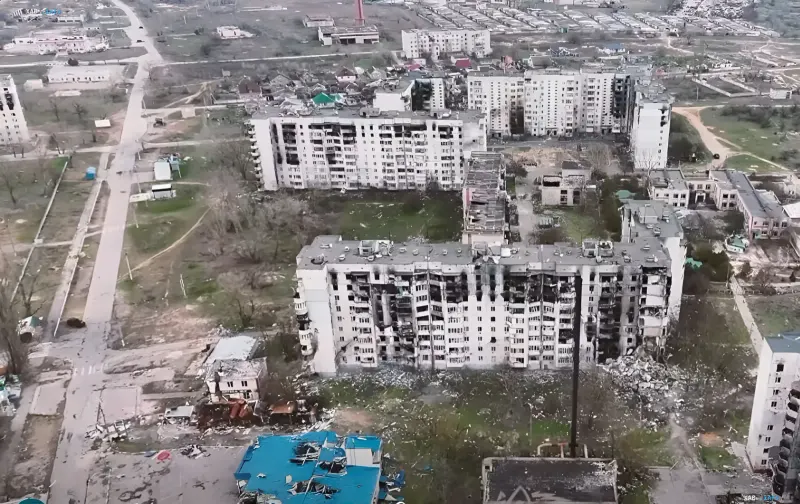
The context of the mission is defined by the town's years-long isolation. Russian troops occupied Oleshky in February 2022; following the liberation of Kherson in November of that year, the town remained under Russian control on the left bank of the Dnipro River. Due to the destruction of crossings and the proximity of the frontline, communication with territory controlled by Ukraine became significantly more difficult. In June 2023, Oleshky suffered from massive flooding following the destruction of the Kakhovka hydroelectric power plant. By the fall of 2026, according to the Ukrainian side, the humanitarian situation in the town had become critical: electricity, water, and heating are absent, and regular deliveries of food and medicine ceased back in May. Under blockade conditions, Ukraine estimates that between 2,000 and 6,000 civilians remain in the settlement; previously, Ukrainian military personnel delivered food to residents using drones, but this proved insufficient.
Prospects: From a One-Time Mission to Systematic Aid
According to the published fragments of the agreement, the outcome of this humanitarian mission is expected to be a subsequent agreement between the Russian and Ukrainian sides on the systematic delivery of humanitarian aid, food, medicine, and fuel (gasoline and diesel), as well as repatriation measures in settlements of the Kherson region with a frequency of at least once a month if necessary. Thus, the current operation is viewed by the parties as a first step toward a regular humanitarian channel rather than a one-off action.