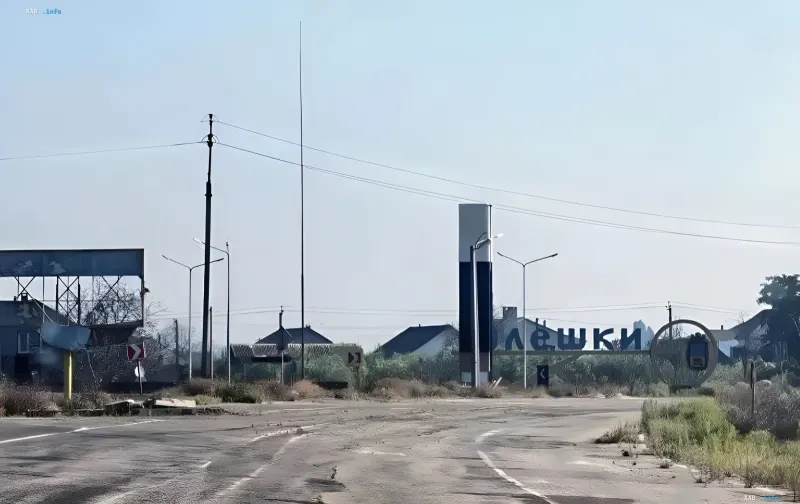
In occupied Oleshky, Kherson region, according to the head of the Oleshky territorial community, Tetiana Hasa-nenko, humanitarian aid delivered to the city during a recent mission is not reaching the residents. She discussed this in an interview with Ukrinform, which was republished by RBC-Ukraine. According to Hasa-nenko, "terrible events continue to occur" in the community, and the few who managed to receive food note that they were given a minimal set insufficient for a single person for a week. "As you can understand, we cannot verify what is happening there," the head of the military administration admitted, stressing that direct verification of the situation inside the occupied city is impossible for her.
Evacuation: who stayed and why
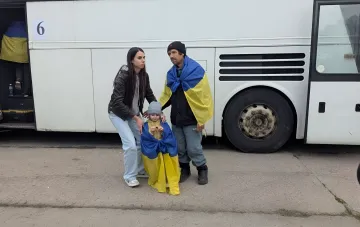
Beyond the problem of aid distribution, Hasa-nenko described the evacuation process, which took place under conditions that hindered informing the public. Some residents were unaware of the evacuation: they were in basements, had no communication, and the long cessation of shelling did not lead them to conclude that an organized evacuation was underway. "People in the community are in such a state that it is hard for them to believe anything. It is hard to assess what is happening around them," Hasa-nenko explained. Another group consisted of residents with limited mobility: a collection point was organized near the hospital, but transport to it was not provided, and some waited for the occupation authorities to pick them up. Furthermore, a significant number of residents refused to evacuate due to fear of so-called "filtration." "They left thinking it might be a 'one-way road.' But they could not stay there, because in both cases death awaited them. So they took the risk," Hasa-nenko said about those who finally left the city.
Context: humanitarian mission and silence regime
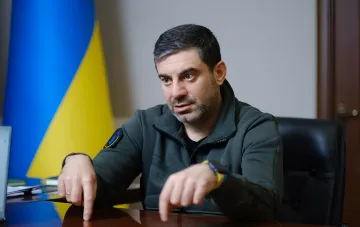
A temporary humanitarian ceasefire in occupied Oleshky was in effect from October 27 to November 1, 2026. The local agreement was implemented under the direct coordination of US First Lady Melania Trump. According to reports, critical humanitarian aid was delivered to the region during the operation, and about 800 civilians were evacuated from the danger zone. After the silence regime ended, Ukrainian Parliament Commissioner for Human Rights Dmytro Lubinets announced the possibility of organizing new humanitarian missions in this direction.
What is known about the current situation
As of November 5, 2026, there is no confirmed data on a second delivery of aid or a new evacuation operation to Oleshky. Hasa-nenko, speaking on behalf of the territorial community, highlights the gap between the formal fact of humanitarian cargo delivery and the actual access of residents to it. The lack of communication, the psychological state of the population that has endured long shelling, and logistical constraints inside the occupied city create a complex problem that, according to Hasa-nenko, cannot be solved without direct presence and control on the ground. The question of whether the next humanitarian mission will be implemented remains open and depends on further agreements between the parties.