August 7, 2026. The situation concerning former US Marine Robert Gilman, who has been imprisoned in Russia since 2022, has reached a critical point. According to human rights organizations and close relatives, the 32-year-old American has fallen into a state described by doctors as dissociative stupor and is on the brink of life and death. US authorities, including the Trump administration, are exerting unprecedented pressure on Moscow, demanding the immediate extradition of the prisoner for treatment.
Catastrophic health deterioration: from prison hospital to psychiatry
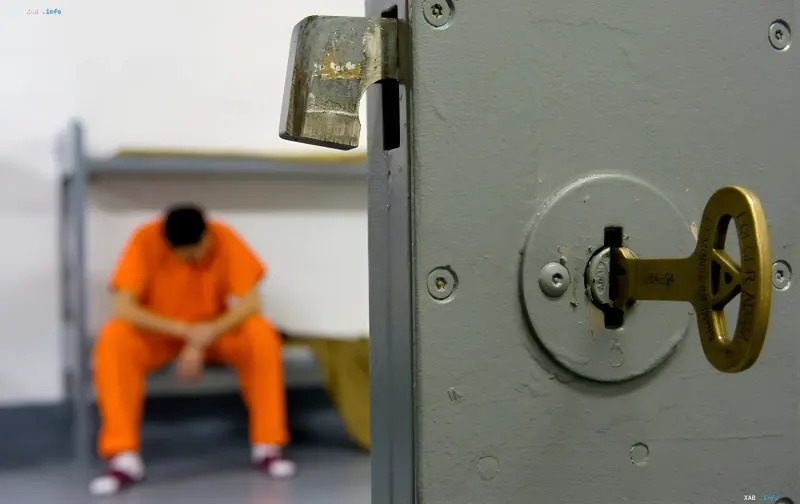
According to reports received from Eric Lebson, chief strategist of Global Reach, representing Gilman's family, the prisoner's condition deteriorated sharply in June 2026. Gilman was transferred from the prison hospital in Voronezh (located about 550 km south of Moscow) to the psychiatric department of a civilian emergency hospital. Doctors diagnosed him with a condition resembling catatonia, classified as "dissociative stupor".
According to the World Health Organization classification, such a condition is characterized by a profound reduction or complete absence of voluntary movements and normal reaction to external stimuli. Currently, Gilman is unable to communicate, his eyes remain closed, and nutrition and hydration are provided exclusively via a feeding tube. This makes it impossible for him to attend court sessions and interact normally with his lawyer.
Diplomatic crisis: Lavrov, Rubio, and the "Warmbier case"
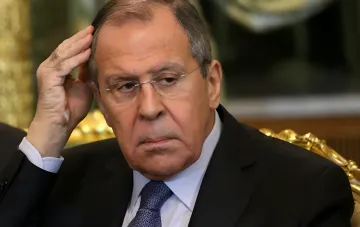
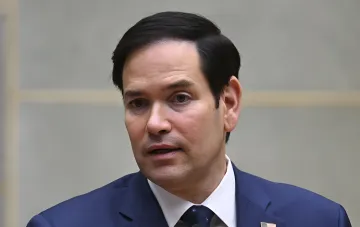
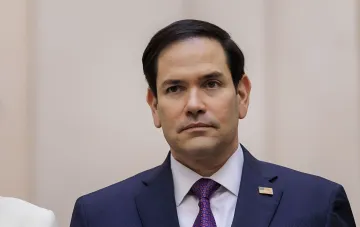
Gilman's case has become one of the central issues in bilateral relations between the US and Russia in August 2026. A source familiar with the situation at the State Department reported that Secretary of State Marco Rubio personally raised this issue during a meeting with Russian Foreign Minister Sergey Lavrov in Manila on July 23. The official response from Moscow to this request is currently unknown, however, the White House and the State Department have repeatedly called on Russia to release Gilman for urgent treatment on US territory.
A senior official in the Trump administration confirmed that authorities "are closely monitoring Mr. Gilman's case and have repeatedly and persistently appealed to the Russians to return him to the US". Elizabeth Richards, Director of Advocacy and Research on Hostages at the Foley Foundation, expressed deep concern: "It appears he is not receiving the care he needs, and we are very concerned about his life and safety". Human rights activists are already drawing parallels with the tragic story of student Otto Warmbier, whom North Korea returned to the US in a coma in 2017; Warmbier died that same month from severe brain damage.
Contradictory data
Versions of events leading to Gilman's current condition and the reasons for his arrest differ radically between official Russian sources and statements by the prisoner's family.
Version of Russian authorities: According to Russian state media, Gilman was arrested on January 17, 2022, in Voronezh for attacking a police officer while intoxicated. In 2024, his prison term was extended to 10 years, allegedly for attacking prison staff. The official status of the case in Russia implies that Gilman is responsible for aggressive actions.
Version of family and lawyers: Robert's father, Vladimir Gilman, in a column for the Boston Globe (October 2024), claimed that the charges were false. According to him, his son fell ill during the incident and accidentally bumped an officer with his foot, who was not injured and dropped the charges. As for the extension of the sentence, human rights activists Lebson and Richards categorically deny the charges of assault. They claim that guards kept Gilman in extremely harsh conditions, subjected him to torture, and administered consciousness-altering drugs, which led to his current state. Furthermore, the Russian hospital banned Gilman's mother from visiting her son, despite having a court order, and US consuls and a Russian lawyer are not allowed into the ward.
Political context: Hostage status and changes in intelligence agencies
As early as March 2023, Gilman's family asked the State Department to recognize him as "wrongfully detained". This status would make his release a priority task for the US government. However, according to Eric Lebson, Secretary of State Marco Rubio has not assigned this status to any American imprisoned in Russia since the beginning of President Trump's second term. Reuters could not ascertain the exact reasons for such a delay in the administrative process.
Against the backdrop of these events, internal changes are also taking place in the US law enforcement system. Recall that in 2017, the FBI secretly began an investigation against Donald Trump regarding his ties with Russia, the materials of which were recently declassified. At the same time, according to Reuters, the structure of the FBI itself has recently undergone significant changes: the bureau has sharply changed course and begun cooperating with law enforcement agencies in Russia and China. This raises concerns among observers about how such changes might affect cases involving detained US citizens abroad.
Voice of the family: "I am afraid I will never see him again"
The personal tragedy of Gilman's family has reached its peak. The prisoner's sister, Lexi Hudson, stated in an interview: "I am more afraid for my brother than ever since the beginning of this terrible nightmare. I am afraid I will never see him again if the Russians do not release him. I am afraid he may die". While US consular officials were occasionally able to visit Gilman in prison, access to him in the hospital has been completely blocked. The Russian Embassy did not respond to requests for comment, leaving the situation in a zone of uncertainty.