OpenAI has begun the large-scale rollout of the ChatGPT Health service. The new feature is now available to all users of the chatbot in the US who are over 18 years old. This update allows artificial intelligence to analyze medical records and health data, providing personalized responses directly within the main interface.
Integration with real medical data
The essence of the update lies in the ability to connect external data sources. Users can grant ChatGPT access to doctor's notes, laboratory test results, and lists of medications being taken. Furthermore, the service integrates with popular health trackers, including Apple Health, Weight Watchers, and MyFitnessPal.
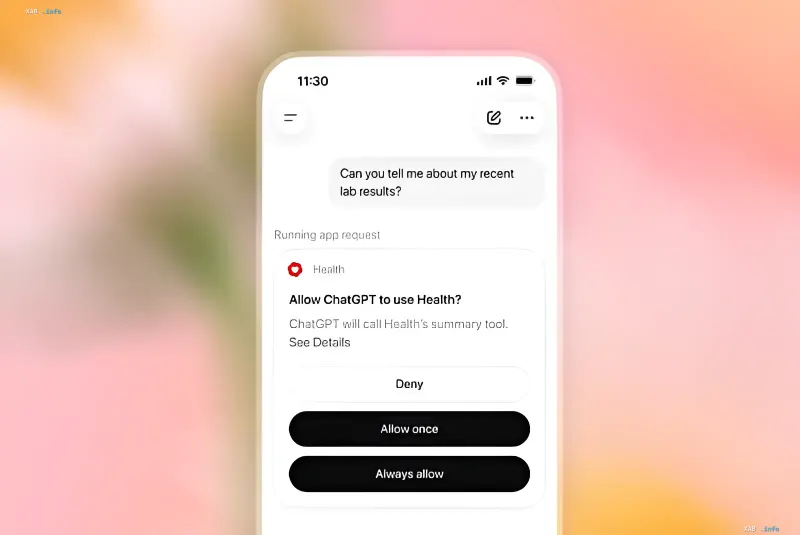
An important aspect is user control over privacy. Individuals choose exactly which data to share with the bot. For example, when requesting information about recent tests, the system asks for permission to access the Health app, offering options for one-time or permanent access.
Debates over AI capabilities in medicine
There are differing views within the company regarding the potential of the new technology. OpenAI's Vice President of Medical Products, Ashley Alexander, asserts that modern AI models are capable of reasoning at a level that exceeds the competencies of practicing physicians.
However, the head of the medical division, Karan Singhal, calls for caution. He notes that, despite research from Harvard and Stanford universities confirming the high capabilities of AI, such claims require a balanced approach. The company's official position emphasizes that ChatGPT Health is intended to support users, not to replace professional medical care.
Availability and security
The widespread launch of the service occurred just a few weeks after the announcement of the new GPT-5.6 Sol model. Users no longer need to navigate to a separate Health section — questions can be asked directly in the chat.
The service runs on the company's latest models and is available in the free version, as well as on the Go, Plus, and Pro plans. Access is provided via the web version and the iOS app. OpenAI guarantees data security: all correspondence is encrypted both in transit and at rest, and medical information receives an additional layer of protection.