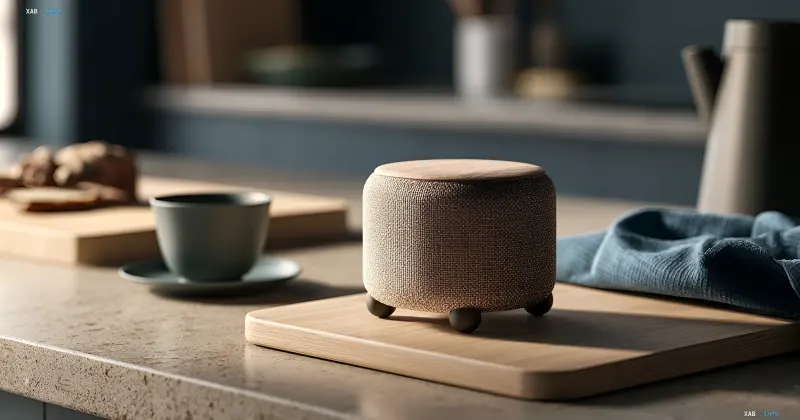
The era of smart speakers that simply execute commands may be coming to an end. According to a new Bloomberg report, OpenAI is preparing to launch its first hardware product — a portable speaker designed to be a true "human-like companion." This device is not just for playing music; it is conceived as a physical embodiment of ChatGPT, capable of natural conversation and adapting to context.
Mobility and Autonomy
Unlike stationary devices that sit in a corner for years, OpenAI's new speaker will be rechargeable and lightweight. The concept of using the gadget is built around its mobility: users will be able to take the device to the kitchen for recipe assistance and then move it to the living room or bedroom. This transforms AI from a static assistant into an active participant in daily life.
The Illusion of Life Without a Screen
One of the most intriguing design decisions is the absence of a screen. Instead of a visual interface, which often distracts, the developers are betting on mechanics. The device will feature moving parts capable of autonomous motion. This will create the effect of a "living" organism that reacts to speech and user actions, rather than lifelessly executing algorithms.
Technological Core and Sensors
At the heart of the speaker lies an advanced version of the GPT-Live model, which is already used in the new voice mode of ChatGPT. This will allow the device to listen and speak simultaneously, instantly processing new information and adapting to the conversation in real time. To gather context about the surroundings, the gadget will be equipped with a camera and a set of sensors, ensuring more personalized responses and precise smart home control.
Merging Talents and Legal Battles
Developing such a complex device required the involvement of top engineers and designers. In 2025, OpenAI acquired the startup io, founded by legendary former Apple designer Jony Ive, for $6.5 billion. This acquisition was key to creating the hardware component of the future device.
However, the path to the release, planned for 2027, is overshadowed by serious legal issues. Apple has filed a lawsuit against OpenAI, accusing the company of stealing trade secrets. At the center of the scandal are former Apple employees Chang Liu and Tang Yu Tang, who are accused of downloading dozens of confidential files, including technical specifications and data on unannounced products.
Apple claims that the interview process at OpenAI was specifically tailored to extract secrets. Currently, more than 400 former Apple employees work at the company, including Paul Mied — the former head of Vision Pro headset development, who now leads OpenAI's new hardware division. The injunction on product release that Apple is seeking could significantly delay the launch of the innovative speaker.