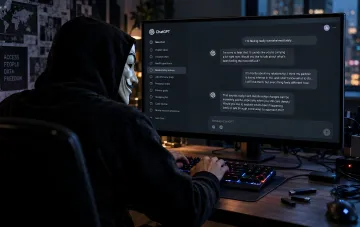
In October 2026, a listening device hidden inside a roll of paper towels was discovered in OpenAI’s executive conference room. According to the U.S. Department of Justice, 35-year-old Abdulrahman Alfouzan, a Saudi national who was working as an engineer at the company, was arrested on October 13. Investigators believe that using an internal AI system for employees, he attempted to determine which OpenAI representatives were likely to meet with Saudi ministers during leadership visits to the kingdom, and maintained regular contact with a member of the Saudi royal family. For a company whose developments have become one of the U.S.'s key strategic assets in artificial intelligence, the incident served as public confirmation that security matters had long lagged behind the pace of the technological race.
"Speed Over Safety"
Former OpenAI employees claim that concerns about weak control measures were voiced even before the launch of ChatGPT in late 2022. According to them, these concerns were communicated to top management, but it felt as though the company prioritized keeping up with competitors like Google and Anthropic over addressing security. "They cannot sacrifice speed for security. Moving fast is more important to them than security — even in the face of the most serious state adversaries," said former OpenAI researcher Will DePew, who left the company in April. The official stance is different: organization spokesperson Elana Widmann stressed that OpenAI is a prime target for malicious actors worldwide and invests heavily in a threat protection program against insiders, cybercriminals, and foreign states.
Monorepository and Open Sandboxes
Employees pointed out that outsiders, including foreigners, could relatively easily gain access to confidential information about the lab's technologies. A significant portion of the code was stored in a single monorepository, while research documentation was kept on GitHub and Slack platforms, where attackers could discover critical data. The company did not conduct regular security audits of internal tools, including sandboxes for stress-testing new models, which employees frequently modified without vulnerability checks. Subsequently, access to confidential working materials was restricted, and the most sensitive developments were moved to separate repositories with strict access control; OpenAI emphasized that the main monorepository notably lacks AI model weights.
Security Overhaul
According to company statements, the turning point began after Dane Stuckey assumed the role of Chief Information Officer in October 2024: internal tool checks are now conducted regularly. Product engineering lead Thibault Sottio reassigned some engineers who previously worked on production systems to tasks focused on improving security infrastructure. At the same time, OpenAI and Anthropic strive to maintain an open research culture that helps attract talent and drive breakthrough discoveries — and this very balance between openness and protection remains the industry's primary dilemma.
The Price of Protection Ahead of IPO
Since the launch of ChatGPT, AI technologies have become a strategic U.S. asset, and American companies are forced to protect their developments from foreign competitors. However, introducing additional layers of protection could slow down progress and complicate OpenAI and Anthropic's plans to go public — both companies could rank among the most valuable in the world. Amid fierce competition, the listening device incident became more than just a legal case; it served as a reason for the entire industry to reconsider whether it is acceptable to sacrifice security for speed in a race where artificial intelligence leadership is at stake.