Search for a 'Cuban Delcy Rodríguez'
The administration of US President Donald Trump has intensified efforts to find a figure capable of leading the government in Cuba in the event of radical political changes. According to The New York Times and Miami Herald, Washington is considering scenarios that go far beyond ordinary diplomatic correction or sanctions pressure. The focus of US intelligence agencies is on current or former Cuban officials loyal to the American agenda who could become an alternative to the country's current leadership.
According to sources, US officials are looking for a figure similar to Delcy Rodríguez, who led the transitional government in Venezuela after the overthrow of Nicolás Maduro. In Washington, the possibility of replacing Cuban President Miguel Díaz-Canel, who is considered a representative of the 'hard line' in the White House, is being considered. Among the potential candidates with whom contacts have already been made, the grandson of the former country leader Raul Castro — Raul Guillermo Rodríguez Castro — is mentioned.
Secret CIA Operational Group
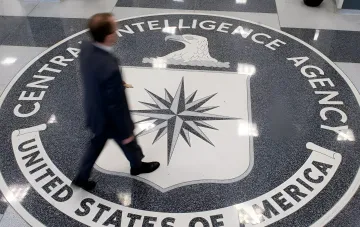
Parallel to the search for political alternatives, a new secret CIA operational group specializing in the Cuban direction has been created in the US. Experts note that the allocation of special resources and the creation of a closed structure indicate a transition from passive observation to active preparation of operations. Former senior intelligence official Mark Polymeropoulos stated that such measures could indicate preparation not only for influence operations but also for more radical scenarios, including possible military action.
"Secret actions do not always mean a coup, but they can imply large-scale influence operations," the expert noted. According to him, the involvement of additional resources in the Cuban issue indicates that Washington is setting a specific goal of regime change, and not just collecting analytical data for reports.
Energy Collapse and Oil Blockade
Political pressure on Havana is exacerbated by a critical economic situation. In early January 2026, the Trump administration imposed a strict oil blockade, completely blocking fuel supplies from Venezuela to the island. This decision led to a deep energy crisis: mass blackouts increased in Cuba, and in recent days the country remained without electricity for almost two days. Cuban authorities called the US actions "genocidal," linking the massive power outages to Washington's sanctions policy.
The economic collapse is exacerbated by the outflow of international companies, which are leaving the island due to instability and pressure from the US. Cuban authorities are trying to compensate for the shortage, but the lack of fuel paralyzes the work of industry and energy, creating ideal conditions for internal discontent, which the US administration is counting on.
Military Escalation and Drone Purchases
In response to increased pressure, Havana is taking steps to strengthen its defense capabilities. According to Axios, Cuba has purchased a batch of 300 unmanned aerial vehicles, which could be directed at US bases. The exporters of drones are likely Russia and Iran, which adds a geopolitical dimension to the conflict. This purchase indicates that the Cuban leadership is ready for a scenario of escalation and possible military confrontation.
Contradictory Data
There are discrepancies in the assessment of the goals of Washington's actions. On the one hand, official sources and analysts from The New York Times describe the situation as preparation for a broad political transformation and a change in leadership. On the other hand, experts such as Mark Polymeropoulos point out that the creation of secret CIA groups may be aimed exclusively at influence operations, and not at a direct military coup. In addition, there is currently no confirmed data that a specific candidate (for example, Raul Castro's grandson) has agreed to the role of leader of the transitional government, and contacts may be of a purely research nature.