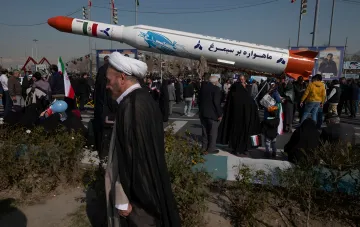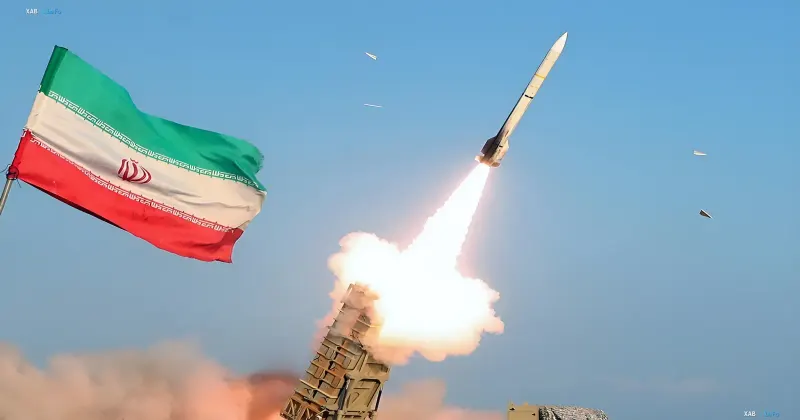
The American magazine Foreign Affairs has published a comprehensive analytical report dedicated to the unprecedented military standoff in the Middle East. According to the publication, the United States and its ally Israel launched more than 13,000 strikes on Iranian territory but failed to fully subdue the Islamic Republic or force its capitulation. This campaign has clearly demonstrated that technological superiority and overwhelming firepower do not always guarantee a military superpower quick strategic success against an asymmetric adversary.
Campaign Scope and Iran's Strategy
The analysis shows that during the first 24 hours of the operation's intense phase, US and Israeli forces deployed bombs, cruise missiles, and drones to target approximately 1,000 key locations in Iran. Over the following 37 days, an additional 12,000 strikes were delivered. Although significant damage was inflicted on the country's military infrastructure, the Iranian government remained resilient and continued to retaliate even after more than six months of continuous pressure. A key factor was Tehran's long-term preparation for such a scenario, featuring an autonomous command system capable of functioning even if top leaders are eliminated, along with mechanisms to sustain the economy under severe blockade.The Economics of War: Cheap Drones vs. Expensive Missiles
A crucial revelation for experts was the role of affordable mass-produced weaponry. Unable to compete equally with the US in stealth aircraft and high-tech sensors, Iran focused on cheap unmanned aerial vehicles and ballistic missiles. This created a severe economic dilemma for the West and its allies: while offensive drones cost tens of thousands of dollars, interceptor missiles cost millions. As a result, the US and Israel are forced to deplete scarce and expensive air defense resources to counter massive waves of relatively inexpensive weapons.Contradictory Data
When assessing the scale of destruction and the effectiveness of defense systems, expert communities and official agencies diverge in their evaluations. Western analysts and Foreign Affairs highlight the unprecedented nature of the strikes and the depletion of defense resources on both sides, whereas regional sources and statements from Iranian officials frequently insist on minimal damage to the country's strategic and nuclear facilities, claiming the successful repulsion of most attacks.
Expert Analysis and Implications for Global Security
According to author Paul Scharre, this conflict marks the dawn of a new era in warfare where cheap, mass-produced precision weapons fundamentally alter the traditional balance of power. By narrowing the technological gap between superpowers and limited-capability nations, the current war forces the Pentagon and military strategists worldwide to re-evaluate rearmament concepts, balancing ultra-complex systems with the urgent need for inexpensive mass-produced combat capabilities.