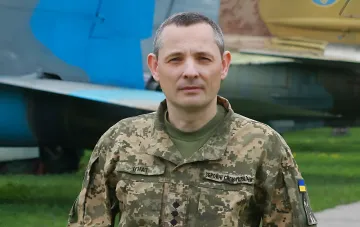
Pavlo Palisa, Deputy Head of the Office of the President of Ukraine, stated that Kyiv is actively seeking ways to counter the sharp increase in Russian attacks using jet-powered drones. According to him, it is precisely this type of drone that the Russians are ramping up most aggressively, and their numbers will continue to grow, as the occupiers are seeing their effectiveness on the battlefield. Palisa emphasized that offensive means always outpace defensive ones, so Ukraine will inevitably have to adapt, and this process will take time.
Increased Attacks with Jet-Powered Drones
As the Deputy Head of the Office of the President noted, Russian military forces have significantly increased their use of jet-powered drones, which differ from earlier models in their higher speed and the difficulty of intercepting them. Palisa pointed out that the trend of their growing numbers persists: having assessed the effectiveness of the new weapon, the enemy will continue to use it on a mass scale. In his assessment, this poses a task for Ukraine's air defense that requires not a one-off but a systemic solution.
The Problem with Drone Interceptors
The key point of Palisa's statement is that the drone interceptors currently in Ukraine's arsenal, which in theory should be shooting down jet-powered drones, have so far failed to demonstrate the expected effectiveness in practice. "Offensive means always outpace defensive ones. We will undoubtedly have to adapt. This will take time," he explained. Thus, official Kyiv acknowledges that one of the promising methods of countering the new drones has not yet lived up to expectations, and the political and military leadership are aware of this problem and are actively seeking ways to solve it.
Alternative Air Defense Means
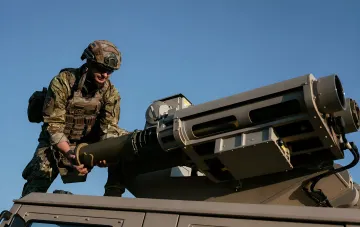
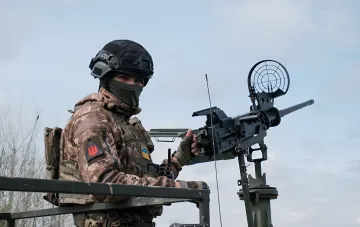
Despite the problems with interceptors, Palisa pointed to a number of means that, in his words, show high effectiveness in countering jet-powered drones. These include man-portable air defense systems (MANPADS), various object air defense systems, as well as aviation. This indicates that the Ukrainian side is betting on a combination of several types of air defense until a single universal solution against the new type of drones is found.
Russia's Tactics According to the CCD
The context of Palisa's statement is reinforced by data from the Center for Countering Disinformation. According to CCD Head Andrii Kovalenko, for the third day in a row the Russians have been constantly and massively attacking Kyiv and the Kyiv region with jet-powered drones. At the same time, in his assessment, the enemy is launching not a large number of devices at the capital, but small waves, the aim of which is to paralyze the city. Kovalenko emphasized that Russia does not have the full resources for massive attacks, and the main goal of such tactics is to exhaust air defense forces and apply psychological pressure on the population.
What Comes Next
The combined statements of Palisa and Kovalenko paint a picture in which Ukraine is in a phase of adaptation to a new quality of air threat. The acknowledgment of the ineffectiveness of some existing interceptors, together with the emphasis on MANPADS, object air defense, and aviation, indicates that Kyiv is revising the architecture of its air defense. As noted in the Office of the President, the search for workable solutions continues, and the outcome of this adaptation will determine the resilience of Ukraine's air defense amid Russia's ongoing expansion of its fleet of jet-powered drones.