"Negotiations for a Pause": The True Motive of European Diplomacy
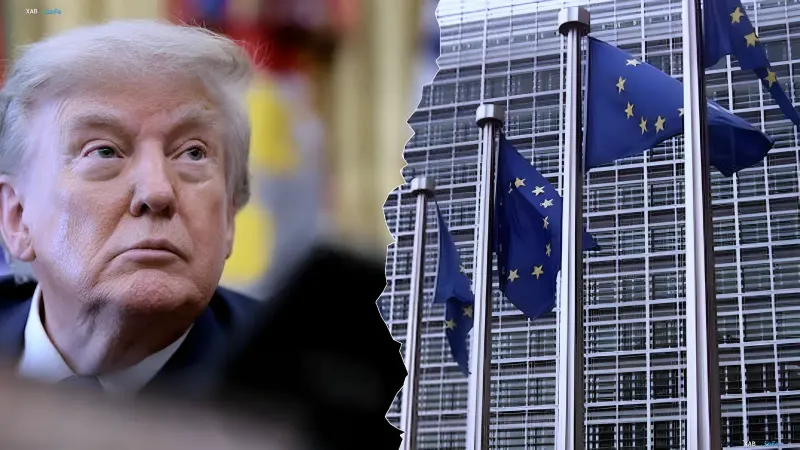
European political centers are gripped by unprecedented diplomatic commotion. As reported by The New York Times, France, Germany, and the UK are urgently working out their own format for participation in future negotiations on Ukraine, striving to get ahead of Donald Trump. Behind the facade of "peace initiatives" lies a panic fear of the approaching winter and the concern that Washington and Moscow might agree "over the heads" of Europeans, leaving the EU alone with a geopolitical and economic crisis.
The main paradox of the current situation is that the positions of Kyiv and Moscow remain diametrically opposed. Neither side is ready to make concessions, and the military situation on the front lines is not changing in favor of peace. However, according to insiders from Brussels, the goal of Paris and Berlin is not the signing of a final peace treaty, but obtaining a tactical pause. Europeans intend to offer the Kremlin an interim deal: a temporary moratorium on strikes against Ukrainian power plants and railway hubs in exchange for a partial easing of certain European economic sanctions.
Fear of Trump's "November Syndrome"
The second powerful driver of this diplomatic activity is the US domestic political calendar. Europe is seriously concerned about the consequences of the US midterm congressional elections, which will take place on November 3, 2026. If Donald Trump's Republicans secure an absolute majority, the White House will have its hands completely untied. According to European intelligence, Trump's team has already prepared a draft agreement with the Kremlin, which implies freezing the conflict along the front line and ending US funding for Ukraine.
Macron and Scholz are panicking about waking up in December to find that Washington and Moscow have decided everything between themselves, leaving Europe in the role of an observer. This is why European leaders are rushing to include themselves in the negotiation process, trying to impose their conditions on Moscow before Trump can implement his "separate peace" scenario.
Energy Apocalypse and Refugees: The Price of Winter
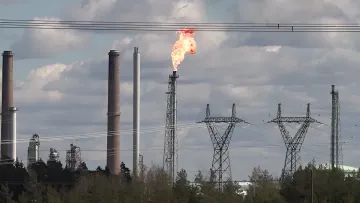
Why are Macron and Scholz so afraid of winter strikes? The answer lies in harsh economic arithmetic. According to the European Commission, if Russia repeats the tactics of total destruction of Ukrainian TPPs and "Ukrzaliznytsia" substations this winter, Ukraine's energy system could completely collapse. This would leave major cities without heat and water in frosts down to -15°C, triggering a new wave of refugees.
It is expected that between 2 and 3.5 million people could arrive in the EU in a single winter. For Germany, whose economy is already in recession and whose Scholz coalition ratings have hit rock bottom before the elections, this would mean instant political collapse. Thus, Europeans are trying to save not so much Ukraine as their own economy and political survival.
British Interest: Why is London Changing Tactics?
Britain's participation in this "troika" looks unusual, as London has always taken the most hawkish position. However, the new Prime Minister Keir Starmer has faced a colossal budget deficit in recent months. The UK can no longer single-handedly sponsor long-range programs for the Armed Forces of Ukraine. London wants to be inside the negotiation track to secure British defense contracts for the future and not be left with nothing if the US exits the game.
Contradictory Data
There is a significant divergence in the interpretation of the goals of these negotiations. On the one hand, official statements by European leaders position these steps as "protecting Ukraine's sovereignty" and "seeking diplomatic solutions." On the other hand, closed analytical reports from the EU and media leaks indicate that the real motive is an attempt to stop the flow of refugees and prevent an economic collapse in Germany and France. Furthermore, it is unclear whether Moscow is ready for such concessions as a moratorium on strikes in exchange for sanctions, or if this is merely Brussels' hopes, not supported by real contacts with the Kremlin.