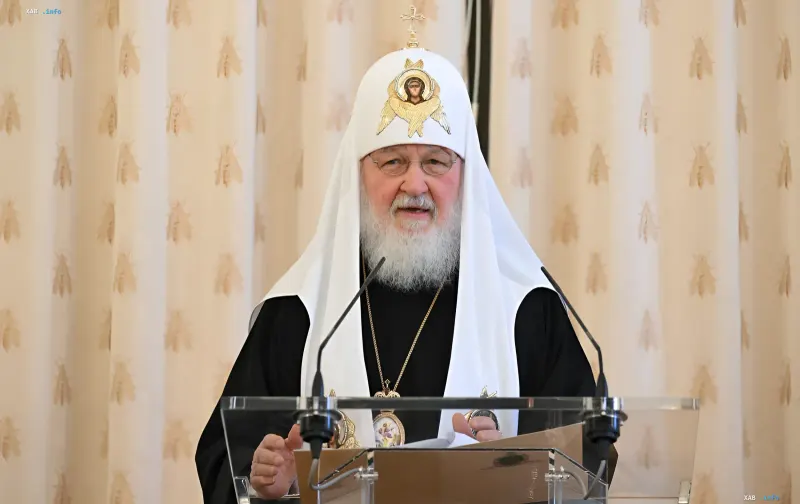
Discussions on the 21st package of EU sanctions against Russia have concluded in Brussels. The outcome was unexpected for many observers: the name of Patriarch Kirill of Moscow and All Rus' did not appear in the final list of restrictive measures. Although this issue had been blocked by Hungary for years in the past, this time Bulgaria's position played a key role.
The role of Bulgarian diplomacy
Details of the negotiations became known thanks to a statement by Bulgarian Foreign Minister Vessela Petkova. She spoke to journalists on the sidelines of an EU Council meeting on July 13. According to the official, Sofia's diplomacy achieved its goal: Bulgarian objections were taken into account, and the names of Patriarch Kirill, as well as Lukoil head Vagit Alekperov, were removed from the draft document.
Thanks to these changes, Bulgaria fully supported the introduction of economic restrictions contained in the 21st package. Additionally, at the request of the Bulgarian side, a company involved in supplying components for the Sofia metro was removed from the sanctions list. This decision allowed important economic ties for the capital's infrastructure to be preserved.
Consensus crisis in the EU
Minister Petkova noted that the lack of unity in adopting the package arose not because of Bulgaria's position, but due to other member states. At the meeting of the Committee of Permanent Representatives (Coreper) on July 12, consensus was not reached because two countries put forward their own demands, which were ultimately not met.
"An important message in this matter is that defending a national position does not lead to isolation," Petkova emphasized. She clarified that Greece insisted on changes in the energy sector, while Austria focused on financial issues. The official called these disagreements "private matters of the respective countries".
Paradigm shift: from Orbán to the new government
The story of sanctions against the head of the Russian Orthodox Church has a long backstory. For years, the initiative to include Patriarch Kirill in the lists was blocked by the former Prime Minister of Hungary, Viktor Orbán. As early as May 2022, he stated that he did not support such measures, arguing that they threatened religious freedom. In a letter to the European Commission, Orbán called potential sanctions a "historic mistake".
Since the introduction of sanctions in the EU requires a unanimous decision by all member states, Budapest's position long remained an insurmountable obstacle. However, the political situation has changed. The new Hungarian government, formed in May 2026, expressed readiness to allow the European Union to impose restrictions on Patriarch Kirill.
Nevertheless, even with the shift in course in Hungary, it was Bulgaria that initiated the demand to remove the Patriarch's name from the 21st package in June. Later, Italy joined this position. Ultimately, despite Hungary's readiness for sanctions, Sofia and Rome were convinced of the necessity of the exclusion, which determined the final shape of the document.