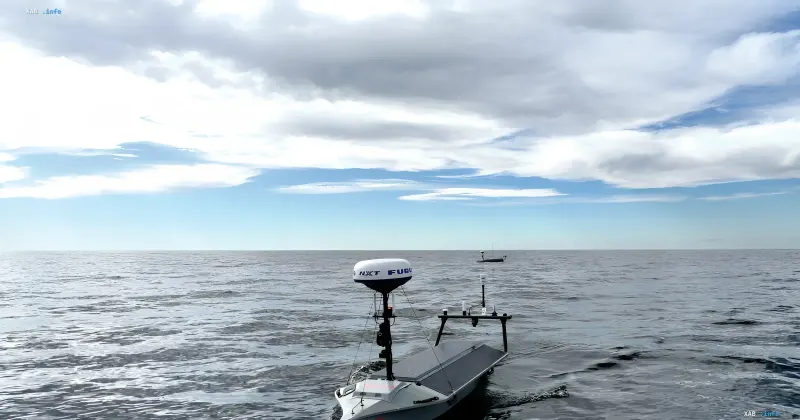
The United States Department of Defense is considering a significant expansion of its testing program utilizing small, canoe-like self-propelled boats. These vessels are planned to be actively deployed along the Rio Grande River and in the Gulf of Mexico to enhance security measures.
Technology Essentials and Lightfish Specifications
This move is part of the military department's broader effort to deploy low-cost unmanned technologies to strengthen border enforcement. The program launched in January with just 10 autonomous patrol boats on the Rio Grande, but the Pentagon is now exploring the addition of about 50 more units to scale the operation. The devices, named Lightfish, are manufactured by San Diego-based defense tech startup Seasats. Measuring approximately 3.3 meters in length and weighing about 154 kg, each unit costs roughly $240,000.
Integration with Advanced Tracking Systems and AI
Powered entirely by solar energy, these boats can operate continuously for months without refueling or scheduled maintenance. Their compact design allows a two-person crew to easily launch or retrieve them directly from a dock or pickup truck bed. Lightfish is equipped with electro-optical cameras, infrared cameras, signal sensors, and a hydroacoustic navigation system. Collected data is transmitted in real time to military software platforms such as Palantir's Maven Smart System and Anduril Industries' Fortress, instantly alerting the U.S. Border Patrol and Coast Guard.
Operational Efficiency and Conflicting Data
According to U.S. Department of Defense data, Lightfish vessels help detect an average of 452 border violations each month, resulting in numerous intercepted crossings. At the same time, experts note ongoing discussions regarding the challenges of scaling such systems under severe weather conditions and active countermeasures deployed by cartels utilizing electronic warfare means.
Future Prospects of the U.S. Autonomous Fleet
Successful trials, including a transatlantic voyage spanning approximately 6,437 km from South Carolina to Portugal, led to new contracts worth over $24 million within just one month. In addition to Seasats, the U.S. government is actively testing and procuring autonomous surface vessels from other suppliers such as Saronic, Saildrone, and Splash, marking a new era in robotic state border protection.