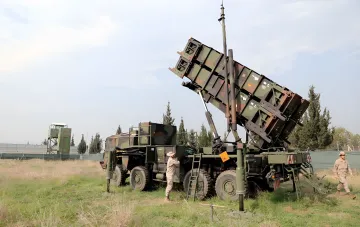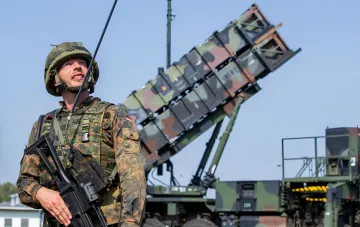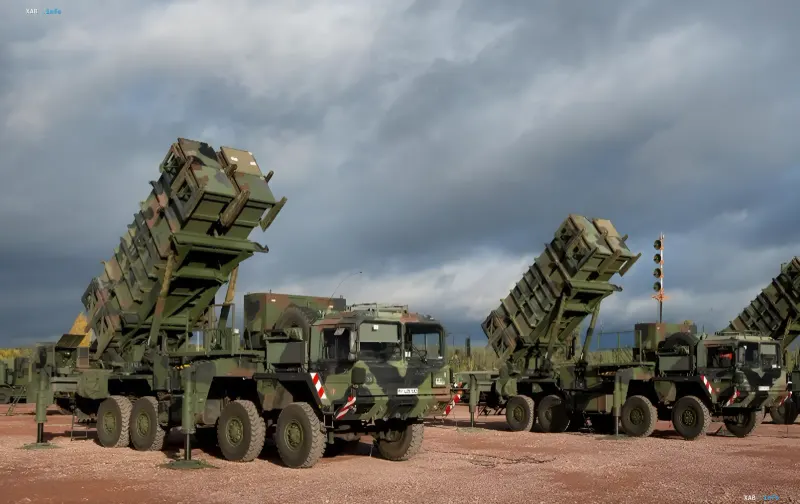
According to information obtained by journalist Raufoglu and published by RBC-Ukraine, licensing documents for the production of Ukrainian Patriot missiles on US territory have effectively stalled within the defense agency. Two sources familiar with the process confirmed that the bureaucratic procedure has hit a dead end, although, according to available data, Secretary of State Marco Rubio and Pentagon chief Pete Hegseth signed the necessary paperwork back in October. Thus, a significant gap has formed between formal top-level approval and actual movement of the documents inside the US Department of Defense.
Where Exactly the Process Is "Stuck"
According to the same source, the licensing process stopped during the period when Michael Duffy held the position of US Under Secretary of Defense for Acquisition and Sustainment. It was at this stage, according to two informed interlocutors, that the documents stopped moving through the hierarchy. At the time of publication, the US Department of Defense refrained from official comments, neither confirming nor denying information about the delay.
Context: Promises and Supply Reality
The issue of production and supply of Patriot missiles for Ukraine remains one of the key elements in bilateral and alliance cooperation. Earlier, President Volodymyr Zelenskyy stated that NATO Secretary General Mark Rutte is ready to assist Ukraine in obtaining PAC-2 and PAC-3 modifications of missiles for Patriot anti-aircraft systems. The Alliance confirmed this readiness, noting the intention to strengthen Ukrainian air defense with corresponding anti-aircraft ammunition. The production license in the US was considered one of the mechanisms for long-term provisioning of Kyiv with interceptors without dependence on one-off supplies from allied arsenals.
How Many Interceptors Partners Actually Have
Aviation expert Konstantin Kryolap assessed the actual stockpiles of interceptors among European partners in his analysis. According to his data, there are about 200 PAC-3 missiles in Europe, but a significant portion of this arsenal has already been transferred to Ukraine. In addition, the expert pointed out that it is reliably known about the presence of about 200 PAC-2 modification missiles in Greece. At the same time, information about a comparable amount of ammunition in Spain, which previously appeared in a number of publications, does not correspond to reality, according to his assessment.
What This Means for Kyiv
The delay in the licensing process at the Pentagon, if confirmed, creates additional risks for the launch timeline of serial production of Patriot missiles at US facilities for Ukrainian orders. In conditions where combat stockpiles of interceptors in Europe are limited and partially depleted, alternative production channels become critically important. The lack of an official comment from the US DoD at this moment makes it impossible to accurately assess how serious the delay is and what steps are being taken to resolve it.