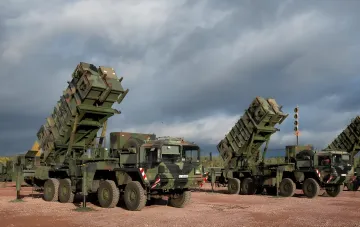
According to Ukrainian and American publications, the Pentagon is delaying the transfer to Ukraine of a batch of approximately 60 Patriot air defense interceptor missiles — U.S.-made PAC-3 and PAC-2 modifications. These munitions were already purchased by Western allies of Ukraine, including through European stockpiles, but their physical transfer to Kyiv has not yet taken place. According to the Kyiv Independent and The Washington Post, the approval has stalled at the level of U.S. Secretary of Defense Pete Hegseth, who, sources claim, has not signed the necessary contracts.
What Exactly Washington is Delaying
The key technical reason for the delay is the origin of the missiles themselves: they are manufactured in the United States, so any agreement on their sale or subsequent transfer to third countries requires mandatory approval by U.S. authorities. It is this mechanism, according to sources, that turns a batch already paid for by allies into a position dependent on a single signature from the Secretary of Defense. Ukrainian officials in conversation with journalists emphasize that Ukraine's partners have already paid for the missiles, and the contracts are effectively "sitting on Hegseth's desk" without a signature.
How the Parties Describe the Situation
Ukrainian officials characterize the delay as a form of political pressure that, they say, could jeopardize the protection of the civilian population from Russian ballistic missiles. They recall that Ukraine receives interceptors for Patriot through several channels, including NATO's Prioritized Ukraine Requirements List (PURL). American sources cited by The Washington Post formulate the position more carefully: the Pentagon chief has not officially rejected the transfer, but has not taken the necessary steps to approve it, while continuing to approve part of U.S. aid. U.S. Secretary of State Marco Rubio, in turn, has publicly explained Hegseth's position on the missile transfer. President Volodymyr Zelenskyy previously accused Washington of exerting pressure on Ukraine and delaying interceptor supplies in an interview with Bloomberg.
Context: Brussels' Calls and New Orders for 2028–2029
Against the backdrop of the delay, EU Commissioner for Defense and Space Andrius Kubilius called on EU countries to transfer Patriot missiles from their own stockpiles to Ukraine. At the same time, as noted in related materials, in the event of such a transfer, European countries plan to receive in return new missiles that Kyiv has already ordered for 2028–2029. Thus, the issue of supplies acquires a dual nature: it is both a matter of the current combat readiness of Ukraine's air defense and a matter of long-term logistics between allies.
Night Attack of November 24: Why the Interceptor Issue is Acute
The urgency of the missile delay is underscored by data on nighttime strikes. According to reports, on the night of November 24, Russia launched 96 strike drones against Ukraine, including 64 jet-powered ones. Ukrainian air defense reportedly shot down or suppressed 73 targets, but the drones hit targets in 13 locations. It is precisely under such conditions, according to Ukrainian officials, that the lack of a sufficient number of Patriot interceptors in service increases risks for civilian areas.