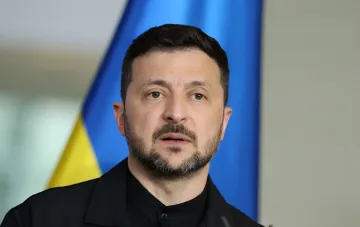
In a conversation with journalists, Ukrainian President Volodymyr Zelenskyy linked the sharp reduction in military and financial support for Kyiv to the escalation of the conflict in the Middle East. According to him, throughout 2026, Ukraine received only 12 Patriot system missiles per month from the US, which, in the head of state's assessment, is significantly lower than the real needs of Ukraine's air defense. Zelenskyy also called the situation around the Strait of Hormuz one of the causes of global energy problems and emphasized that the Middle East crisis "has consequences for the entire world," including Ukraine's supply channels.
Interceptor deficit: numbers versus air defense needs
Assessing the gap between supplies and needs, Zelenskyy provided a comparison that, in his words, "is the answer to many different questions." Even calculating for 150 American interceptor missiles per year, the Ukrainian side has to contend with, he said, approximately 150 ballistic missiles per month. Thus, the volumes of incoming interceptors are vastly inferior to the pace of Russian ballistic strikes, which, according to the president's assessment, creates the risk of further intensification of attacks by Russia amid a shortage of countermeasures.
Dependence on Washington and Hegseth's signature
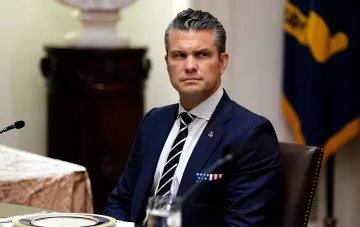
Zelenskyy acknowledged that Ukraine's agreements with other countries have also affected the number of Patriot missiles available to Kyiv, adding that the Ukrainian side is trying to negotiate additional anti-ballistic missile supplies with partners. However, according to him, such supplies are impossible without approval from the US: he named the necessity of the signature of US Secretary of Defense Pete Hegseth as a key condition. Earlier, Air Force Spokesperson Yuriy Ihnat noted that the Patriot missiles expended in the Middle East could have sustained Ukraine for several years of combat operations, while Ukrainian troops, he said, have learned to use interceptors more rationally.
A combination of problems in relations with the US
Separately, Zelenskyy drew attention to the coincidence of several problematic issues in relations with Washington. Among them, he listed the topics of Starlink and Starshield, intelligence sharing, the supply of interceptor missiles to counter Russian ballistic strikes, and agreements regarding Russian diesel fuel. According to the president's assessment, the combination of these issues creates a difficult situation for Ukraine, which he commented on with the phrase: "We understand where everything is going. 'Home alone' is the next part. It's a challenge, a difficult challenge."
Resumption of intelligence sharing and aid to regional partners
Despite the outlined difficulties, Zelenskyy reported that Ukraine and US have resumed intelligence sharing and thanked American partners, including President Donald Trump and the military, for facilitating this decision. He also recalled that Ukraine, at the request of partners, had assisted in the region, including on issues related to bases housing US citizens in Saudi Arabia, the UAE, and other countries, and emphasized the importance of resolving the Middle East crisis. Additional context: according to Ukrainian sources, Kyiv is essentially "gathering" interceptors one or two at a time directly from state leaders, while the US remains the only partner capable of providing aid on a massive scale.