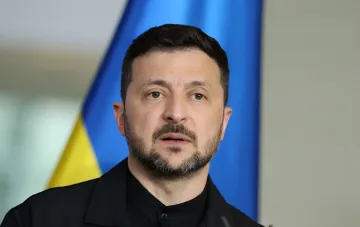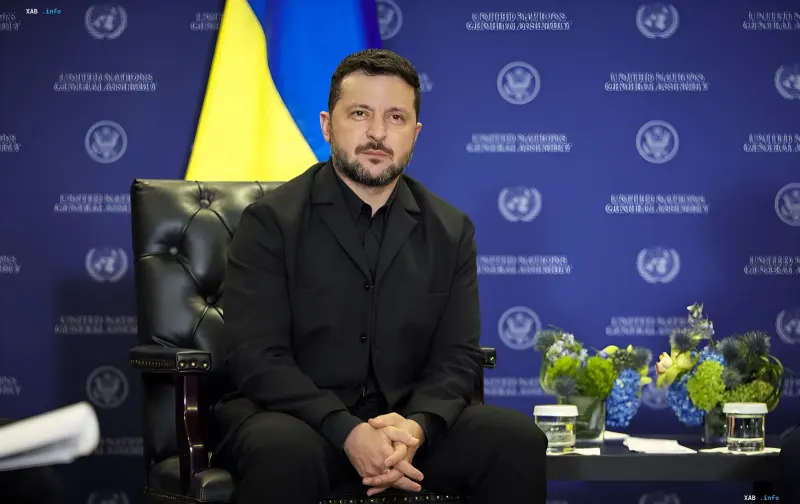
Ukrainian President Volodymyr Zelenskyy, speaking with journalists in Istanbul, detailed Kyiv’s strategy to close the critical deficit of missiles for Patriot air defense systems. According to him, Ukraine is counting on European partners' support in financing the purchase of 500 missiles. However, to accelerate deliveries needed right away, Kyiv intends to use a mechanism of temporarily borrowing munitions from allies under guarantees of future supplies from the United States.
A 500-Missile Package and Europe’s Role in Financing
Zelenskyy emphasized that Washington's proposed package of 500 missiles is «a very good offer,» but significant financial resources must be mobilized to implement it. «We are grateful to the United States of America. Of course, we need to raise money for this proposal. I am sure we will find the finances thanks to our partners,» the head of state stated. At the same time, he specified that the financing of purchases under the PURL program, through which Kyiv receives PAC-2 and PAC-3 missiles, is largely provided by Europe. «Europe is financing everything. That means it’s not for free, not gifts,» the president noted, adding that the Ukrainian side continues working in a bilateral track with European countries and other states.
The «Queue Swap» Scheme: Borrowing 10–30 Missiles Under Guarantees
A key element of the strategy revealed by Zelenskyy is the so-called «queue swap» operation. According to him, Ukraine plans to discuss with individual partners the possibility of temporarily taking 10, 20, or 30 missiles for Patriot from them, signing corresponding guarantees and agreements that these munitions will later be returned from the US 500-unit package — «with some interest or maybe without interest.» «Several times during this war we performed... and during various dialogues this operation worked when you swap queues. I will try to do this with some partners,» the president explained. Thus, Kyiv expects to receive a portion of the missiles from allies' stockpiles much earlier than full-scale American deliveries arrive.
Production Delays and the 2030 Horizon
Zelenskyy explicitly pointed to the reason why the Ukrainian side is forced to seek alternative mechanisms: missile deliveries under the American proposal have been delayed for several years. Media previously reported the possibility of deliveries after 2030, and the president confirmed that the delay is due to manufacturing specifics. «We have an understanding of what this winter will be like. It is not enough. It is an insufficient amount to protect,» he stated. According to him, the US provides or is ready to provide Ukraine with weaponry from its own stockpiles, but the pace of this process does not allow for a sufficient level of civilian protection.
Deficit and Priority: What Kyiv Receives Now
Separately, Zelenskyy touched upon the actual distribution of PAC-2 and PAC-3 missiles among consumers. He stated that a significant portion of these munitions goes to the Middle East, and Ukraine «is not a priority in terms of allocating PAC-2 and PAC-3.» At the same time, the president stressed that Kyiv receives missiles not only from Washington but is also negotiating with other countries around the world, primarily European ones. «We gather 2–5–10: as many as we can agree on to take and deliver the respective missiles to Ukraine to protect people. We protect infrastructure, energy first and foremost,» he said. Consequently, the current volume of arrivals remains incomparable to the stated need of 500 units, which determines the logic of seeking accelerated delivery mechanisms.
Bilateral Tracks and Dependence on the American Package
Concluding his position, Zelenskyy emphasized that the announced package from the United States remains «very important,» but Ukraine cannot rely solely on it. «If Ukraine relied exclusively on missiles from the US, the country would be in severe pain,» the president stated. He confirmed that work on the bilateral track with Europe and other countries continues in parallel with the implementation of the American proposal, and the mechanism of temporarily borrowing missiles is viewed as a tool to bridge the time gap between current air defense needs and the actual timeline of American deliveries.