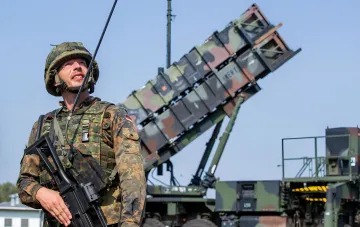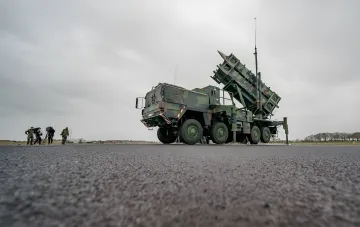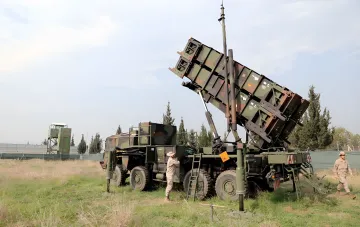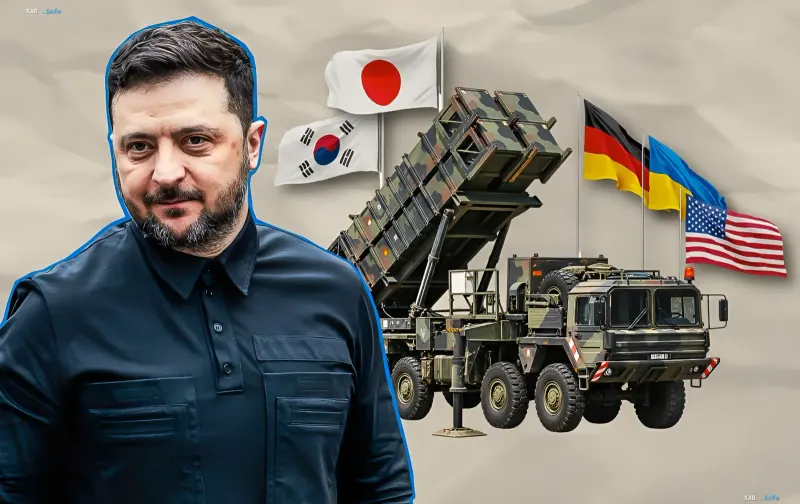
The shortage of missiles for Patriot air defense systems, capable of intercepting ballistic targets, remains a key problem for Ukraine's air defense system throughout 2026. In October, President Volodymyr Zelenskyy confirmed that the majority of available PAC-2 and PAC-3 systems have long been transferred to the Middle East, and Ukraine is not the suppliers' top priority. According to CNN, the country has run out of Patriot missiles once again, and the US, according to the president, supplies only 12 such interceptors per month. Against this background, Kyiv has approached partners with a request for the so-called 'winter package'—100 Patriot missiles monthly, or about 300 for the winter period.
Scale of the Request: From 300 to 360 Missiles for the Winter
The story of the 'winter package' began back in July. On July 13, at a meeting of the 'coalition of the willing,' Zelenskyy voiced the need for 100 Patriot missiles per month, meaning 300 for the winter. On August 23, the president clarified that the Air Force's request stands at 360 missiles, and global production of such interceptors, according to his data, is estimated at approximately 600 units per year. That same August, he reported an agreement with Chancellor Friedrich Merz on the supply of 600 PAC-2 missiles for 2027–2028. Earlier, in February, Germany promised Ukraine a batch of 35 PAC-3 missiles, but in April Zelenskyy warned that due to the tense situation in the Middle East, the transfer of missiles could slow down even if funded by European resources.
The 500 PAC-3 MSE Deal: Strategic Horizon vs. Operational Necessity
On October 30, the US Department of State approved a potential sale to Ukraine of 500 PAC-3 MSE missiles worth $2.1 billion. The deal is funded by European partners under the PURL program—a coordinated scheme through which, according to The Telegraph, Ukraine receives 95% of all Patriot missiles. However, as Politico journalist Paul McLeary noted, the approval is only the beginning of contract negotiations, and most likely, the missiles will not arrive until 2030 at the earliest. Zelenskyy, in turn, stressed that 500 missiles at a rate of 100 per month would be enough to 'close the sky' in the coming months, and proposed a scheme: partners transfer interceptors from their own stockpiles in the winter of 2026–2027, and then replenish them through contracted and paid production. The following day, the president explained that he intends to 'swap queues' with individual partners—taking 10, 20, or 30 missiles from them under guarantees of return from the American package.
What Actually Lies in European Warehouses
There is no complete picture of stockpiles in open sources. According to Bloomberg, German Defense Minister Boris Pistorius convinced several partners, notably the Netherlands, to chip in for about 30 PAC-3 missiles, and Germany added another five from Bundeswehr reserves—totaling around 35 interceptors. Poland confirmed in summer that at the request of the US and NATO it transferred 'several' interceptors, and according to RBC-Ukraine, considered transferring another batch. At the same time, according to Politico, European countries have largely exhausted their capabilities to supply Patriot missiles to Ukraine. The Telegraph names Greece and Spain as the main potential reserves: Athens, according to the publication, has at least 200 PAC-2 missiles, the certified 23-year operational life of which is coming to an end. Madrid announced the transfer of five interceptors, but the volume of Spanish reserves is not disclosed. Despite pressure from NATO and the EU, neither country has agreed to larger batches. EU foreign policy chief Kaja Kallas pointed out during talks in Ireland that some countries have missiles whose expiration dates are approaching.
Production: From 600 to 2,000 Missiles a Year—But Not for Years
In January, Lockheed Martin and the Pentagon announced a framework agreement under which production of PAC-3 MSE is to increase from approximately 600 to over 2,000 missiles per year over seven years. US stockpiles themselves, according to The Telegraph, may amount to less than 1,700 interceptors. Aviation expert and defense enterprise development director Anatoliy Khrapchynsky emphasizes that regarding Patriot missiles, it is necessary to clearly distinguish between political announcements and the physical presence of interceptors in launch canisters. 'The October decision of the US State Department approving the sale of 500 PAC-3 MSE missiles for $2.1 billion funded by European partners is a strategic story with a delivery horizon in 2030–2033,' he notes. Thus, the operational deficit currently faced by Ukraine's air defense and the long-term US production program remain two different time planes, and combining them depends on the willingness of European partners to transfer missiles from their own, partly aging, stockpiles.