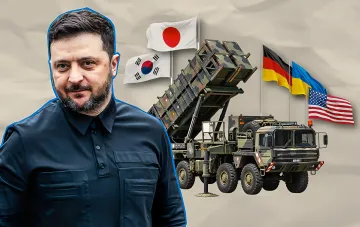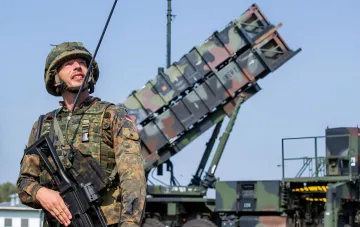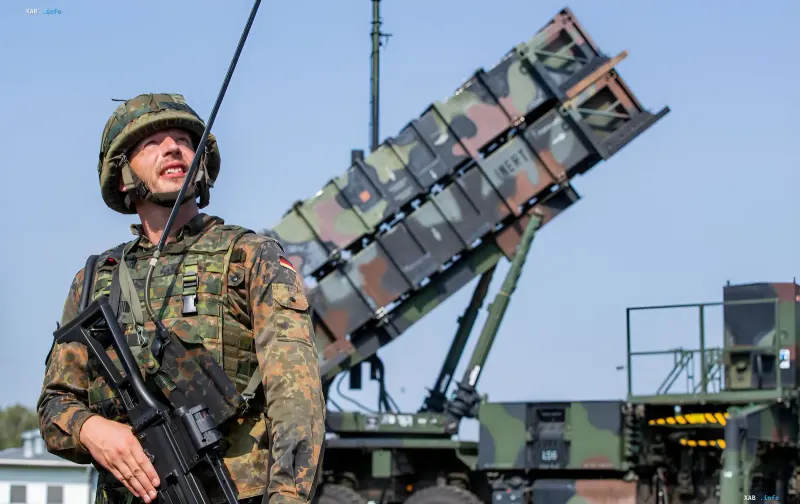
In late October 2026, the US State Department approved the sale of 500 PAC-3 MSE missiles for Patriot air defense systems to Ukraine for a total of $2.1 billion. The financing is being provided by Kyiv's European partners and allies. However, according to aviation expert Anatoliy Khrapchynskyi, the delivery horizon for these interceptors is 2030–2033, making the contract a strategic rather than an operational solution. "A paper contract for 2030 will not intercept this winter's combined ballistic missile barrage," the expert emphasized in a commentary to RBC-Ukraine, stressing the need to clearly separate political announcements from the physical presence of interceptors in launch canisters.
The Production Ceiling of the US Defense Industry
The reason for the gap between the political decision and actual delivery timelines, according to Khrapchynskyi, lies in the fact that the US defense-industrial complex has still not reached the pace required for a high-intensity war. Lockheed Martin is only scaling up its production lines to 650 missiles per year, with the order backlog scheduled 5 to 7 years in advance. Pentagon stockpiles, following heavy expenditures in Ukraine and the Middle East, have dropped to a critical level for the US Army — approximately 800 units, the expert estimates. This means that even with the full utilization of US warehouses, Ukraine will not receive a significant quantity of PAC-3 MSEs this winter season.
European Warehouses as the First Line of Defense
Since Ukraine cannot wait for new production cycles in the US, the first tier of solutions for the current winter, in Khrapchynskyi's view, consists of missiles from existing European stockpiles followed by the replenishment of American arsenals through a circular swap scheme. The expert identifies Germany and Poland as the primary operators with real PAC-3 MSE reserves, and the Netherlands and Sweden to a lesser extent. At the same time, German Defense Minister Boris Pistorius previously stated that Germany can no longer supply additional Patriot systems to Ukraine, confirming the limited availability of resources even among key European powers.
PAC-2 GEM-T: The Compromise Reserve of Spain and Greece
Khrapchynskyi highlights Spain and Greece as a separate potential reserve, where PAC-2 GEM-T missiles are primarily kept on standby. These interceptors are less effective against ballistic targets than PAC-3 MSEs, but transferring them could relieve air defense sectors from cruise missiles and aircraft, preserving scarce MSEs for ballistic interception. Nevertheless, as RBC-Ukraine reported, Greece and Spain have already refused to transfer Patriot missiles to Ukraine, despite the expiration dates nearing for some of them. Thus, this theoretical reserve has not yet transformed into a practical transfer.
Technological Monopoly and Europe's Own Programs
The launch of the European COMLOG plant in Germany, capable of producing 1,000 GEM-T missiles per year, does not solve the problem of intercepting ballistic targets, as Washington retains its technological monopoly and refuses to grant Europe a license to produce PAC-3 MSEs. A parallel direction, according to the expert, must be the investment of European funds into proprietary anti-ballistic programs — primarily the Eurosam consortium and SAMP/T NG systems with Aster 30 Block 1 NT missiles. Deploying additional MBDA lines and shortening the Aster 30 production cycle requires time and engineering efforts, but Khrapchynskyi suggests Europe look to Ukraine's experience: Ukrainian manufacturers are launching serial radar production lines using their own working capital in parallel with testing, which accelerates the cycle from development to combat deployment.
The combination of these factors creates a complex picture: the political will to support Ukraine in air and missile defense has been stated at the level of multi-billion dollar contracts, but the physical availability of modern interceptors remains critically limited in the coming months. The 2026/2027 winter season will likely be a period where air defense effectiveness is determined not by new deliveries, but by the ability to optimize the use of existing European arsenals and redistribute tasks among various types of interceptors.