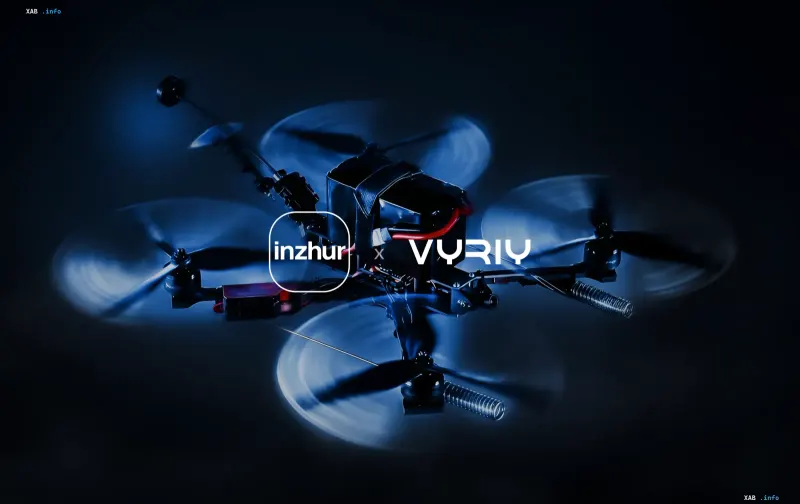
Amid the full-scale war, Ukraine's defense industry has evolved from small technological developments to mass drone production. With scaling comes a growing need for working capital: components must be purchased in advance, while payment for finished products arrives much later. In August 2026, Vyriy Industries, Ukraine's largest private drone manufacturer, teamed up with investment company Inzhur to launch a new financing channel—the Inzhur MilTech fund, which opened investment access to ordinary citizens. By the end of October 2026, more than 34,000 people had joined the project, with the volume of attracted funds reaching nearly 2 billion hryvnias.
Mechanics: From Fund Certificate to Vyriy Bonds
The fund's operational model is structured as follows. Each investor purchases an Inzhur MilTech certificate with a minimum entry threshold of 1,000 hryvnias. The fund pools participants' contributions and uses these funds to purchase corporate bonds of Vyriy Industries. The defense company, whose products are used by more than 200 military units, channels the raised capital into expanding mass production: purchasing components, building up reserves, and financing production cycles. According to Vyriy CEO and owner Oleksandr Babenko, the funds are not planned to be invested in experimental R&D projects or high-risk developments—it is exclusively about scaling already mastered mass production.
Why Through a Fund Rather Than Directly
The key limitation that determined the placement structure was the classification of Vyriy Industries' financial information under an order by the Ministry of Defense of Ukraine. This makes a public bond issuance impossible. At the same time, legislation limits private placement of securities to no more than 150 investors. The Inzhur MilTech model bypasses both restrictions: the fund acts as an underwriter for a private placement, and pooling small contributions from thousands of people into a single investment formally fits within the legal framework.
Capitalization and Yield
Every 35 days, Vyriy pays interest on the bonds to the fund. Instead of distributing dividends, the fund directs these funds to purchase new bonds, creating a capitalization effect: the earned income itself begins to generate additional income, and the value of investors' certificates grows. The projected average annual simple yield of Inzhur MilTech over a three-year period is 25–29% in hryvnias. The maximum figure—up to 29% per annum—is available to those who purchased certificates at the start of the placement in August 2026. The later an investor joins, the lower the projected yield, as part of the capitalization period has already passed. You can track certificate values and accumulated income in the Inzhur mobile application.
Liquidity and Taxation
Unlike a bank deposit, an investment in Inzhur MilTech is not illiquid. An investor can sell certificates at any time by submitting a request in the Inzhur app; the company's stated execution time is up to three business hours at the current certificate price. However, the tax burden depends significantly on the timing of the sale. If certificates are sold before the fund closes, investment income is taxed at a rate of 23% (18% personal income tax and 5% military levy). If the investor waits for the final closure of the fund in July 2029, income is paid out as dividends and taxed at a rate of 14% (9% personal income tax and 5% military levy). Thus, from a taxation perspective, holding the position until the end of the fund's term is 9 percentage points more profitable. New certificates can be purchased until December 31, 2026.
Context: From Grants to Private Capital
Before the launch of Inzhur MilTech, Vyriy Industries was funded by its own funds, bank loans, grants, and state contracts. The launch of the fund in August 2026 marked the company's first-ever raising of mass private capital. For more than 34,000 participants, this is an opportunity to simultaneously support the Defense Forces of Ukraine and receive a return significantly higher than bank deposit rates. For Vyriy, it provides access to long-term working capital without increasing debt burdens to banks. At a time when Ukraine's defense industry is scaling amid ongoing combat operations, the "citizen-fund-manufacturer" model is becoming one of the instruments ensuring the resilience of weapons supply chains.