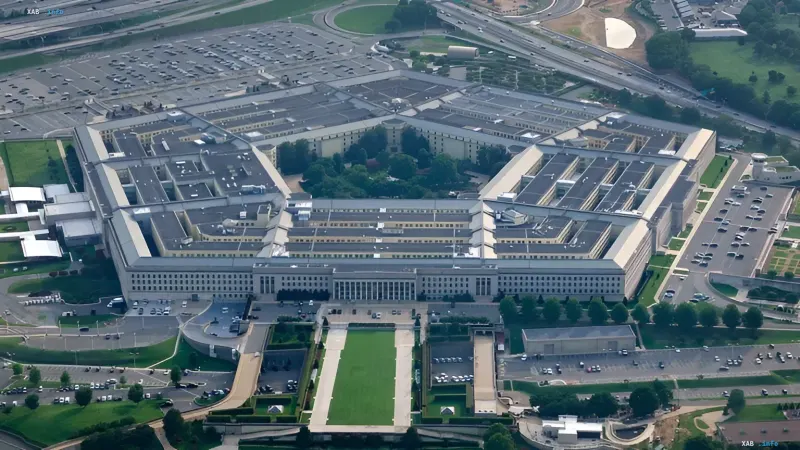
On August 21, 2026, the U.S. Department of Defense terminated the contracts of three key figures at the newspaper Stars and Stripes — editor-in-chief Eric Slavin, publisher Max Lederer, and Middle East correspondent Lara Corte. The official wording, conveyed through the termination-of-employment notices, was "insubordination." According to the employees themselves, the real reason was their public statements in defense of editorial independence, including in an interview with CBS, where they rejected the possibility of censoring material about service members. The firings came against the backdrop of the outlet's consistent criticism over recent months of U.S. tactics in the conflict with Iran and its publication of material on problems within the army.
History and legal status of the publication
Stars and Stripes is one of the oldest military publications in the United States, first published in 1861, in the midst of the Civil War. For more than a century and a half, the newspaper has positioned itself as the "voice of American soldiers," and today, according to the editorial staff, it reaches approximately 1.4 million readers daily in print and online editions abroad. Although the publication is partially funded by the Pentagon, current legislation and the department's internal policy explicitly require the newspaper to maintain editorial independence. It was precisely this principle, the fired employees claim, that became the sticking point: the Department of Defense leadership, they say, sought to remove from the publications what the Pentagon called "demoralizing factors" and to change the rules ensuring the editorial team's autonomy.
The reason for the firings and the position of those fired
Eric Slavin stated that he was fired "for saying in a CBS interview that censorship of news about service members would be unacceptable to him," and emphasized his commitment to the principle that the newspaper must maintain editorial independence "as required by law and department policy." Lara Corte, who gave a similar interview last month, wrote on the social network X that her contract was terminated after she told CBS that she worked at Stars and Stripes, "not at the Pentagon, not for any administration and not for any politicians." Max Lederer, who had worked at the publisher for 19 years and had planned to retire in September, said that his understanding of the newspaper's "values and mission" was "fundamentally" at odds with the Pentagon leadership's plans. In an interview published on July 5, journalists had already criticized the department's attempts to revise the rules governing the publication's independence.
Contradictory accounts
Here the versions on both sides diverge markedly. The Pentagon's official position boils down to a formal charge of "insubordination" — that is, a disciplinary violation not directly tied to the content of the publications. The fired employees, by contrast, insist that the firings are an act of retaliation for their public statements in defense of press independence and for critical material on the course of the campaign against Iran. An additional element of contradiction lies in the assessment of the reasons for the pressure on the editorial team: the Pentagon explains the changes as a desire to remove "demoralizing factors" and restore "fighting spirit," whereas the editorial staff interprets these steps as an attempt to restrict access to information (in particular, the team, according to Slavin, was forbidden to publish news from paid agencies such as the Associated Press, which "made it harder to cover urgent events"). Thus, the same actions are described either as a restoration of discipline or as a violation of the editorial autonomy guaranteed by law.
Prior pressure and lawsuits
The August 21 firings were not the first step in this line. As early as January 2026, Jacqueline Smith, who was responsible for safeguarding the newspaper's editorial independence, was dismissed from the publication; according to her, the reason was an article in which she criticized the restrictions on the press introduced by the Pentagon. She later sued the Department of Defense, claiming that her dismissal was an act of retaliation. Meanwhile, Stars and Stripes was among the first to report on deteriorating living conditions and low morale aboard the aircraft carrier USS Abraham Lincoln, which, according to the outlet, had been stationed near Iran for more than 200 days without once entering port. The newspaper also published material on ammunition shortages and, earlier this month, printed an article by retired U.S. Army Lieutenant Colonel Daniel L. Davis asserting that "America's war against Iran has failed at the strategic level."
Broader context: the Pentagon's and Trump's relations with the media
The events surrounding Stars and Stripes fit into a broader picture of strained relations between the U.S. administration and the press. President Donald Trump has repeatedly accused the media of spreading "fake news" and has filed lawsuits against a number of outlets. Defense Secretary Pete Hegseth, for his part, has stated his intention to "eradicate the woke culture" in the army and restore "fighting spirit." Against this backdrop, the firing of the leadership of an independent military publication, formally subordinate to the Pentagon but protected by law in terms of editorial autonomy, is perceived by observers as a test case of how far the department is willing to go in restricting criticism of its own operations.