The Pentagon has begun preparing a comprehensive review of the U.S. military presence in Europe. According to a Reuters report, the U.S. Department of Defense is developing at least four detailed scenarios for the future deployment format of a contingent numbering around 80,000 service members. The final analytical report is expected to be completed by November 6, 2026. It is important to emphasize: at this point, this is strategic modeling for political leadership, not an already-made decision to withdraw troops.
Four scenarios: from maintaining the status quo to shifting focus to Asia
According to Reuters, the Pentagon's terms of reference consider four main models. The first assumes maintaining the current troop levels and deployment structure on NATO's eastern flank. The second — a partial reduction of heavy ground brigades, replaced by rotational units. The third — the redeployment of part of the forces closer to the eastern borders (Poland, the Baltic states, Romania) at the expense of reducing bases in Western Europe, particularly in Germany and Italy. The fourth, the most sweeping option, provides for reallocating resources to the Indo-Pacific region as part of a strategy to contain China — a line actively promoted by a number of strategists and former defense sector officials, including Deputy Defense Secretary Elbridge Colby.
Allies' reaction and the role of Elbridge Colby
European allies view the review with skepticism. According to the agency, some representatives of NATO countries have privately expressed concerns that a decision to reduce the American contingent has effectively already been made. U.S. Deputy Secretary of Defense for Policy Elbridge Colby is to discuss the prepared scenarios with NATO ambassadors in Brussels. The Pentagon states that Washington intends to move to a more limited support of Europe, expecting allies to play a greater role in ensuring their own security, and separately mentions President Donald Trump's dissatisfaction with the actions of several allies in recent months.
Contradictory data
There are notable discrepancies in the statements of the parties involved. On the one hand, a senior Pentagon official, speaking on condition of anonymity, emphasizes that the department is merely assessing the pros and cons of various options for troop levels and force distribution, and that no final decision has been made. On the other hand, European diplomats claim behind closed doors that the reduction has already been effectively decided. Moreover, the primary materials cite the figure of "around 80 thousand" service members, whereas specialized analytics estimates the contingent in the range of 80–100 thousand. These inconsistencies require careful handling: until the review is completed and the scenarios are discussed at the Pentagon, none of the options constitutes an active decision.
What's next: timelines, questionnaire, and infrastructure
The Pentagon's terms of reference separately account for U.S. rights of access to allies' territory, the placement of military facilities and overflight of NATO countries, as well as the space and cyber domains, intelligence capabilities, and infrastructure for the global employment of forces. Washington intends to assess whether allies can meet their NATO spending commitments and close the force gap identified in the "NATO Force Model." The U.S. previously sent Alliance countries a special questionnaire on defense spending, procurement, strategy, and access restrictions; allies are to provide their answers by Friday. All prepared options are planned to be discussed at the Pentagon by September 18, 2026, with the participation of the commander of U.S. forces in Europe. It is noted that NATO European countries have already offset a significant portion of the military capabilities that the U.S. previously removed from its plans for a conflict in Europe.
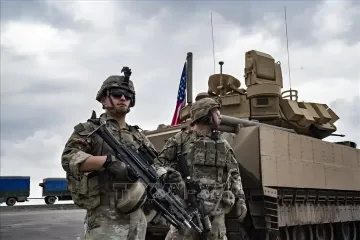
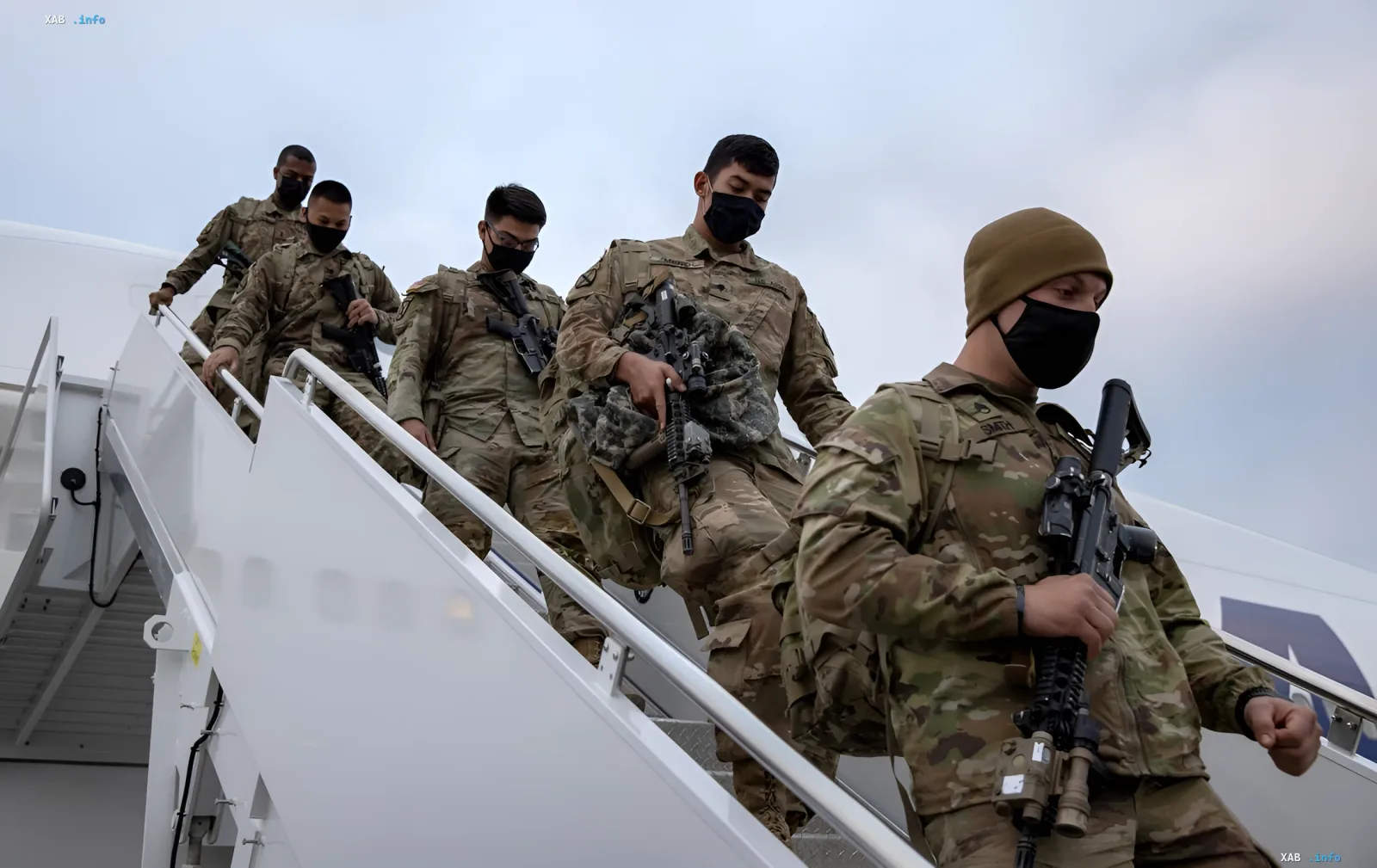
U.S. Army service members in Europe / Illustrative photo