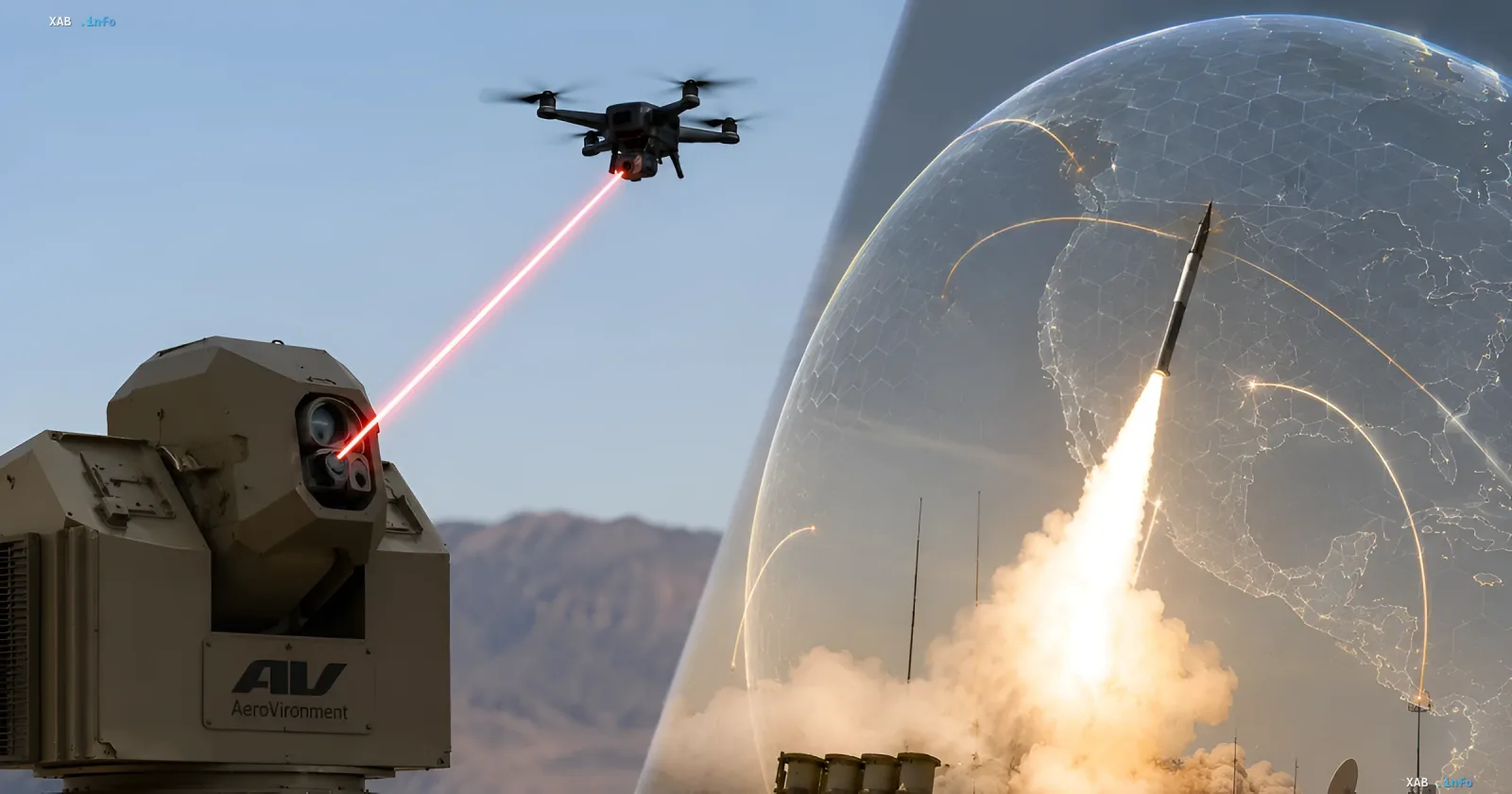
August 9, 2026, marked a pivotal day for the U.S. defense industry. According to Bloomberg, citing informed sources, the U.S. Department of Defense signed its first major production contract with technology company AeroVironment to procure anti-drone laser systems named Locust. The deal is valued at $400 million. This event signifies a transition from the prototyping phase to the actual mass deployment of directed energy systems within the country's armed forces.
Transition to Energy Weapons: The Locust Contract
The contract with AeroVironment, known for its developments in drones and robotics, is historic. It is the first time a laser-based anti-drone system has moved beyond experimental models. The Pentagon plans to purchase dozens of such complexes, indicating a fundamental shift in the doctrine of defense against small-scale aerial threats. In the context of modern warfare, where drones have become the primary tool of attack, traditional air defense systems are often economically inefficient or overwhelmed. The Locust laser systems offer a solution that allows for the near-instantaneous destruction of targets with minimal cost per shot.
The Shadow of the El Paso Incident: Deployment Challenges
Despite optimism regarding new technologies, the path to their implementation has not been smooth. In January 2026, U.S. Secretary of Defense Pete Hegseth approved the transfer of the Locust system to the U.S. Customs and Border Protection agency for deployment in the Fort Bliss area near El Paso, Texas. However, by February 2026, The Wall Street Journal reported a serious "friendly fire" incident. Border guards, using the laser system, mistakenly shot down several balloons, mistaking them for drug-smuggling drones. The incident led to the closure of airspace over El Paso and a vast area of New Mexico, sparking criticism and raising questions about the reliability of target recognition algorithms.
The 'Golden Dome' Strategy: From Testing to Space
Parallel to the development of tactical laser systems, the U.S. is actively advancing the ambitious "Golden Dome" missile defense program. In June 2026, Secretary of Defense Pete Hegseth announced a successful test of an anti-aircraft missile complex, marking a significant step in creating a global shield. According to the latest data from Bloomberg, the military expects to complete the initial stages of system testing this year, with demonstration flights scheduled for 2027. Key program milestones include one ground test, two space test flights, and a demonstration of interceptor technology in 2029. Additionally, the government has allocated $60 million for the production of medium-range interceptor missiles to complete ground testing by the end of 2026.
Contradictory Data
Issues surrounding the "Golden Dome" program are sparking sharp debates on the international stage. On one hand, the U.S. positions the system as a necessary element of national security and the protection of allies. On the other hand, Russia has repeatedly emphasized that "Golden Dome" undermines strategic stability. In January 2026, Dmitry Medvedev, Deputy Chairman of the Russian Security Council, stated that the presence of this system is provocative. Russian Defense Minister Andrey Belousov noted that the American system includes the capability to intercept and destroy Russian and Chinese missiles even before launch, effectively depriving the adversary of nuclear deterrence. These statements create a tense atmosphere and force the international community to consider the consequences of an arms race in space.
Conclusions and Prospects
The signing of the $400 million contract with AeroVironment and progress in the "Golden Dome" program indicate that the U.S. is betting on high-tech solutions in the field of defense. Laser systems and space interceptors are becoming new security standards. However, as the El Paso incident showed, the implementation of such technologies involves risks and requires careful algorithm tuning. At the same time, the geopolitical tension caused by the development of "Golden Dome" could lead to conflict escalation and new challenges for international security.