Washington is facing the need for an urgent large-scale replenishment of its arsenals. The Pentagon has submitted a request to Congress for emergency funding totaling $67 billion. The bulk of these funds — $18.2 billion — is intended for the procurement and replacement of high-tech missile systems, the stockpiles of which have been critically depleted during recent military operations.
Documents provided to lawmakers and published by Bloomberg indicate serious concern among military authorities regarding the state of weapon reserves. This situation has arisen against the backdrop of active combat operations by US armed forces against Iran and the interception of Tehran's drone and missile attacks on US bases in the region.
Expense breakdown: from "Patriots" to secret systems
The funding request covers a wide range of armaments necessary to restore defense capabilities. Specifically, funds are allocated for:
- $100 million for the procurement of a secret air-defense weapon from Lockheed Martin Corp. called the "Joint Advanced Tactical Missile" (JATM), which is not yet operational.
- $3.28 billion for three versions of the Navy's Standard Missile family of interceptors, developed by RTX Corp.
- $5.75 billion for THAAD interception systems from Lockheed.
- $5.57 billion for additional models of the Patriot Missile Segment Enhancement (MSE) — the most modern version of the air defense system.
- $1.9 billion for Standard Missile-6 (SM-6) missiles for the Navy and Army.
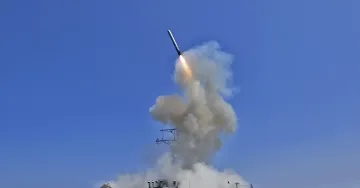
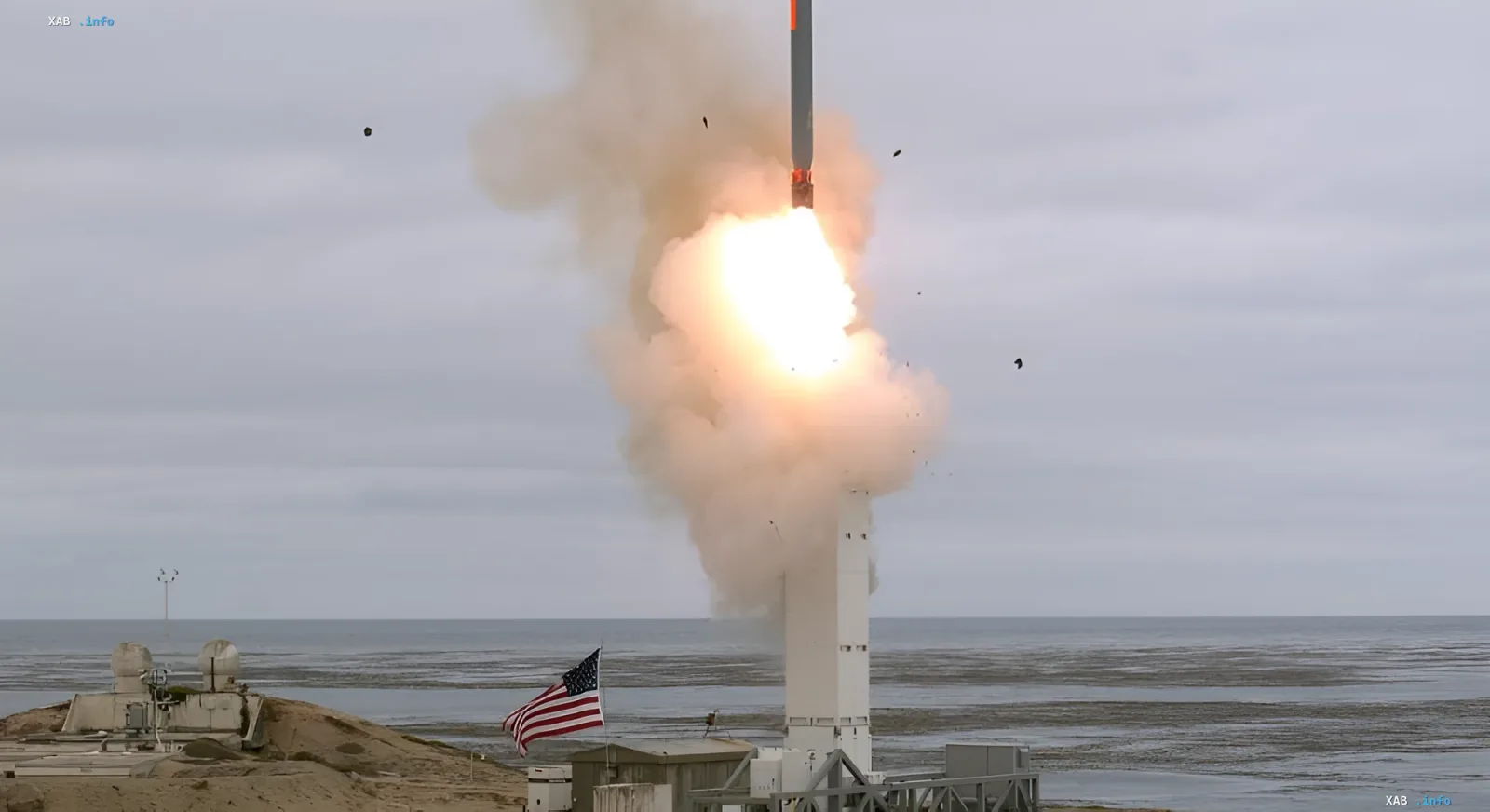
The list of expenses also includes $1.3 billion for Tomahawk cruise missiles for the Navy and Army, $1 billion for SM-3 Block IIA interceptors, and $992 million for AMRAAM missiles. Special attention is paid to Lockheed's Precision Strike Missiles, which were used in combat conditions against Iran for the first time.
The Defense Secretary and the President on production
In written remarks sent to the Senate Appropriations Committee, Defense Secretary Pete Hegseth emphasized that the request includes $21 billion to accelerate the procurement of high-tech missiles and new, cheaper munitions. This refers to long-range GPS-guided JDAM missiles and ground-based "cheap containerized munitions," although these items account for only about $3 billion.
US President Donald Trump, at a Cabinet meeting, assured that defense contractors are already producing munitions in volumes never seen before. "We have the best equipment in the world, but we want it to work faster," he added.
Analysis: reality versus requests
Experts note that the expenditure data helps to better understand exactly how much weaponry was consumed during the operation against Iran. From the start of the conflict on February 28 until the ceasefire in April, 13,629 munitions were fired at Iranian targets.
However, analysts warn against directly equating the requested amounts with actual losses. Chris Park of the Center for Strategic and International Studies noted that requests for systems such as PAC-3 MSE and THAAD are very close to actual consumption figures. At the same time, according to Virginia Berger of the Defense Information Center, requests for "Tomahawks" and SM-6s may not cover the probable total number of missiles fired.
"I would not view these figures as a direct indicator of what was fired during Operation 'Epic Fury,' but rather as an attempt by the Pentagon to simply get everything possible from Congress at this time," Berger commented.
In addition, the regular $1.5 trillion budget already allocates $11.4 billion for 484 THAAD systems and $14 billion for 3,203 Patriot MSS missiles. Funding of $333 million is also provided for the development of the "Blackbeard" small hypersonic missile from the startup Castelion.