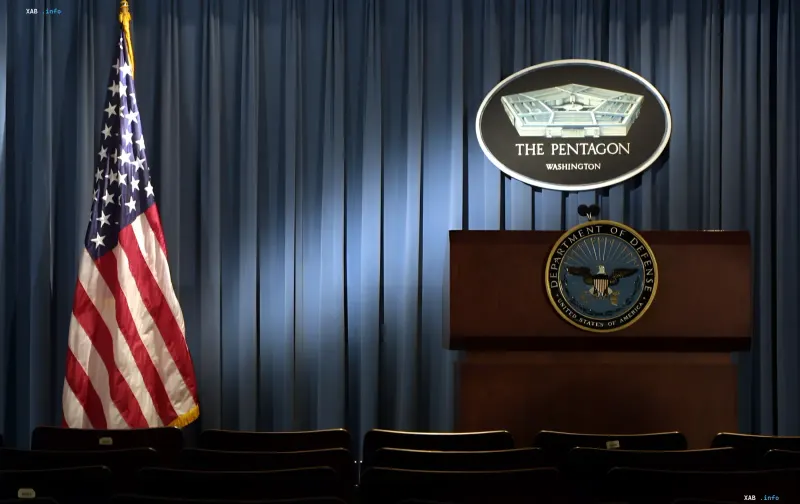
A significant event has occurred within the US Department of Defense that could substantially alter the landscape of information transparency in national security. The Pentagon has decided to restrict access to a vast dataset that has been available to the general public for decades.
On July 30, Amy Henniger, Director of the Pentagon's Office of Weaponry Testing, signed an order limiting access to a 25-year archive of unclassified annual reports. These documents, previously distributed freely, are now accessible only to personnel holding a special military pass issued following a thorough FBI background check.
AI as the reason for secrecy
The official explanation from Washington sounds like a warning from the future. The department stated that this is a measure to strengthen operational security. Officials believe that modern artificial intelligence capabilities allow foreign adversaries to gather scattered, seemingly safe data and compile it into a detailed profile of vulnerabilities in US defense capabilities.
The issue concerns annual reports on the status assessment of major weapons programs. Until recently, they were the primary source of information on the status of large-scale projects, including the famous F-35 fighter program, with a budget estimated at $1.6 trillion. Along with individual assessments by the Government Accountability Office (GAO), these documents allowed the public and experts to track the efficiency of defense spending.
Dispute over legality
The Pentagon's decision has sparked a sharp reaction within the expert community. Greg Williams, Director of Defense Policy at the Project on Government Oversight, pointed out a clear contradiction with current legislation.
According to Williams, the 1983 law that created the testing office clearly stipulated that reports must be unclassified and require no distribution restrictions. Furthermore, the 2011 law requires publishing every unclassified report submitted to Congress online.
"This wording is extremely unambiguous. I don't see how it can be bypassed without involving Congress," Williams stated, emphasizing that the department may be violating the letter of the law under the pretext of protecting against technologies that are still developing.
Context of restrictions
This is not the first time the Pentagon has changed the rules regarding transparency. Earlier this year, other defense officials blocked the public release of the mandatory annual GAO report on the F-35 for the first time in over 20 years, designating the document as "controlled unclassified information."
The Pentagon is attempting to mitigate criticism by insisting that access to the reports has not been "restricted" for defense partners, but rather moved to a secure site to guarantee access exclusively to authorized personnel.
The decision to close the archives is being made against the backdrop of other significant events within the department. Previously, the Pentagon made a final decision to reorganize the Ukraine Security Assistance Group, tasking its European Command with implementing the corresponding changes. The department also admitted to falling behind Ukraine in the drone sector and made unflattering statements regarding Patriot licenses for the Ukrainian Armed Forces. In such an environment, the question of which data to hide and which to publish becomes part of a broader US information security strategy.