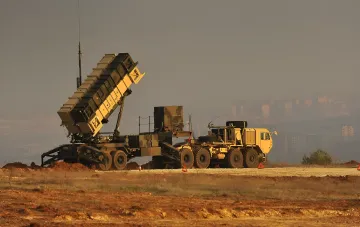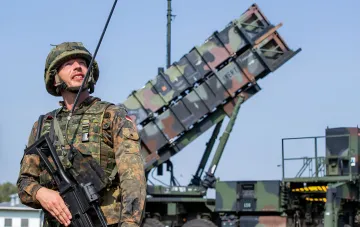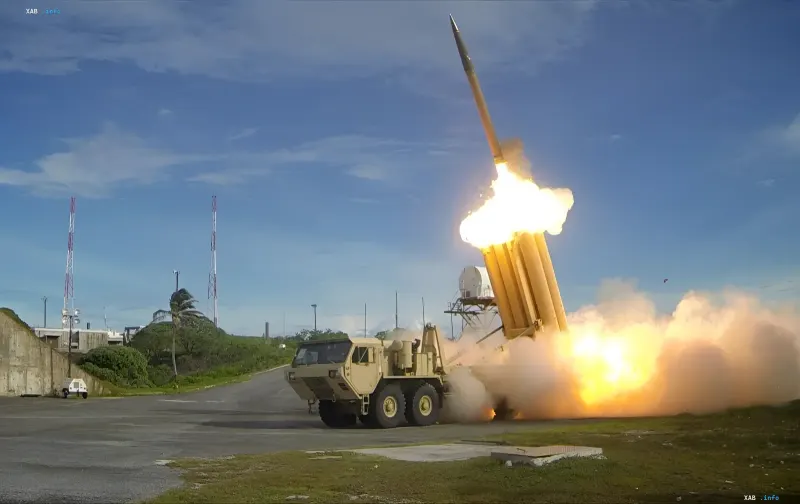
The Pentagon has officially announced the signing of two key framework agreements with General Dynamics and Lockheed Martin, launching seven-year multi-year procurement contracts aimed at increasing production volumes and accelerating delivery schedules for critical missile components of air and missile defense systems. These are the THAAD (Terminal High Altitude Area Defense) interceptor missiles and the PAC-3 MSE (Missile Effectiveness Enhancement), which form the backbone of the Patriot air defense systems. This was reported by RBC-Ukraine on September 1, 2026, citing an official statement from the U.S. Department of Defense.
Seven Years of Large-Scale Production: What the Agreements Provide
The signed documents establish a multi-year contracting mechanism that allows manufacturers to plan in advance for the expansion of production capacity, procurement of raw materials, and modernization of assembly lines. Undersecretary of War for Acquisition and Sustainment Michael P. Duffy stated: "Today's announcement is an example of the evolution of how we partner with industry to expand the Arsenal of Freedom and stay ahead of emerging threats." According to him, General Dynamics and Lockheed Martin responded to the Pentagon's call, as a result of which officials and air defense missile manufacturers are streamlining bureaucratic procedures, shortening production timelines, and rapidly scaling internal production capacity to ensure advanced air and missile defense capabilities.
Context: Pressure from Russian Ballistic Threats and Shortages in Ukraine
The decision to ramp up production is being made against the backdrop of escalating ballistic threats. The Russian armed forces continue to strike Ukrainian cities, including Kyiv, using an updated ballistic missile under the provisional designation "Iskander-1000." Thanks to an enlarged engine and an extended launch platform, this modification is capable of hitting targets at a significantly greater range, increasing the load on interception systems. Air Force spokesperson Yuriy Ignat previously publicly stated that there is a shortage of air defense missiles not only for Patriot systems but also for ground and aviation platforms, underscoring the urgency of the need to expand production capacity on the part of the United States and its allies.
What This Means for Air Defense Architecture
The seven-year planning horizon gives General Dynamics and Lockheed Martin the opportunity to invest in line automation, diversification of component supply chains, and workforce development. For Ukraine and other recipient countries of Patriot and THAAD systems, this means that in the medium term, delivery volumes of PAC-3 MSE interceptor missiles and THAAD components should grow several-fold compared to current rates. Experts note that it is precisely multi-year framework agreements, rather than one-off purchases, that allow the industry to shift from reactive to proactive production modeling, which is critically important in conditions of simultaneous demand from multiple theaters of military operations.
Contradictory Data
Headlines in a number of Ukrainian media outlets (in particular, TSN) state that the Pentagon's statement "named shocking scales" of production expansion, implying specific quantitative figures. However, in the text of the original RBC-Ukraine report and in Michael Duffy's quote, exact figures for the multiple increase in production (for example, "three times" or "five times") are not provided — the wording is limited to general expressions such as "increasing volumes" and "scaling capacity." Thus, there is a gap between the headline presentation and the substantive content of the source: specific production multipliers are not recorded in the materials available at the time of publication, and their exact value remains subject to further clarification by the Pentagon.