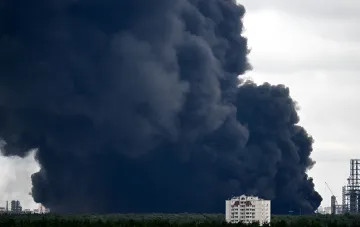

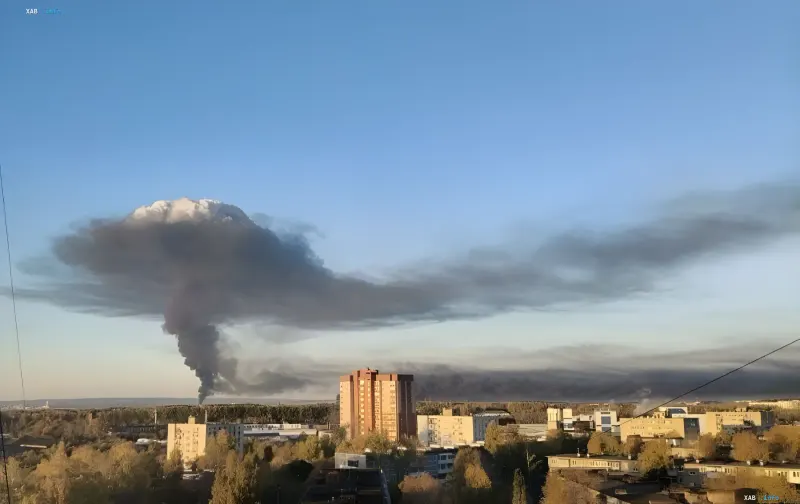
The Perm Oil Refinery, one of Russia's largest petroleum enterprises ranking seventh in crude processing volume nationwide, has been forced to completely suspend its production activities. The incident resulted from a successful attack by a Ukrainian unmanned aerial vehicle recorded on the night of September 25, 2026. According to reports from the reputable international agency Reuters, the strike caused severe destruction on the industrial site's premises.
Scale of Destruction and Consequences for the Enterprise
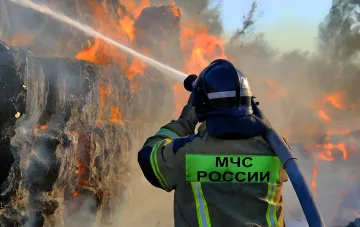
As a result of the UAV strike, a large-scale fire broke out at the refinery. Industry sources confirm that key technological units, trunk pipelines, and tank storage facilities were damaged. Given the critical nature of the destruction, the Lukoil-Permnefteorgsintez enterprise has lost a significant portion of its operational capacity, making it impossible to continue stable oil refining under current conditions. Satellites and emergency services are recording the aftermath of the fire and severe damage to the infrastructure.
Authorities' Reaction and Previous Incidents
Perm Krai Governor Dmitry Makhonin confirmed the attack on a local industrial facility in his Telegram channel, though he refrained from explicitly naming the enterprise. It is worth noting that this refinery has been targeted previously. A major attack occurred on August 21, after which the plant also suspended operations on August 24 due to severe damage to technological units. The current incident demonstrates the systemic nature and increasing effectiveness of strikes against strategic facilities of Russia's fuel and energy sector.
Contradictory Data
While the international agency Reuters and Ukrainian sources, including RBC-Ukraine, explicitly state that the Perm Oil Refinery was successfully hit on the night of September 25, 2026, and its operations were subsequently halted, regional authorities represented by Governor Dmitry Makhonin only confirm the fact of an attack on an industrial facility without detailing the scale of destruction or production shutdown. Such discrepancies in rhetoric traditionally accompany major technological incidents at strategic Russian facilities, where official structures seek to minimize public assessment of damages.