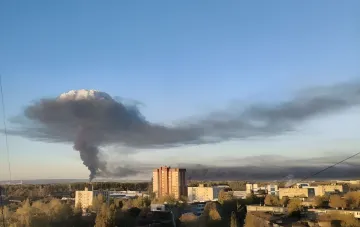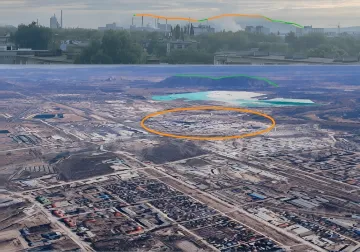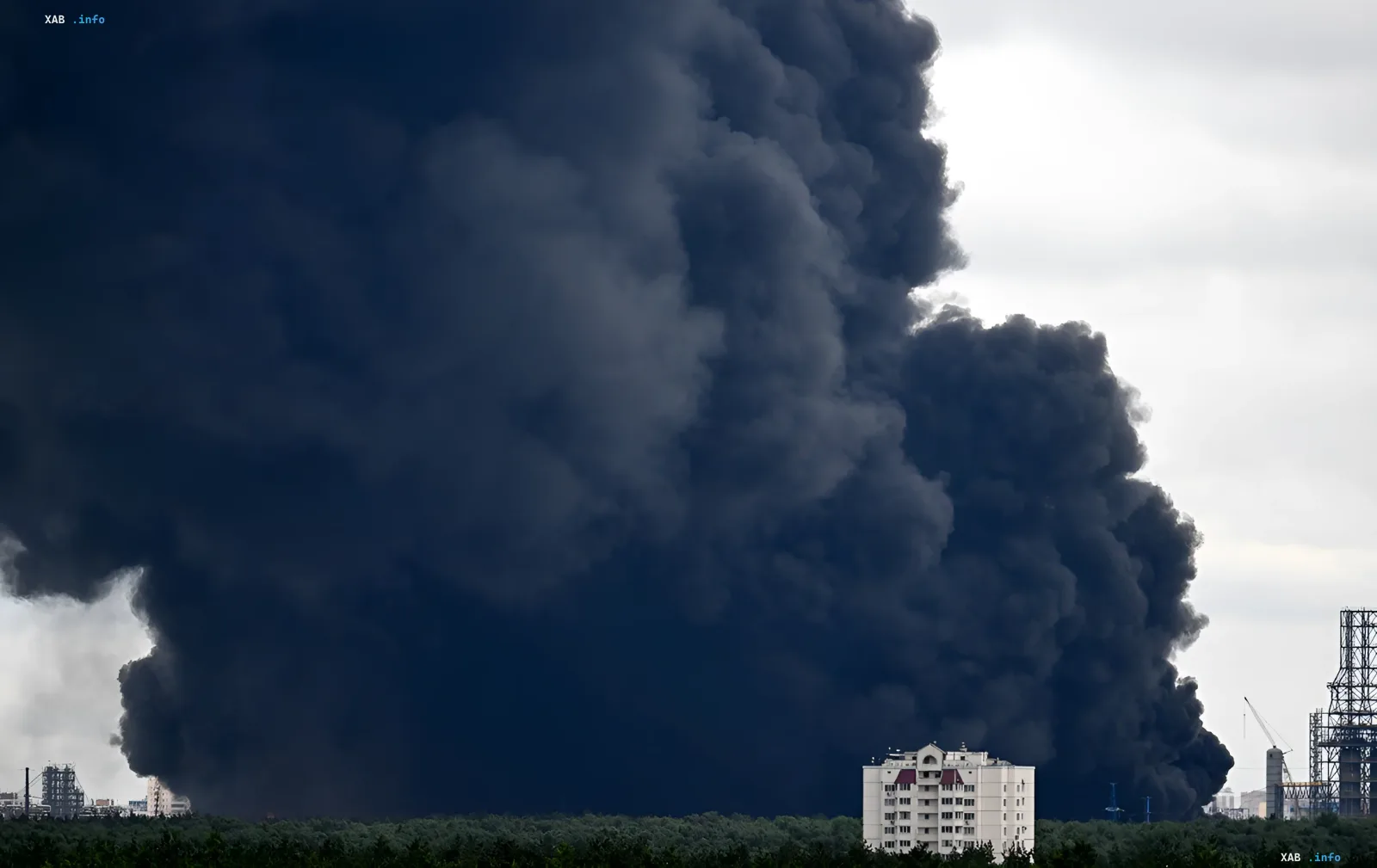
On the night of August 26, 2026, the Ukrainian Defense Forces struck one of Russia's largest oil refineries — LLC "Lukoil-Nizhnevogodsknefteorgsintez" in Kstovo, Nizhny Novgorod Oblast. According to RBC-Ukraine, citing the General Staff of the Ukrainian Armed Forces, a statement from the Unmanned Systems Forces, and a statement by President Volodymyr Zelenskyy, the attack triggered a large-scale fire on the plant's territory, and a huge column of thick black smoke rose over the industrial zone, visible from many kilometers away.
Confirmation of the Strikes and the Scale of Damage
The General Staff of the Ukrainian Armed Forces confirmed that the plant was hit and reported that a fire broke out on its territory; the extent of the damage, according to the department, was still being assessed at the time of publication. Thus, official Ukrainian sources record both the fact of the strike and its immediate consequence — a fire at the production site — while final figures on equipment damage and losses in production capacity had not been disclosed at the time of writing.
How the Strike Was Delivered
The Unmanned Systems Forces noted that the Russian plant was hit by operators of the 1st Operational Center together with other components of the weapons systems; the distance to the target from the Ukrainian state border was approximately 800 kilometers. In addition, according to Fire Point, at night Ukrainian FP-1 drones simultaneously struck not only the refinery in Nizhny Novgorod Oblast but also the largest warehouse of the Wildberries network in Tambov Oblast, indicating a coordinated multi-target operation deep in the enemy's rear.
What Is "Lukoil-Nizhnevogodsknefteorgsintez"
The struck facility is part of the Lukoil group and is one of the largest oil refineries in the aggressor country, with a processing capacity of about 17 million tons of crude oil per year. The plant produces automotive gasoline, diesel and aviation fuel, fuel oil, bitumen, sulfur, and other petroleum products, and, according to Ukrainian military assessments, is used to meet the needs of the Russian occupiers, making it a key element of fuel logistics and the war economy.
Context: 16 Targets in 24 Hours
President Zelenskyy emphasized that in just 24 hours Ukraine applied so-called "long-range sanctions" against 16 targets on Russian territory. In the head of state's statement, he spoke of "long-range responses" against oil facilities — the "Russian oil wallet funding the war" — as well as against airfields, a missile unit, infrastructure used for strikes on Ukraine, a military enterprise, and Russian logistics. Zelenskyy stated that "the war must be returned to where it came from" and that Ukraine responds to enemy strikes in such a way that "the price of war for the aggressor inevitably rises."