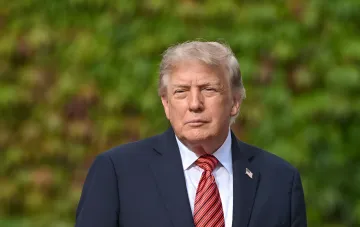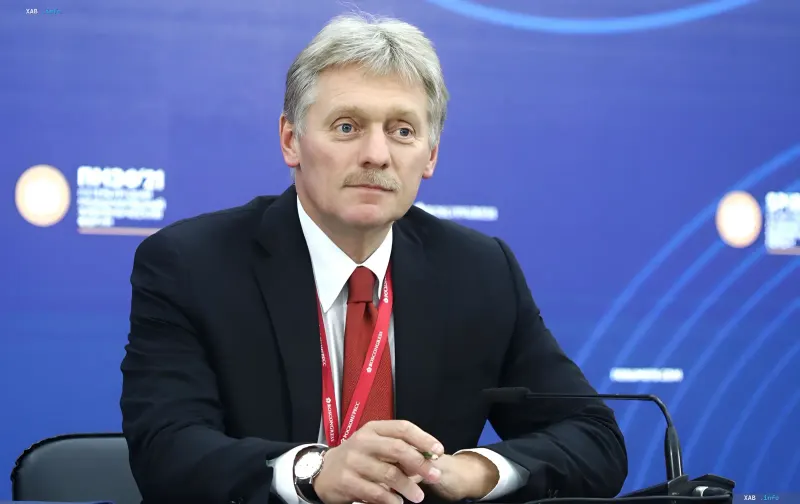
Russian presidential spokesman Dmitry Peskov has publicly agreed with Donald Trump’s assessment that Vladimir Putin is capable of “acting harder” regarding Ukraine. According to RBC-Ukraine, Peskov stated this in response to reporters' questions, and his comments were disseminated by RIA Novosti and other Russian media outlets. The statement came against the backdrop of ongoing discussions surrounding the negotiation track and Washington’s rhetoric regarding a settlement in Ukraine.
“One can agree with President Trump”
Answering a direct question about the American leader's words, Peskov noted: “One can agree with President Trump, because there is room for harsher action.” Thus, the official Kremlin representative not only failed to refute the thesis about the possibility of tougher actions but actually confirmed it, indicating that Moscow has additional leverage. The phrasing serves as a public diplomatic declaration, aimed simultaneously at a domestic audience and negotiation partners.
Trilateral meeting on the sidelines of APEC
In the same commentary, Peskov announced that the key topics for the trilateral meeting between the leaders of Russia, the USA, and China, scheduled for the APEC summit, have already been agreed upon. According to him, the meeting will take place “in the coming days,” and part of the negotiations will be open to the media. This indicates that the trilateral format is viewed as a functional tool rather than a one-time ceremony, and that the parties are pre-arranging the agenda and media access rules.
Context: rhetoric and negotiation signals
The Kremlin’s support for Trump’s words introduces the theme of “harshness” into the public sphere as a parameter that both sides are prepared to discuss openly. For analysts, this means that rhetoric about possible increased pressure should be viewed as an element of negotiation positioning: it simultaneously demonstrates readiness for escalation while leaving room for de-escalation if conditions are deemed acceptable. Linking this statement to the announcement of a trilateral meeting at APEC reinforces the impression that verbal signals and institutional coordination formats are being used in parallel.
How it is presented in Russian media
In the Russian media landscape, Peskov’s statement was picked up by RIA Novosti and several other outlets, signaling its official status and that it passed through the Kremlin's coordinated communication channel. For international observers, it is important that the wording does not contain new factual details about specific measures but merely establishes the principle—the existence of the possibility to act more harshly. This allows the Kremlin to maintain flexibility: the thesis is confirmed, but its practical implementation and timing remain unannounced.
The outcome of Peskov’s comment is a dual signal: on one hand, public agreement with Trump’s assessment regarding the potential for tougher actions in Ukraine, and on the other, confirmation of preparations for a trilateral contact between Russia, the USA, and China on the sidelines of APEC with partial media access. Both elements together form a picture where verbal escalation and institutional dialogue proceed simultaneously, while the final parameters of potential “harshness” and the meeting agenda remain subject to further observation.