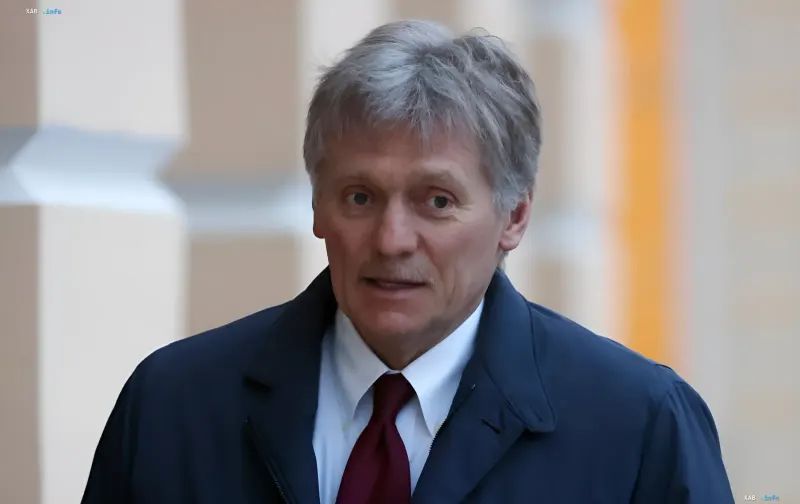
Russian President's press secretary Dmitry Peskov stated that Russian military forces are "carrying out their tasks across the entire territory of Ukraine" and intend to continue striking. According to reports, RBC-Ukraine cites TASS. The statement came against the backdrop of the high-profile incident involving a passenger train hit near the Ukrainian-Polish border, which triggered a sharp reaction from Warsaw and Brussels.
Peskov's comment on the incident at the border
According to Peskov, his statement was a response to a message from the Polish railway operator about a drone strike on a locomotive near the Polish-Ukrainian border. "If I understand correctly, this is Ukrainian territory. Our military is carrying out its tasks across the entire territory of Ukraine," TASS quoted the spokesman as saying. He added that Russian forces would continue shelling and "carrying out tasks" across the entire Ukrainian territory. At the same time, as noted in the report, Peskov ignored the direct accusations against Russia from Ukraine and the European Union related to this incident.
Incident at Yagodyn station
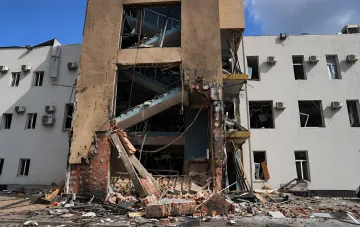
Recall that on September 13, Russian military forces struck a gas station and a passenger train at Yagodyn station in Volyn Oblast, located near the Ukrainian-Polish border. One of the Russian drones hit the locomotive of a train traveling from Kyiv to Warsaw. Among the passengers, according to available data, were, in particular, security advisers from several EU countries, as well as former UK Prime Minister Boris Johnson.
Poland's reaction and warnings to residents
Against the backdrop of Russian attacks on Ukraine, Polish military forces detected aircraft activity. Warnings about the danger were issued to residents of the Lublin and Subcarpathian voivodeships. The incident triggered a sharp reaction from Warsaw: Polish Prime Minister Donald Tusk convened an emergency meeting and stated the possibility of a near-term Russian invasion of the country's territory.
Contradictory data
Available sources contain discrepancies in the interpretation of events. On the one hand, Peskov limited himself to a general formulation about "carrying out tasks across the entire territory of Ukraine" and in fact did not comment on the specific details of the strike on a civilian passenger train with foreign passengers. On the other hand, the Polish side and statements by Ukrainian and European officials point to an incident that directly affected a train at the border, linking it to a threat to Polish territory. Thus, the Russian side's version reduces to an abstract "carrying out of tasks," while the Polish and Ukrainian sides emphasize the specific hitting of the train and the risk of escalation. Independent verification of the full composition of the train and the exact circumstances of the hit on the locomotive has not been confirmed by additional primary sources at the time of publication.
The situation remains tense: the Russian spokesman's statements about continuing strikes across the entire territory of Ukraine coincided with emergency measures by Polish authorities and warnings to residents of the border voivodeships. Further developments will depend on the official positions of Kyiv, Warsaw, and Brussels, as well as on whether new incidents are recorded near the border.