The MasterZoo pet store chain, part of Suziria Group, in cooperation with the Barrier-Free public organization, has released the second part of the 'Pet-Friendly Transport' guide. While the first part was addressed to businesses and carriers, the new version is designed for pet parents—those traveling with cats and dogs. The authors explain how to transport a pet using various modes of transport, what safety rules to remember, and what documents to prepare for traveling abroad. A separate section of the guide is dedicated to trips with companion animals (service dogs).
First Aid Kit: Assembled in Advance and with a Veterinarian
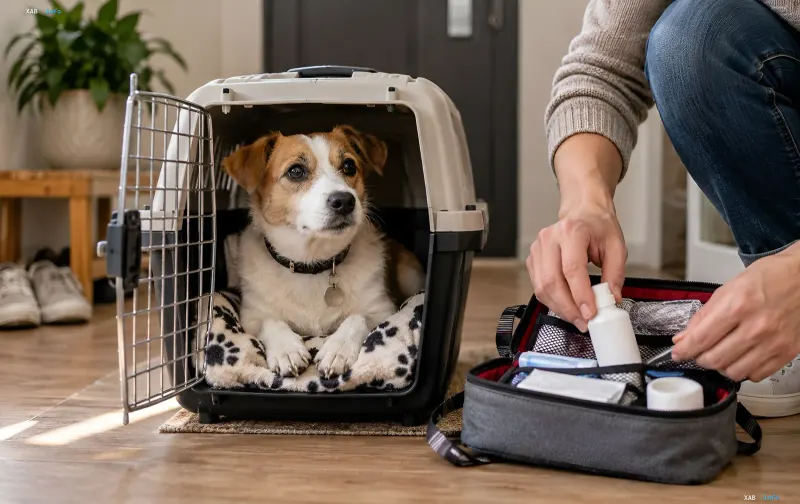
The practical part of the guide answers the question of how to prepare a pet for the road. The authors emphasize that the usual principle of 'taking food and a leash' is not enough, because travel stress manifests not only in behavior—the animal can get motion sickness or experience digestive issues. Therefore, it is recommended to assemble a first aid kit in advance and together with the attending veterinarian so as not to search for necessities along the way. The basic set includes an antiseptic for treating wounds, an anti-inflammatory ointment, and a self-adhesive bandage, as well as regular medications that the pet takes by prescription. For those who do not want to pick everything out on their own, MasterZoo offers a ready-made first aid kit bag for dogs and cats, stocked according to veterinarians' recommendations; you just need to supplement it with the medications your specific pet needs.
Documents and Gear: What to Check Before Leaving
The key document is the veterinary passport with records of vaccinations and parasite treatments; traveling abroad additionally requires an international veterinary certificate. Gear and auto accessories mentioned by the authors include an ID tag with a phone number, as well as a pet carrier or car hammock with a seat belt. These should be chosen in advance, taking into account the animal's weight and size—MasterZoo pet stores help with this. The food and water section includes the usual food with a supply for two to three days, bottled water or a travel waterer, a collapsible bowl, and treats. Hygiene items include waste pickup bags, disposable pads, and wet wipes; it is better to keep bags and wipes handy in a pocket or bag rather than in the trunk. Familiar items (a bed or blanket, favorite toys, a towel) and seasonal items—a cooling mat, paw wax, a raincoat, or a cape—are also brought along.
Transportation Rules and Traveling Abroad
Many of the guide's recommendations concern the conditions of animal transport. For example, a cat on long-distance trains is paid for as luggage—at a tariff calculated for 20 kg, while on commuter trains it is transported for free. Service dogs travel for free on trains of any category, and the carrier has no right to demand a carrier or an extra fee for them. The longest preparation is required for a trip to the EU—at least four months: a blood test for rabies antibodies can be taken no earlier than a month after vaccination, and after that, another three months of waiting is required. There is no single document in Ukraine that collects all animal transport rules: basic requirements are set by Cabinet of Ministers Resolution No. 1402 of November 16, 2011, updated by Resolution No. 806 in 2025. For the metro and electric transport, each city sets its own rules, and the travel conditions, payment, and carrier dimensions are determined by the specific carrier. The guide gathers these requirements in one place and categorizes them by animal type, weight, and transport mode.
How to Ensure the Carrier Doesn't Become a Source of Stress
To prevent the carrier itself from becoming a source of stress for the pet, the authors advise introducing it in advance: a few days before the trip, leave it open at home, put treats and a familiar bedding inside, gradually get the pet used to the closed door, and then take a few short trial trips. 'Pet-Friendly Transport' is not the final point of the project: Suziria Group, MasterZoo, and the Barrier-Free NGO will continue to look for solutions that will help businesses become more open to animals and pet parents feel more confident in public spaces.