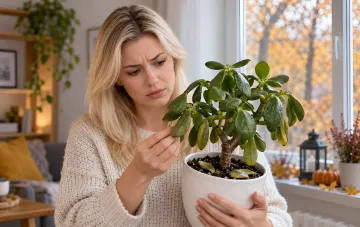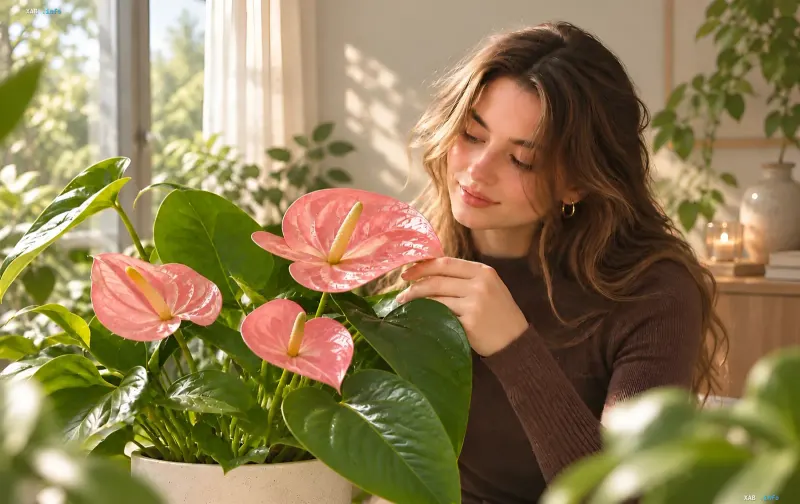
With the onset of the heating season, which traditionally begins in October, many houseplant owners notice their green companions losing their vitality. The Anthurium is one of those plants that reacts particularly sharply to changes in indoor microclimate: leaf tips dry out, edges develop brown spots, and flower spathes wilt prematurely. The issue is often attributed to dry air from radiators, but as experts from the Royal Horticultural Society (RHS) note, the cause can also lie in improper watering, substrate dehydration, or root system issues. Anthuriums originate from tropical regions and are evolutionarily adapted to high humidity, making the sudden transition to dry winter air a major stressor.
Why Anthuriums struggle with dry air
When radiators and heaters are turned on, relative humidity can drop below 30–40%, which is unacceptable for a tropical plant. According to the gardening company Promesse de Fleurs, the optimal maintenance temperature for Anthuriums is 18–25 °C. During colder months, the plant requires adequate light while being protected from cold drafts and direct heat from radiators. Experts emphasize: do not move the flower to a dark corner "to save it from the heat" — due to lack of light, the Anthurium may stop blooming entirely. Thus, the owner's task is to balance protection from dry, hot air with sufficient illumination.
How to increase humidity without overwatering
As recommended by Iowa State University, one of the most effective ways to increase indoor humidity is using a humidifier. Alternative options that require no additional costs include clustering several houseplants together or placing the pot on a tray with moist pebbles. It is critical that the pot's bottom remains above the water line, otherwise, the roots will suffer from waterlogging. A hygrometer will help monitor indoor humidity. Meanwhile, the U.S. Environmental Protection Agency (EPA) recommends keeping indoor humidity below 60% to reduce mold risk. Common flowering Anthuriums can adapt to moderate room humidity, while some ornamental foliage species require a more humid environment.
Watering during heating season: Less, but mindful
Experts from the New York Botanical Garden explain that during the cold period, the Anthurium needs less intensive watering than during its active summer growth. Before hydrating the substrate, it is recommended to check its condition with your finger: the top layer should dry out slightly, but prolonged complete desiccation of the soil must not be allowed. There is no strict watering schedule — in a warm room, the substrate may dry out faster even in winter, so you should rely on the actual state of the soil rather than a calendar. Experts also warn: misting the leaves does not provide a lasting increase in humidity; its effect is short-lived and does not replace a humidifier. Moreover, Ask Extension experts recommend completely avoiding misting if the plant already shows suspicious damage, as wet leaf surfaces create favorable conditions for fungal and bacterial infections.
Handling damaged leaves and faded inflorescences
It is not always possible to determine the cause of the problem by the appearance of the leaves, so before changing care routines, experts advise checking the substrate moisture, root health, and pot placement. Costa Farms recommends removing yellowed and damaged leaves, as well as faded inflorescences, by carefully trimming them at the base of the petiole or flower stalk with a clean, sharp tool. If only a small section of a leaf is dry, it is not necessary to remove the entire leaf — healthy green foliage should be left as it continues photosynthesis and feeds the plant. Experts also recommend periodically wiping leaves with a soft, damp cloth to remove dust that hinders gas exchange. You should categorically avoid trying to "save" an Anthurium by increasing fertilizer dosages: first, you must check lighting, air humidity, and watering accuracy.
Safety: Sap, children, and pets
When pruning an Anthurium, it is advisable to wear gloves, as its sap can irritate the skin. North Carolina State University warns of the plant's toxicity if ingested, so the pot should be placed in a spot inaccessible to children and pets. Treating the cut with crushed charcoal, as recommended by gardeners, helps disinfect the wound surface and reduces the risk of rotting. Adhering to these simple precautions allows you not only to maintain the plant's health but also to avoid unpleasant consequences for the household members.