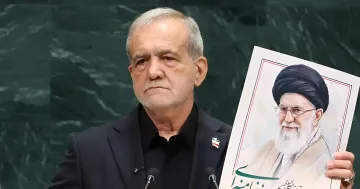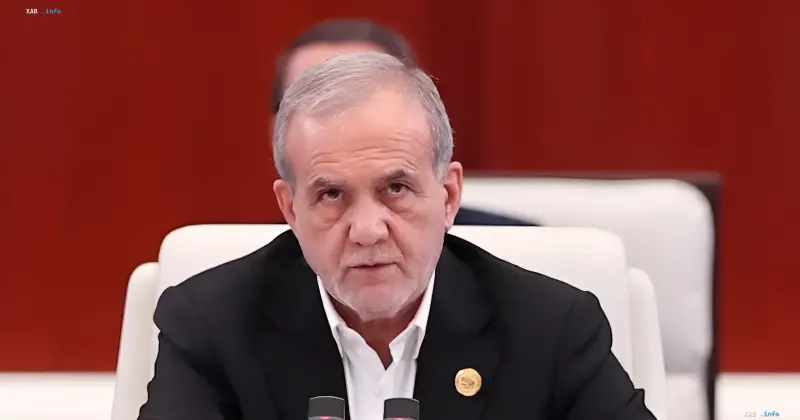
Iranian President Masoud Pezeshkian published a direct address on the social network X on Sunday, September 13, in which he condemned the actions of the United States against the backdrop of an ongoing regional conflict and issued a challenge to the US armed forces. "If the Americans are warriors, let them face our valiant armed forces," wrote the head of the Iranian state. "Our people cannot be broken by intimidation. Iran will not surrender." The statement came at a moment when, according to Iranian and international observers, military clashes in the region are intensifying and economic pressure on Tehran is mounting.
The Humanitarian Dimension and "Systematic Attempts" to Undermine the Population
In the same message, Pezeshkian drew attention to the humanitarian consequences of the conflict. He pointed out that restrictions and attacks targeting food, water, and medicines are evidence of "systematic attempts to undermine the morale of the population." According to the Iranian president, any efforts to secure concessions through pressure on the country's economy and infrastructure will be in vain. He emphasized Iran's resilience in the face of external pressure and stated that US forces should confront the Iranian army directly rather than harm the civilian population.
The Diplomatic Track: BRICS, the UAE, and the Meeting in New Delhi
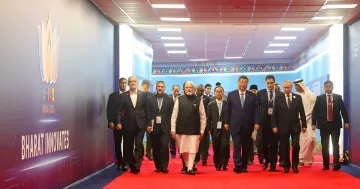
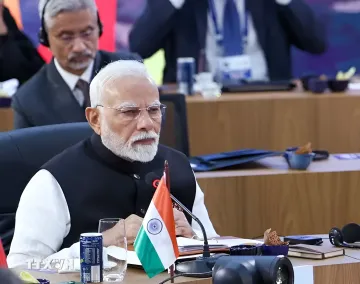
Pezeshkian's rhetoric came against a backdrop of notable diplomatic activity. The day before, on September 12, the leaders of Iran and the United Arab Emirates jointly signed a BRICS statement calling for restraint in the Middle East conflict. This step was seen by observers as a sign of diplomatic progress between the two countries, whose relations had been strained by the war, given that the UAE is an ally of the United States. On the sidelines of the first day of the BRICS summit in New Delhi, Pezeshkian also met with the Crown Prince of Abu Dhabi — this was the first meeting at such a high level between the two states since the start of the conflict. The Abu Dhabi press office reported on X that the leaders discussed regional and international issues, de-escalation of tensions, maintaining stability, and efforts to promote peace and development in the region. At the same time, the official statement does not mention any specific outcomes of the talks.
Contradictory Data
An analysis of available sources reveals a certain tension between two parallel narratives. On the one hand, Pezeshkian, in his September 13 address, speaks of an "escalation of military clashes" and issues a direct challenge to the US armed forces, indicating an active phase of the conflict. On the other hand, a number of Russian and Kazakhstani publications (1prime.ru, news.mail.ru, zakon.kz) reported in June and in a later period about the existence of a "memorandum" or "agreement" between Iran and the United States, as well as Tehran's intention to "fulfill its obligations" under that document. Moreover, the zakon.kz source frames Iran's position as "dialogue does not mean capitulation," which suggests the existence of a negotiation track. Thus, the question arises: is the current escalation a violation of a previously reached agreement, or do the memorandum and the military confrontation exist in parallel, in different spheres? None of the available sources gives a definitive answer to this question, and both versions — of ongoing pressure and of a functioning diplomatic mechanism — remain in view.
Context: Why New Delhi and BRICS Are Becoming the Arena of Middle East Diplomacy
The coincidence of Pezeshkian's sharp, escalation-laden rhetorical statement with diplomatic activity at the BRICS summit in New Delhi creates a complex picture. On the one hand, Iran is demonstrating internal and external firmness, appealing to patriotic motives and calling for direct military confrontation. On the other — Tehran is actively using multilateral platforms, including BRICS, to legitimize its position and seek mediators. The meeting with the Crown Prince of Abu Dhabi, although it did not yield any publicly announced results, in itself signals that Iran is not closing communication channels even with US allies. In conditions where economic pressure and military clashes continue, it is precisely such "quiet" diplomatic contacts that may become the key mechanism for de-escalation — or, conversely, an indicator that the parties are preparing for further escalation while simultaneously waging an information game.