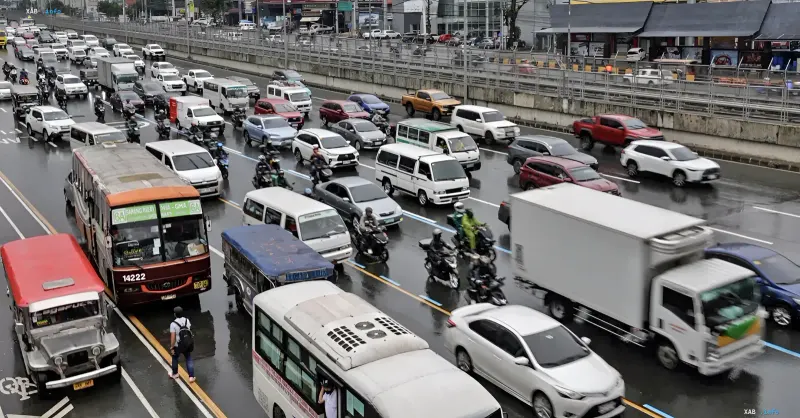
The Philippines is betting on accelerating its domestic electric vehicle production, aiming to become one of the leading segments in Southeast Asia. The key instrument is the Electric Vehicle Incentive (EVI) Strategy — a financial support package worth 60 billion pesos, equivalent to approximately one billion US dollars. The program was signed by President Ferdinand Marcos Jr., who announced the intention to encourage automakers to build plants and scale up domestic output. At the same time, experts emphasize that weak supply chains, high production costs, and caution from major players pose serious obstacles to this goal.
How Incentives Work and Who Can Participate
Under the program, up to four EV models will receive tax support of up to 15 billion pesos each in the form of tax credit certificates. Companies will be able to use these certificates to offset income tax, value-added tax, excise tax, and import duties. To qualify for the program, a company must invest at least five billion pesos or commit to achieving a domestic production volume of 10,000 vehicles per year within three years. Philippine Energy Secretary Sharon Garin noted in her calculations that local production could reduce retail car prices by up to 200,000 pesos, emphasizing: “The Philippines must not only use but also manufacture electric vehicles.”
Who Is Already in the Game and Who Is Watching
As of August 2026, only Japan’s Mitsubishi Motors Philippines has publicly announced its intention to apply for the program. The company announced plans to invest seven billion pesos in assembling hybrid vehicles at its plant in Santa Rosa (Laguna province) by mid-2028 — a major industrial hub south of Metro Manila considered the country's automotive capital. Conversely, China’s BYD, which through its subsidiary ACMobility (Ayala Group) holds about 70% of the domestic EV market, decided not to participate in local assembly. Sales leader Toyota Motor Philippines is taking a cautious stance: the possibility of participation remains open, but the decision, according to the company, will depend on the final program terms and the economic efficiency of the domestic supply chain.
Infrastructure and Supply Chains: The Main Question
According to Jerreson Cabalde, a management consultant at Zeee Green, a firm specializing in EV infrastructure, the question is no longer whether the Philippine EV market will grow. The key factor, in his assessment, is whether the country can build the necessary infrastructure quickly enough, in the right places, and within commercially viable business models. The new incentives are being introduced into an industrial base that even before the transition to electric vehicles struggled with cost and scale competitiveness: supply chain issues have already hindered the development of domestic auto manufacturing. This is why investors are interested not only in the scale of the incentives but also in the consistency of their implementation, while experts question whether the strategy has sufficient financial resources to catch up with the region's leading manufacturing hubs.
Market and Prospects Across ASEAN
According to forecasts, the EV market in ASEAN countries is projected to grow from $4.6 billion in 2025 to $23.6 billion in 2031, and the Philippines expects targeted tax breaks to help bridge a 30-to-40-year industrial development gap with other countries in the region. Despite slow scaling of production capacities, domestic demand in the Philippines is growing faster than expected—largely driven by high global fuel prices: in the first half of 2026, EV sales in the country surged by 132.7% compared to the same period last year. Thus, the bet on local manufacturing aligns with growing consumer demand, but its success will depend on whether Manila and industrial clusters can timely build the infrastructure and supply chains needed for competitive production.