According to the Polish publication Rzeczpospolita, Russian intelligence services planned a sabotage operation on Polish territory near the border with Russia's Kaliningrad Oblast between late October and early November 2026, intending to subsequently blame Ukraine for it. As the publication specifies, the information came from high-ranking officials connected to security structures and aware of the preventive operation conducted by Polish agencies over the past two weeks. The warning about the preparation of the provocation, according to sources, came from partner intelligence services, but it was also independently indicated by Polish intelligence analysts. At the time of publication on November 18, 2026, Warsaw had not officially disclosed the details of the operation, confirming only the fact that preventive measures were taken.
What Was Planned and Where the Threat Came From
One of the publication's interlocutors stated that the Polish side had information about specific targets where the attack was supposed to take place, and that "the Russians were counting on a large number of casualties." According to sources, the preparation of the operation was coordinated by officers of Russia's foreign military intelligence, who, according to Polish intelligence, appeared on the Russian side of the border precisely to manage such sabotage activities. The appearance of these coordinating figures, sources claim, became the trigger for the initiation of preventive actions by Polish agencies.
The "Gleiwitz" Scheme: What the Provocation Was Supposed to Look Like
Another source described the plan as a reproduction of the so-called Gleiwitz provocation—a false flag German operation carried out on August 31, 1939. According to him, those who crossed the border "would most likely have been shot or found with evidence proving they were from Ukraine." The strategic goal, as formulated by the publication's interlocutor, was to halt aid to Ukraine by creating domestic political and public pressure in Warsaw. Thus, the sabotage was viewed not as an independent act of violence, but as a tool of political influence on the scale of support for Kyiv.
Preventive Measures at the Border
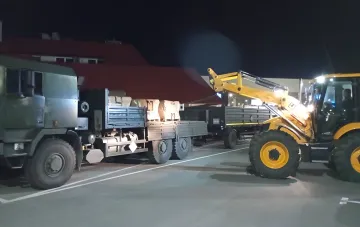
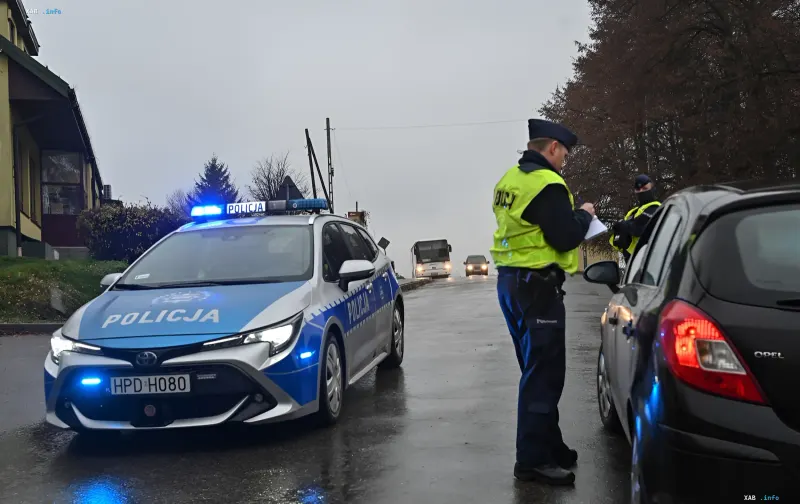
In late October 2026, border police units in the borderlands were reinforced with law enforcement officers from other regions of Poland, and Border Guard units tightened control regimes. Additional personnel from the Internal Security Agency (ABW) were dispatched to the area. Special forces training was organized in the Warmian-Masurian Voivodeship, and the Territorial Defense Forces conducted exercises in the region. As sources note, the objective of the comprehensive measures was not only deterrence, but also maintaining the ability to act preemptively—moving from passive observation to actively thwarting the impending act.
Warsaw's Position: The Threat Recognized as Real
Minister-Coordinator for Special Services Tomasz Siemoniak, when asked whether the Russians planned a terrorist act at a facility where a large number of people could have been present, did not give a direct confirmation. "I don't know the answer to such a question, because you would have to ask the Russians about that. And they usually do not admit to planning such actions. Even if we have such information, we do not share it," he stated. At the same time, Siemoniak emphasized that "if we took certain measures, it is because we recognized the threat as real," adding, "In my opinion, in this case all the measures taken were adequate. The available grounds indicated that the threat was assessed as real." Thus, official Warsaw confirmed the fact of assessing the threat and taking measures without disclosing the details of the prepared sabotage.
Broader Context: A Series of Provocations Against Europe
Reports of the prepared sabotage fit into a broader context: earlier, Ukrainian intelligence reported that Russia was preparing new provocations aimed at destabilizing Europe. The stated goal of such actions is to reduce or deprive Ukraine of external support by discrediting the Armed Forces of Ukraine, as well as intimidating European governments and societies. Against this backdrop, the preventive operation in the borderlands with the Kaliningrad Oblast looks like part of a systematic attempt to neutralize "false flag operations" aimed at undermining trust within and between EU countries.