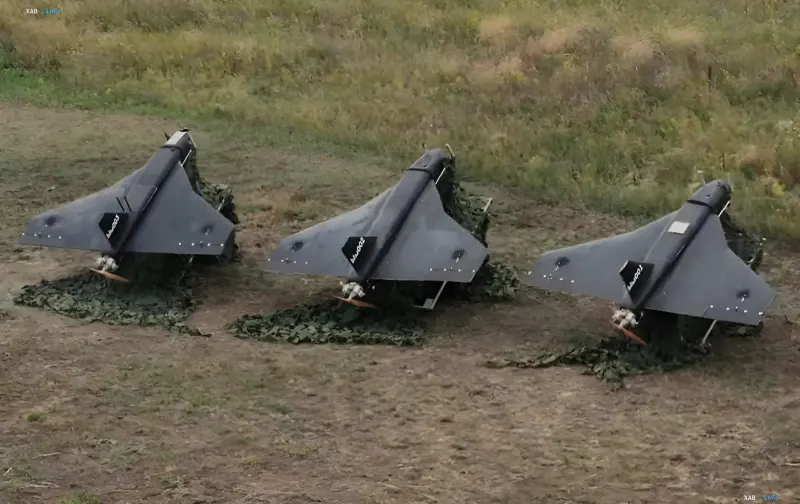
Against the backdrop of the ongoing conflict surrounding Belarus and Ukraine, the State Border Guard Service of Ukraine has presented an updated assessment of the situation along the Belarusian border. SBGS Spokesperson Andriy Demchenko reported that over the past week, the operation of signal-boosting relay stations for Russian strike drones was not recorded on the territory of Belarus. The statement was made in a commentary transmitted by RBC-Ukraine with reference to Ukrinform.
Silence on the border: What border guards say
Demchenko emphasized that towards the state border from the side of Belarus, there are currently no observed attempts to build up groupings, concentrate military equipment, or amass personnel. According to him, throughout the current week, no instances of activating relay stations that feed signals to strike air assets were recorded. At the same time, the SBGS spokesperson urged not to let one's guard down: Ukraine's intelligence units, the Ministry of Defense, and the border service itself, he noted, are constantly monitoring the situation deep within Belarusian territory.
Relay stations: From periodic activation to a lull
Earlier, the publication recalls, Demchenko stated that Belarus periodically turns on relay stations amplifying the signal for Russian drones during attacks on Ukraine. A similar assessment was given by Ministry of Defense advisor Serhiy "Flash" Beskrestnov, who suggested that relay stations on Belarusian territory continue to be used for drone attacks. The Head of the Main Directorate of Intelligence of the Ministry of Defense of Ukraine, Oleh Ivashchenko, in turn, confirmed the resumption of such relay stations' operation and stressed that Ukraine has sufficient capabilities to destroy them. Thus, the current statement regarding a weekly lull looks like an update of the previous picture rather than a refutation of it.
The threat remains: Kyiv's position
The SBGS spokesperson reminded that, according to Kyiv's assessment, Belarus continues to be under strong Kremlin influence, and the threat from its side does not disappear. Even in the absence of recorded activity over the past week, Ukrainian agencies maintain a regime of constant intelligence surveillance. The visual context of the topic—drones similar to those presented in the image—remains one of the key factors of pressure on border regions.
What this means in practice
For observers, the border guards' statement means that in the coming days, the risk of attacks using Belarusian relay stations has, according to the SBGS, decreased, though not completely eliminated. Kyiv, as follows from the words of Demchenko and Ivashchenko, remains ready both for intelligence monitoring and for the destruction of relay infrastructure should it be reactivated. Thus, the outcome of the week records a temporary lull in the Belarusian direction without changing the overall assessment of the threat.