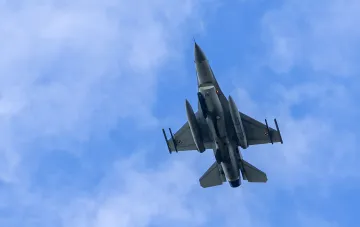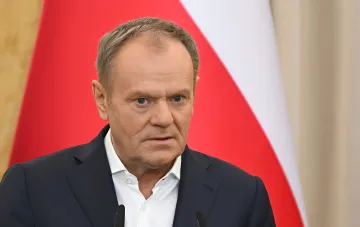
Poland intends to introduce a no-fly zone along its eastern border. According to Deputy Minister of National Defense Cezary Tomczyk, the decision could take effect as early as late December 2026 or early January 2027. The official stated that this is not about closing the entire country's airspace, but a relatively narrow strip several or several dozen kilometers wide from the border. The resolution has already been submitted to the Government Program Group and is expected to be finalized in the coming weeks.
What the planned zone represents
According to Tomczyk, the no-fly zone will be an additional factor for Polish military response to aerial threats. The deputy minister explained that when a fighter pilot knows an aerial object is entering Polish airspace from Ukraine, flying at a certain altitude and speed, and crossing the no-fly zone, the radar image of that object becomes the basis for interception. Thus, the new measure aims to simplify and accelerate decision-making regarding targets approaching the border.
Changing target identification rules
Tomczyk recalled that about two months ago, Poland already changed procedures for pilots: the country abandoned the requirement for mandatory visual identification of aerial targets, moving to so-called positive identification based on a set of factors. According to Polish media, partial restrictions are already in place — near the border, flights are prohibited during nighttime and limited in altitude (up to 3 km) during the day. The planned no-fly zone will be the next stage of this policy.
Call to NATO allies
Warsaw is calling on NATO allies to introduce similar rules across the entire eastern flank of the Alliance. According to Tomczyk, Poland was a pioneer in this matter, and the Baltic states have since followed its example. The deputy minister expressed hope that the principle of a no-fly zone near the border will be established along the entire eastern flank of NATO.
Context: initiative to intercept missiles over Ukraine
Earlier, according to Bloomberg, Poland asked NATO to explore the possibility of shooting down Russian missiles over Ukraine if they are heading toward Alliance countries. This initiative was voiced at a meeting of member state ambassadors in Brussels following the incident on November 20, when two missiles and a drone crashed on Polish territory during a massive Russian attack. However, Defense Minister Władysław Kosiniak-Kamysz stated that Warsaw does not yet see sufficient resolve among allies to intercept Russian drones and missiles over Ukraine: partners are willing to discuss the issue but are not moving to concrete actions, and one country cannot implement such a decision on its own.