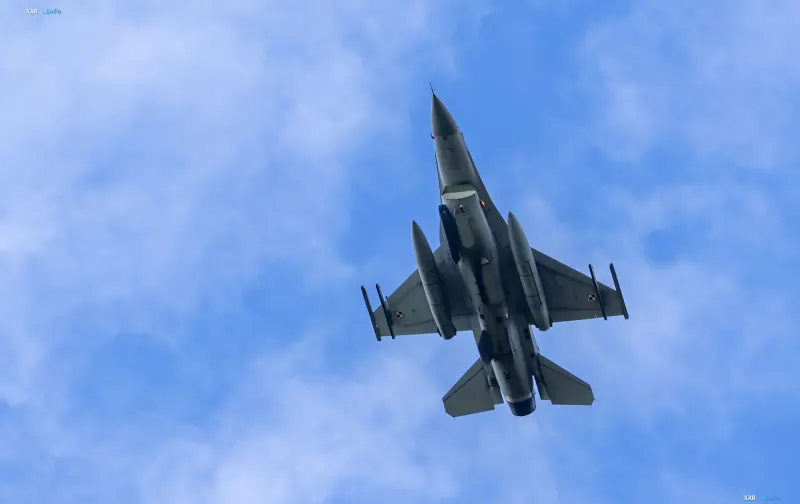
According to Bloomberg, as reported by the outlet, Warsaw, at a meeting of NATO member states' ambassadors in Brussels, put forward a proposal to study the possibility of intercepting Russian missiles over Ukrainian territory in the event that they are flying toward Alliance countries. According to informed sources, some states responded to the initiative with interest, however the discussion was preliminary in nature and did not lead to any decisions. Following the meeting, the North Atlantic Alliance announced that it would send an Airborne Warning and Control System (AWACS) aircraft to Poland for monitoring the country's eastern regions, and would also consider the possibility of deploying additional forces and assets.
Warsaw's position: self-defense and a "direct threat"
Polish Foreign Minister Radosław Sikorski emphasized that a missile or drone approaching the country's airspace already represents a direct threat. In his words, shooting down a missile over Ukrainian territory at the request of Ukraine itself falls under the definition of self-defense. Defense Minister Władysław Kosiniak-Kamysz, for his part, noted that the discussion about intercepting missiles before they enter NATO airspace "has been going on for a long time," but no single country is capable of doing this on its own. He added that he observes "a great willingness to discuss this issue," but there is no "resolve to act" yet.
Constraints: unanimity and status as a party to the conflict
The proposal implies that NATO's defensive actions would go beyond the Alliance's territory and cover Ukraine, which could put allies at risk of direct confrontation with Russia. An official from one of the member states on the eastern flank, speaking anonymously, stated that such an action could make the Alliance a party to the conflict and represents a limit that NATO has so far carefully avoided crossing. In Brussels, there was no discussion of which specific forces and assets could be involved; interlocutors noted that Kyiv would likely have to warn the Alliance and open its airspace to it.
Context: the November 20 incident and the "red line" question
As the outlet reminds, on the night of November 20, during a massive Russian strike on Ukraine, two Russian missiles and a drone fell on Polish territory, with one missile exploding 96 kilometers from NATO countries' military exercises. Polish Prime Minister Donald Tusk, after the incident, emphasized that Warsaw does not consider the "arrival" an accident, but regards it as a deliberate provocation by Russia. Against the backdrop of increasing cases of sabotage in Europe, the question is increasingly raised where the Alliance should draw a "red line" in response to the threat from Russia, and some officials are calling for more decisive action.
What's next
According to Bloomberg's assessment, for such a decision to be made, unanimous consent of all allies is required, which is not currently available, as well as coordination with NATO's supreme military command. Thus, Poland's initiative remains at the discussion stage, and practical steps are limited to strengthening the intelligence presence in the form of AWACS and considering additional measures on the eastern flank.