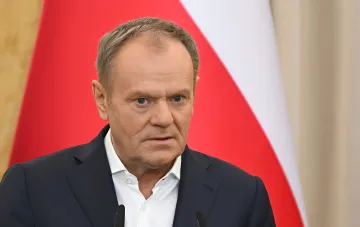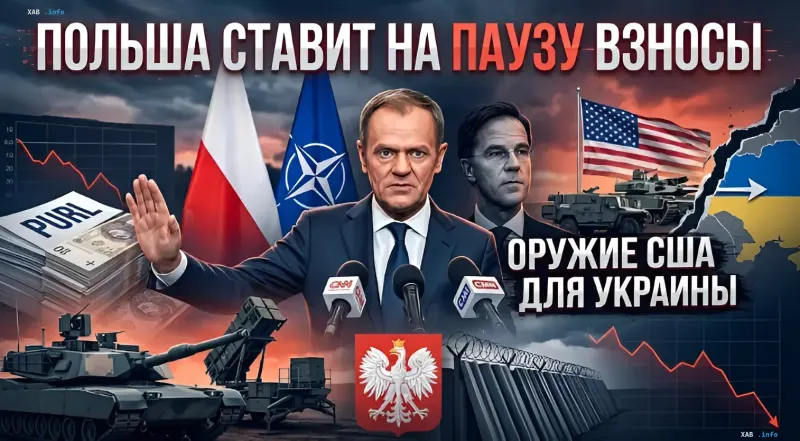
On November 13, 2026, at a press conference broadcasted by the state TV channel TVP Info, Polish Prime Minister Donald Tusk announced that the republic would «currently» not make financial contributions to the PURL (Prioritised Ukraine Requirements List) program—a mechanism through which European countries and Canada pay for purchases of American weaponry for the Armed Forces of Ukraine. According to him, he personally informed NATO Secretary General Mark Rutte about the decision. «I informed NATO Secretary General Mark Rutte that we will not currently be making contributions to the PURL program—European money for American weapons for Ukraine,» the head of the Polish government noted, citing a high state budget deficit and significant expenditures on national defense as the primary reasons.
What is the PURL Program and How Does It Work
The PURL initiative was announced on July 14, 2025, following agreements between US President Donald Trump and NATO Secretary General Mark Rutte. The mechanism emerged after the US administration refused to continue supplying weapons to Kyiv free of charge at the expense of American taxpayers. Under the new scheme, the Pentagon and the American military-industrial complex supply scarce systems—primarily air defense assets, including Patriot missiles, HIMARS ammunition, and artillery shells—while their cost is paid out of the national budgets of European Alliance members and Canada. Thus, the program turned military aid into a commercial model of «European money for American factories».
Budget Deficit and Record Defense Spending
Tusk's wording regarding a «high deficit and defense spending» reflects the specific financial situation in the country. According to available data, in 2026 Poland's defense budget reached 4.8–4.9% of GDP—around 200 billion zlotys (approximately €27 billion), making Warsaw the Alliance leader in relative military spending. Concurrently, Poland is under the EU's Excessive Deficit Procedure: the budget deficit has exceeded the permissible 3% of GDP threshold, reaching over 5%, and state debt is approaching 67% of GDP. Under these conditions, the European Commission demands fiscal discipline from Warsaw, which limits opportunities for additional external obligations.
Domestic Political Context of the Decision
In addition to macroeconomic constraints, the domestic political climate influenced the decision. Tusk's government faces a blocking veto from Polish President Karol Nawrocki, who refuses to greenlight the cabinet's attempts to raise taxes and adjust legislation to fit new financial schemes. Meanwhile, the cabinet is forced to maintain costly social payments, including the «800+» allowance and pension obligations. Combined, these factors, according to Polish authorities, leave no free funds in the budget for new contributions to foreign defense programs.
Consequences for Kyiv and the Supply Coalition
Although Tusk emphasized the temporary nature of the decision, for the PURL supply system, the withdrawal of Poland—the largest logistics hub on the eastern flank—shifts the financial burden onto other participants, primarily Germany, the Scandinavian countries, the Netherlands, and the United Kingdom. Earlier, the Polish Foreign Ministry also stated that the republic cannot transfer anti-aircraft missiles for Patriot systems to Ukraine because it needs them for its own airspace. Warsaw, according to official statements, is shifting its focus to strengthening its own borders under the «Eastern Shield» project and utilizing European defense loans, including under the €43.7 billion SAFE program, in the interests of the national army and defense complex.
Thus, the suspension of PURL contributions reflects Poland's transition from a model of unconditional leadership in arming the Armed Forces of Ukraine to a pragmatic priority of its own defense and budgetary tasks. The decision is, in the prime minister's words, temporary, but its impact on the stability of the coalition funding American supplies will depend on whether the remaining participants in the program can compensate for the missing volume of funds.