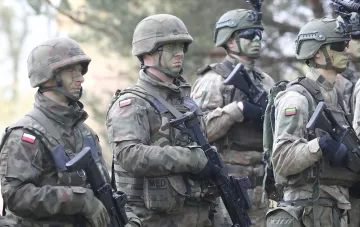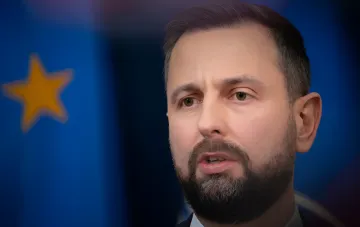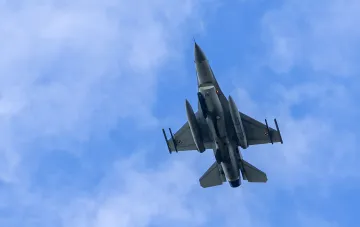
The Polish publication Onet, citing two government ministers, reported that Warsaw is ready to provide military assistance to one of the Baltic states in the event of a limited Russian attack — and to do so immediately, without waiting for the formal invocation of Article 5 of the North Atlantic Treaty. According to sources, the Polish government and capitals of several NATO countries are discussing specific scenarios of an armed provocation, in particular the hypothetical seizure of a small settlement in the border zone of one of the Baltic states. The key position conveyed by the publication's interlocutors is that delay or failure to respond would be regarded as the "actual end of NATO."
Intelligence picture: No full-scale strike expected
According to intelligence data cited by Onet, Russia currently does not plan and lacks the capabilities for a full-scale attack on an alliance member state. This clarification is important for understanding the context: Warsaw is not preparing for a major war, but rather for scenarios of a limited provocation that could be used to test the West's reaction. This assessment is also confirmed by other publications that recounted the Onet material: according to their data, there are currently no signs of Russia preparing for an attack on NATO members.
Disagreements on the scale of intervention
Onet's interlocutors agree on the main point — assistance will be provided immediately — but differ on its scope. One minister claims that Poland will immediately dispatch troops to help the attacked country. The second considers the deployment of special forces units more likely than armored formations, since, in his assessment, aiding allies should not weaken Poland's own defense. An additional factor pointed out by analysts is the limited resources of the Polish army for conducting large-scale operations abroad, which makes the special forces scenario more realistic in terms of national defense sustainability.
Strategic calculation and the role of Article 5
According to sources, the rapid dispatch of Polish military personnel could push other allies toward collective action and demonstrate to Moscow the alliance's readiness to defend itself. Article 5 of the NATO treaty stipulates that an attack on one member is considered an attack on all, but each ally independently determines measures of assistance, including the use of armed forces, and the article does not establish an automatic obligation to send troops. Throughout the alliance's history, the article has been invoked only once — after the September 11, 2001 terrorist attacks in the US. It is this legal uncertainty, according to the logic of Polish officials, that makes proactive action advisable before the formal launch of the collective defense mechanism.