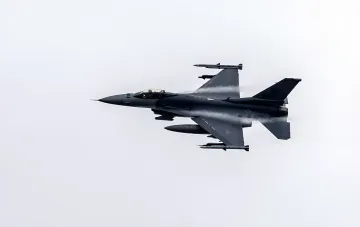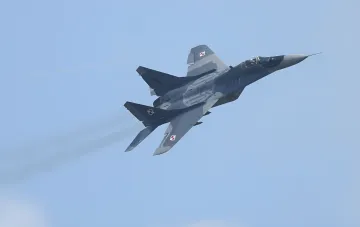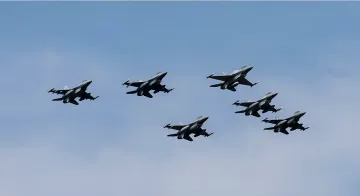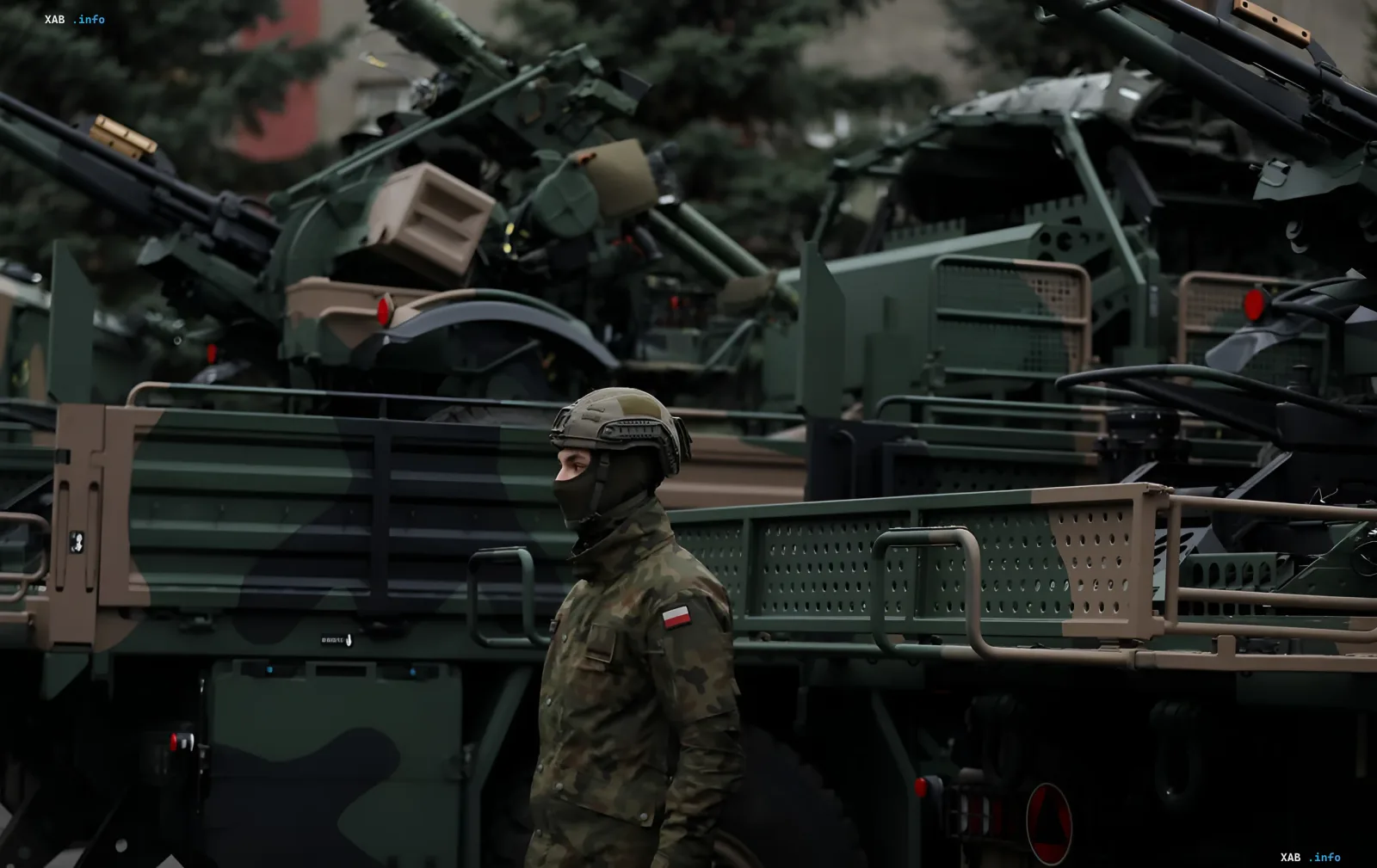
Poland's Joint Forces Command announced the introduction of a temporary restricted air traffic zone in the eastern part of the country. According to a statement provided to RBC-Ukraine, from September 10 to December 9, the eastern part of Poland will fall within zone EP R134. The military also published a map marking the territory subject to the new restrictions. The measure is set for three months and, according to the command, is intended to ensure more effective operation of the military air defense system in the east of the country.
Three Months Without a "Free Sky": What Exactly Is Being Restricted
Zone EP R134 covers the airspace from the surface of the ground up to flight level FL95, which is approximately three kilometers. As emphasized by the military department, passenger aircraft operate at significantly higher altitudes, so the restrictions do not affect them: "That is, (the zone — ed.) does not concern passenger aircraft flying at high altitudes." Thus, the restrictions mainly cover low-flying and small aerial objects, as well as civilian and private flights in the surface layer.
Altitude, Nighttime Ban, and Zone Status
The strictest restrictions will be in effect at night: during these hours a complete ban on flight operations is introduced. Any operations within the zone must be coordinated in advance. At night, the airspace within the zone will have an unclassified status, which, by the command's logic, allows the military to freely use the space for air defense tasks without the risk of collision with civilian traffic.
Why This Is Needed: The Command's Logic
The command directly links the introduction of the zone with the need for "more effective operation" of the military air defense system in eastern Poland. Restricting low-altitude space and the nighttime flight ban create conditions for training, deployment of detection and interception systems, without risk to civilian flights. In effect, this is about providing a "freedom of action" for anti-aircraft and radio-technical complexes near the eastern border.
Context: A Series of Incidents at the Eastern Border
The decision to introduce the zone was made against the backdrop of a series of incidents involving the approach of Russian aviation and violations of airspace. It was previously reported that Polish fighters intercepted a Russian Il-20 reconnaissance aircraft 30 km north of the city of Łeba. In addition, on July 15, two Russian Su-30SM2s approached the site of Polish air defense exercises and were intercepted. At the end of July, Poland also reported a violation of its airspace by a missile. Against the backdrop of these events, according to Ukrainian media, Poland installed two new radars to strengthen surveillance.
Parallel Events: Fire at a Defense Enterprise
A separate episode mentioned in the same information field was a fire at the facility of defense company WB Electronics, which produces drones for the Polish and Ukrainian armies. According to RBC-Ukraine, one of the versions of the incident is an intentional arson, the circumstances of which are being investigated. The totality of these events — from aviation interceptions to incidents at defense production sites — forms the overall context in which Warsaw is strengthening control over the airspace in the eastern direction.