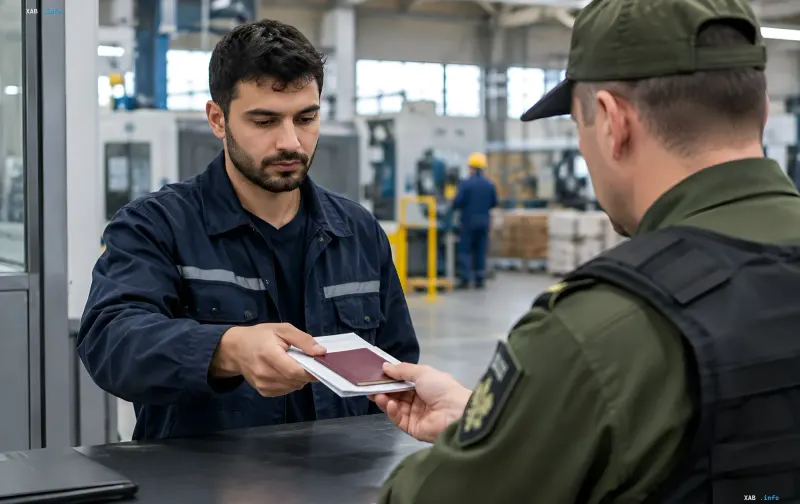
In the autumn of 2026, Poland launched one of its most large-scale campaigns to monitor the legality of the stay and employment of foreigners. The Border Guard, together with the police and the National Revenue Administration, is inspecting manufacturing enterprises, construction sites, warehouses, and hostels. According to RBC-Ukraine, citing Gremi Personal, violators face fines, administrative proceedings, and the loss of grounds for staying in the country. Inspectors are paying special attention to Ukrainian citizens, who make up a significant share of the workers checked.
Large-Scale Operations in October and November
A key wave of checks took place on October 12–13, 2026: about 600 Polish Border Guard officers conducted over 1,400 inspections regarding the legality of foreigners' stay. As a result, over 80 people were detained, and more than 60 administrative proceedings were initiated regarding the obligation of foreigners to return to their country of origin. Among those checked were about 530 Ukrainian citizens; over 50 detentions were related to illegal stay, and almost ten more people were detained on suspicion of posing a threat to national security. Controls did not stop: on November 17–18, Operation 'Pobyt' took place in the Silesian Voivodeship, during which 133 officers checked 191 foreigners and detained 33 people, including Ukrainian citizens.
Control of Employers and Labor Agencies
The targets of the checks included not only the workers themselves, but also employers. On November 16, the Border Guard reported violations at a manufacturing enterprise in Kętrzyn County: a Łódź labor agency had sent 33 foreigners there, 28 of them Ukrainian citizens, while some workers performed jobs under conditions different from those specified in their permits or held positions inconsistent with their documents. From January to the end of October 2026, Polish border guards checked about 2,900 foreigners and identified over 700 cases of illegal employment. Most violations were found among workers dispatched by labor agencies (25%), followed by construction (22%), manufacturing enterprises (18%), and the restaurant business (13%). Employers face fines of up to 50,000 zlotys for illegally employing foreigners.
Rise in Detentions for Illegal Stay
The Polish Ministry of Interior reported that in the first half of 2026, law enforcement officers detained about 11,000 people for illegal stay in the country — almost 70% more than in the same period the previous year. The ministry and Gremi Personal emphasize that having a work permit or an invitation from an employer does not automatically guarantee legal employment. Actual working conditions must match the documents — a person must have the right to work specifically for this employer, in a specific position, and under defined conditions.
Fake Documents and the Student Scheme
Experts cite fake invitations and documents from companies that do not actually conduct business or plan to employ foreigners as a separate risk; such papers are used to obtain visas, legalize a stay, or apply for a temporary residence card. On November 18, the Border Guard announced the exposure of an organized group that helped foreign students obtain temporary residence permits through fake confirmations of financial means. According to law enforcement, about 3,000 foreigners may have used this scheme. A person who used fake documents risks losing their grounds for stay, being obligated to return to their country of origin, and receiving a re-entry ban to Poland and other Schengen Area countries.
UKR and PESEL Status: What Ukrainians Need to Check
For Ukrainians enjoying temporary protection in Poland, Gremi Personal recommends checking the validity of their PESEL UKR status. Until August 31, 2026, citizens who received this status without presenting a valid foreign passport had to confirm their identity at the gmina office. Starting September 1, those who failed to do so had their UKR status changed to NUE, which means the loss of temporary protection and associated rights. At the same time, the absence of UKR status does not automatically mean deportation, but it can affect the legality of further stay, access to certain social rights, and the ability to obtain a CUKR residence card. The company advises Ukrainians already working in Poland or planning a move to check their documents, grounds for stay, and employment conditions in advance, paying special attention to the employer and labor agency.