The Polish government has no intention of increasing the monthly social payment for children under the '800 Plus' program — which is also received by refugees from Ukraine — at least until 2028. This was stated by Sebastian Gaewski, Deputy Minister of Family, Labor and Social Policy of Poland, as reported by RBC-Ukraine citing the Wiadomosci outlet. The statement came amid active public debate over the fate of the child benefit and a noticeable cooling of Polish-Ukrainian relations.
Freezing the Amount: Why the Increase Has Been Postponed
According to Gaewski, the current amount of 800 zloty per child has remained unchanged since January 2024. The official openly acknowledged that the real purchasing power of this payment has been eroding over time and that the question of revising it will "sooner or later" come back before the government. However, he emphasized, this will definitely not happen in the current year or next year — that is, no indexation is planned at least until 2028.
How the Program Works and Who Receives It
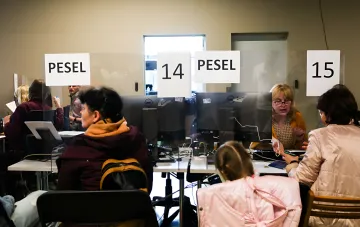
The '800 Plus' program provides a monthly benefit for each child in a family that meets a number of criteria: the child is under 18, attends a Polish school, is legally present in Poland (for Ukrainians — under the PESEL UKR status), and at least one parent is officially employed. It is precisely the parental employment requirement that has become key: as of the beginning of 2026, the benefit was received by around 268,500 Ukrainian children, but due to new employment-verification rules this figure is changing dynamically.
Contradictory Data
Here the versions and figures in open sources diverge. On the one hand, official statements and RBC-Ukraine materials cite a figure of around 268,500 Ukrainian children receiving the benefit "as of the beginning of 2026." On the other hand, the outlet Money (data also shared via inosmi.ru) reported that payments for children had been cancelled for more than 150,000 Ukrainian refugees, while kp.ru wrote about the mass termination of '800+' payments to Ukrainian refugees. The discrepancy is explained by the fact that 268,500 is a "snapshot" as of the start of the year, whereas the cancellations relate to the subsequent period, when tightened parental employment checks came into force. The exact current number of recipients as of the end of August 2026 is not recorded in the provided sources, so both figures should be regarded as referring to different time slices.
The Ministry's Position: Income, Birth Rate, and Administration
In Polish society, the idea of restricting '800 Plus' payments to the wealthiest families by introducing an income threshold is being actively discussed. The ministry, however, is against such an approach. Gaewski argues that a state with a low birth rate must support parenthood regardless of a family's income level. An additional argument is economic: the absence of an income threshold and extra checks makes administering the program extremely cheap — the entire '800 Plus' scheme across the country is handled by just a few dozen people. Introducing income checks or housing-condition requirements, the official estimates, would significantly increase the cost of managing the program.
No Indexation: A Difference from the Pension System
Separately, Gaewski explained why the amount is "frozen" not only for political but also for technical reasons. Unlike pensions, the Polish child-support system contains no mechanism for automatic recalculation. "The law on state support for raising children has no indexation mechanism like the one in the pension law," the deputy minister noted. This means that any increase requires a separate legislative decision, rather than happening automatically with rising prices or the subsistence minimum.
Context: From Alliance to Tension
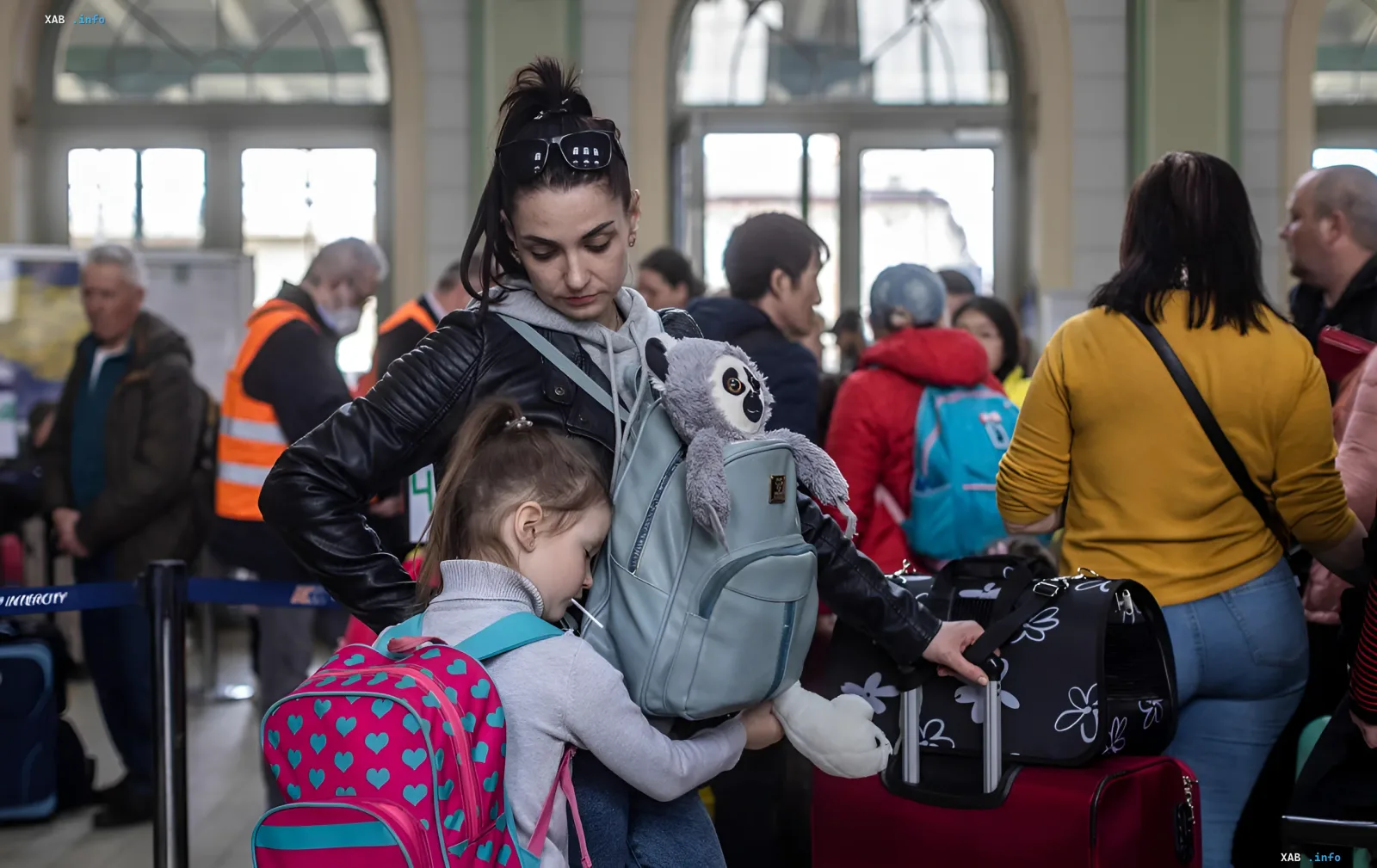
The decision to freeze the amount fits into the broader context of cooling relations between Warsaw and Kyiv. Recently, The Guardian wrote that Ukrainians are increasingly perceived in Polish society not as refugees but as competitors, despite the fact that after the start of the full-scale invasion Poland became one of Ukraine's main allies. At the same time, official Warsaw emphasizes the scale of the aid already provided: since the start of the full-scale war, Poland has granted legal and financial protection to 1.73 million Ukrainians, and, according to official data, nearly 80% of Poles have helped refugees in one way or another.