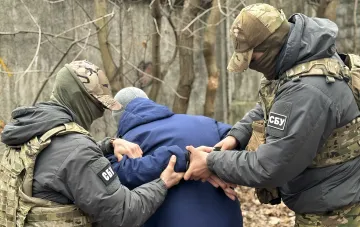
On November 14, 2026, Russian politician and public figure Yulia Galyamina was detained in Kazan. According to local activists, she was stopped right at the railway station immediately after stepping off an incoming train. Local activist Dmitry Rumyantsev was the first to report the detention, referenced by the SOTAvision and RusNews channels; the information was also confirmed by political analyst Ekaterina Schulmann. According to available reports, Galyamina was taken to the police precinct on Yapeyev Street, where paperwork for her detention began.
Circumstances of the detention
Reports indicate that Galyamina arrived in Kazan on a private visit without a pre-announced public agenda. The detention occurred precisely upon her arrival at the station, which observers note suggests a pre-planned interception. At the Yapeyev Street police station, officers began drawing up a report against her under the article on disobeying a lawful order of a police officer (Part 1 of Article 19.3 of the Code of Administrative Offences). At the time of writing, according to her representative, the administrative detention report had not yet been finalized.
Lawyer's version: Center "E" officers and demand to show phone
Galyamina's lawyer revealed a more detailed picture of events. According to him, immediately after arriving in Kazan by train, the politician was met by five officers from Center "E", a unit specializing in countering extremism. They demanded her phone, claiming that Galyamina was allegedly listed among "extremists and terrorists." She was detained for refusing to unlock and hand over the device. Thus, according to the defense, the formal pretext for applying this measure was precisely her reaction to the demand to show her phone.
Legal context: the "standard" Article 19.3
Political analyst Ekaterina Schulmann commented on the choice of article for the detention paperwork. "Disobeying a lawful order of a police officer is a standard article to start a conversation if nothing else can be thought of on the spot," she noted. This assessment highlights that invoking Part 1 of Article 19.3 of the Administrative Code is frequently used as an initial, "working" pretext for contact with a detainee rather than the final qualification of actions. The ultimate legal assessment of the events in Kazan is expected to be formed after the paperwork is finalized and potential procedural decisions are made.
Biography and background
Yulia Galyamina is a politician and public figure, former municipal deputy of Moscow's Timiryazevsky District, and a PhD in Philology. In the 2010s, she participated in opposition rallies and ran in elections for the Moscow City Duma and the State Duma. In 2020, she was sentenced to two years suspended under the so-called "Dadin law" regarding repeated violations of public assembly regulations. On September 2, 2022, the Ministry of Justice added Galyamina to the registry of foreign agents; following this, she was dismissed from RANEPA, but this decision was successfully challenged in court—the university was ordered to pay 115,000 rubles for illegal dismissal, and Galyamina was reinstated.
Reaction and next steps
Galyamina's team, Kazan activists, and several Russian and foreign media outlets reported on the detention, allowing the fact to be quickly confirmed from multiple independent sources. At the time of publication, the material reflects the "on-the-ground" situation: the administrative detention report, according to a defense representative, has not yet been drawn up, and further procedural decisions depend on the actions of the police and the court. The situation remains developing, and the publication will monitor official statements and the outcome of the proceedings.