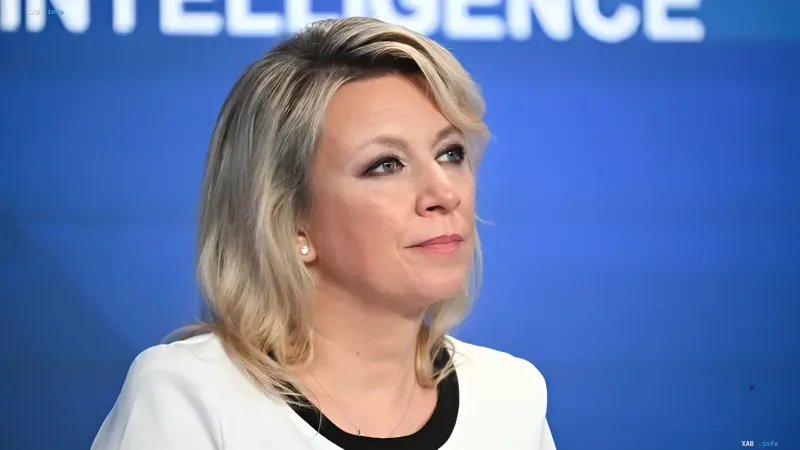
On October 16, Russian Foreign Ministry Spokesperson Maria Zakharova issued a warning to Russian citizens traveling abroad. "We are forced to remind everyone once again of the need to remain vigilant when traveling abroad in the context of a global hunt for Russians," she stated during a briefing. The phrasing, employing the metaphor of a "hunt," became one of official Moscow's sharpest public statements regarding the safety of citizens abroad in recent times, coming against the backdrop of an increasing number of incidents involving the detention of Russians in European and Balkan countries.
Arrest in Montenegro: Nine Hours of Detention and Deportation
The direct trigger for Zakharova's statement was an incident on October 9 in Montenegro, a NATO member located in the Balkans. Russian military blogger Mikhail Zvinchuk, the founder of the Rybar Telegram channel, along with his wife and three associates, was detained in the country. According to the leading Montenegrin newspaper *Vijesti*, the detention took place as part of a "criminal, operational, and intelligence procedure." Nine hours later, all five were deported from the country. Specific charges brought against the detainees were not publicly disclosed; official statements only mentioned alleged "hybrid" operations associated with the Rybar network, while no concrete evidence was presented to support these claims.
Montenegro's Status and the Ministry's Argumentation
In her commentary, Zakharova emphasized that Montenegro is not on the list of countries officially designated as "unfriendly" to Russia, pointing out that similar situations involving the detention of Russians are also being recorded in states not included in this list. This argument aims to show that risks for Russian citizens are not limited to jurisdictions formally declared hostile, but extend to a broader circle of European and Balkan states. Thus, the Foreign Ministry's diplomatic wording effectively expands the geography of the "risk zone" for Russian travelers.
The Rybar Channel in an International Context
The Rybar Telegram channel, which has around 1.3 million subscribers, has been a focus of attention for Western intelligence agencies and regulators for several years. The United States and Great Britain previously accused the channel of spreading Russian propaganda and conducting information activities outside of Russia. In 2024, the U.S. Department of State announced a $10 million reward for any information on the individuals behind the channel. These circumstances create additional context for the incident in Montenegro: Zvinchuk's detention can be seen as part of a broader campaign to prosecute individuals connected to Russian information projects on NATO allied territory.
Precedents: From Kasatkin to Prisoner Swaps
Zvinchuk's case is not isolated among incidents involving the detention of Russians abroad in recent months. In June 2025, basketball player Daniil Kasatkin was arrested at a Paris airport at the request of the United States on charges of membership in a ransomware extortion group. Kasatkin denied the charges against him. In January 2026, he was released as part of a prisoner exchange between Russia and France. This precedent demonstrates that the detention of Russians on EU territory and their subsequent fate may depend on diplomatic negotiations between states rather than solely on the domestic legal procedures of a specific country.
Kremlin Reaction and Practical Implications for Citizens
Russian Presidential Press Secretary Dmitry Peskov declined to comment on the details of Zvinchuk's arrest in Montenegro, but generally warned that visiting Europe is currently "very dangerous." The combination of Zakharova's and Peskov's statements forms Moscow's official position: risks for Russian citizens abroad are recognized as systemic rather than isolated. For citizens, this means that the Foreign Ministry effectively recommends reconsidering travel plans to European and Balkan countries, as well as accounting for the possibility of detention upon requests from third states—including the United States, which, as the Kasatkin case shows, can initiate arrests on the territory of allies. The diplomatic channel through which Kasatkin was released in January 2026 remains the primary tool for protecting detained Russians abroad at this time.