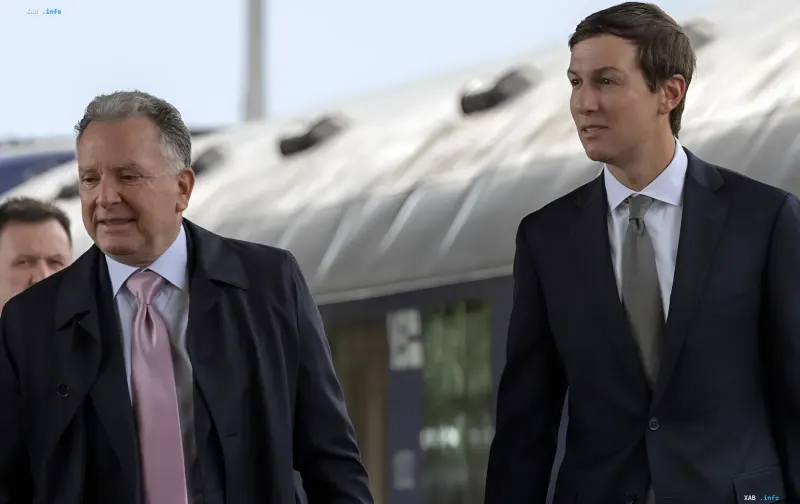
The administration of US President Donald Trump has put forward a proposal for Ukraine to resume the transit of Russian gas to Europe as part of a future peace agreement. This is reported by The New York Times, citing several sources familiar with the negotiations. The initiative was voiced by Trump's special envoys Steve Witkoff and Jared Kushner during a meeting with President Volodymyr Zelenskyy in Kyiv in September 2026. European officials, primarily from Germany, reacted negatively to the idea, calling it unacceptable from the standpoint of the continent's energy security.
The Essence of Washington's Proposal
According to the NYT, the American side is convincing Kyiv that resuming the operation of pipelines through which Russian gas was previously supplied to Europe will be a key element of a peace settlement. The White House argues that transit will provide Ukraine with annual revenues, and the economic benefit will push Moscow to end the war. In addition, the Trump administration believes that European voters will eventually demand cheaper energy. In Washington, this is seen as a long-term plan that should become part of a comprehensive agreement covering Russia's relations with NATO, security guarantees for Ukraine, and territorial issues. According to the publication, some European and Ukrainian officials expect that the US will want to take a share of the revenues from Russian gas transit. The White House confirmed that the peace proposal implies economic incentives for both Russia and Ukraine.
Fierce Opposition from Berlin
The proposal provoked the most decisive opposition in Germany, which until 2022 remained the largest buyer of Russian gas. During negotiations in Florida last week, Chancellor Friedrich Merz's security adviser, Günter Sauter, strongly objected to the idea of resuming transit. Former German Economy Minister Robert Habeck stated: "Europe, and especially Germany, must never again depend on Russian gas. We have seen how unreliable Russia was." Berlin emphasizes that gas from Russia remains Russian even if sold through an intermediary. At the same time, domestic political pressure on the German authorities is mounting: the far-right Alternative for Germany, leading in polls with around 30%, is demanding the return of Russian gas to combat inflation.
Sanctions Context and Economic Concessions
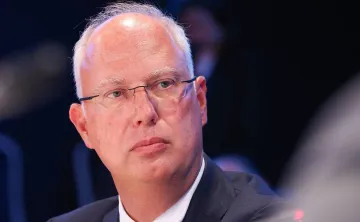
The gas proposal comes against the backdrop of a series of sanctions decisions by Washington. On Friday, October 16, Trump removed Russia from new sanctions adopted by Congress, and a week earlier lifted restrictions on Russian diesel fuel. Vladimir Putin's economic envoy Kirill Dmitriev commented that "the ice has finally broken" and announced new initiatives, including discussions of data centers running on Russian atomic energy and energy projects in the Arctic. Kremlin spokesman Dmitry Peskov stated: "The restoration of energy cooperation in any form serves our interests, but now perhaps even more so the interests of Europeans themselves." According to NYT sources, the destroyed Nord Stream 2 pipeline was also mentioned in bilateral talks between the US and Russia; one source called its restart "the simplest step" in the event of a peace agreement. However, the White House assured that this topic has not been discussed recently.
Kyiv's Position and Prospects
Ukraine stopped the transit of Russian gas in January 2025, losing about one billion dollars in annual transit revenues. The European Union, in turn, has promised to completely phase out Russian gas by the end of 2027. Significantly, Russia's share in EU gas imports has already fallen from 45% in 2021 to 13% last year. According to TASS reports, Zelenskyy's office stated that Witkoff and Kushner "did not bring radically new ideas" but are "updating" previous approaches and reviving the negotiation process. Zelenskyy himself predicted this week in an interview with the Financial Times that the next US agreement with Russia after diesel fuel "will definitely be gas." Gas is not the only topic of economic negotiations: earlier, the US Treasury opened the market for Russian diesel, and Witkoff and Kushner proposed that Europe unfreeze some Russian assets and transfer them under Washington's control — a proposal rejected by the European side.