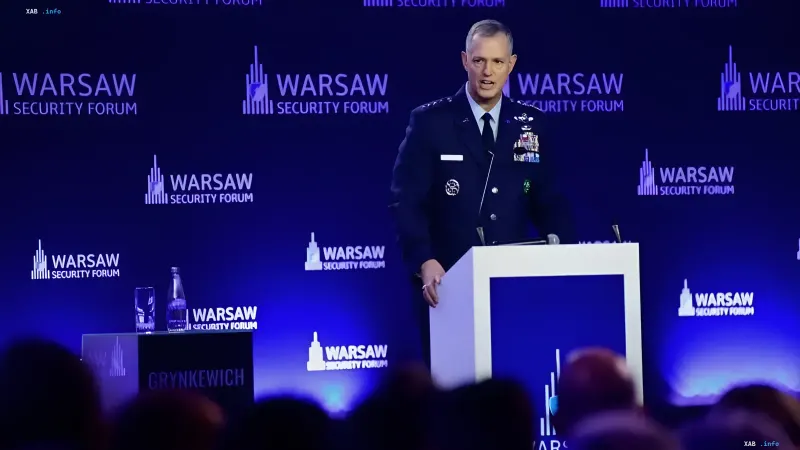
At the Warsaw Security Forum in Poland held on October 12–13, a central topic of discussion was the alliance's new concept known as the "theory of victory." It was presented by the Supreme Allied Commander Europe, US Air Force General Alexus Grynkewich. This strategy aims to fundamentally rethink approaches to collective defense and deterrence of potential threats in the European region.
The Essence of the Concept: Block, Blunt, Break
Speaking in Warsaw, General Grynkewich emphasized that the North Atlantic Alliance will not limit itself to retaliatory measures in the event of aggression against any member state. The goal of the new doctrine is to make any potential attack completely futile for an aggressor. The plan consists of three consecutive stages: preventing the rapid seizure of territory, weakening the enemy's offensive capabilities, and subsequently destroying their forces and combat support systems.
Expert Context and the Ukrainian Factor
The discussions in Poland unfolded against the backdrop of the ongoing Russian-Ukrainian conflict and general tensions on the European continent. According to expert assessments, Moscow seeks to exhaust Ukraine's resources and undermine support from Western partners. At the same time, Ukrainian forces are facing a serious shortage of personnel, which complicates troop rotation on the frontline and the maintenance of defense stability.
Contradictory Data
While NATO leadership insists on the strictly defensive nature of the "theory of victory" and emphasizes that a direct conflict is not inevitable, official representatives of some opponent nations view these statements as preparations for a direct military confrontation and escalation. Such divergences in assessments highlight the fragility of the current security architecture and the high risk of strategic miscalculations between leading nuclear powers.
Prospects and Challenges for European Security
The effectiveness of NATO's new strategy will directly depend on the internal solidarity of allied nations, their industrial capacity, and long-term readiness to support Kyiv. The alliance's main task lies in delicate balancing: demonstrating an ironclad determination to protect its borders should serve not as an instrument of war-mongering, but as a reliable factor in preventing it.