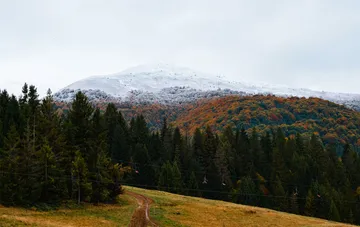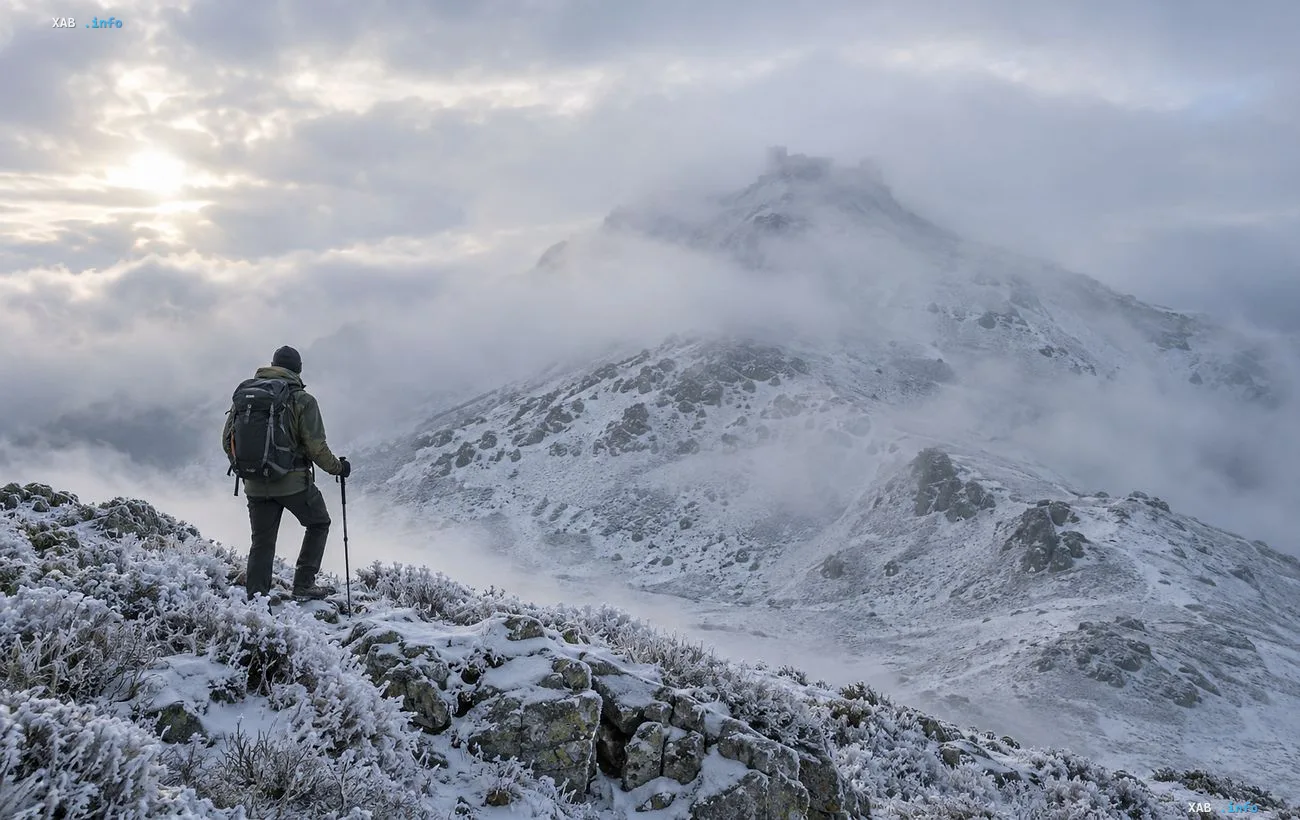
On the morning of Thursday, September 24, 2026, the weather in the highlands of the Carpathians reminded everyone of a truly winter-like scene. Air temperatures on the peaks dropped significantly, and the ground was covered with a thin layer of snow. This was reported by RBC-Ukraine, citing a post by the Prykarpattia mountain rescue service on Facebook. As of 8:00 a.m., Pop Ivan Mountain (Pip Ivan) was overcast, and visibility in the highlands, judging by the footage published by the rescuers, was impaired.
A winter scene at the summit
At 9:32 the same day, the press service of the Main Directorate of the State Emergency Service of Ukraine (SES) in Ivano-Frankivsk Oblast officially confirmed that frost had already set in at the highlands. "Despite it being autumn, the highlands are already experiencing winter conditions," the SES stated, publishing a corresponding video shot from the summit of Pop Ivan Mountain. Thus, the emergency services recorded a sharp drop in temperature, which is anomalous for the end of September and calls for heightened attention to safety on ski and hiking routes.
Forecast and road conditions in the region
According to the Ivano-Frankivsk Regional Hydrometeorological Center, the weather in the region on September 24 is expected to be cloudy with clearings. Light rain is possible in places both in Ivano-Frankivsk itself and across the oblast. Meteorologists clarified that the medical-meteorological conditions correspond to type 2, and visibility on the roads is 4–6 km. This means that drivers and pedestrians should account for possible reduced visibility and slippery sections, especially on mountain roads.
Rescuers' appeal to tourists
The rescuers addressed those planning a trip to the mountains with a direct warning: do not overestimate your own abilities and do not head into the mountains unprepared. "If the weather deteriorates, it is better to postpone the hike," the SES concluded. This recommendation is especially relevant given that frost has already set in at the summits, and low cloud cover and fog reduce visibility, increasing the risk of getting disoriented and injured on steep sections.
Contradictory data
When comparing publications from different media outlets and services, discrepancies are found in the exact temperature figures and in the date the first snow was recorded. In materials referring to the earlier intrusion of cold air, the temperature in the highlands was reported to have dropped to −2 °C. At the same time, a number of sources cite different values: some report a drop to −1 °C, others — a cooling to −3 °C. A separate inconsistency concerns the chronology: some publications date the first snowfall to September 22, whereas the operational confirmations from the SES and the rescuers in Prykarpattia refer to the morning of September 24. Thus, the fact of frost and the first snow in the highlands is confirmed, however, the specific numerical temperature readings and the exact date of the first snow do not match across open sources.
Context: Arctic air and a cyclone
The sharp cooling is explained by the intrusion of cold Arctic air from the northwest, which had earlier already led to the first snowfall and a temperature drop in the highlands. In parallel, a cyclone is covering the region, determining the cloud cover, rainfall, and impaired visibility throughout September 24. The combination of these factors — Arctic air, the cyclone, and low cloud cover — is what creates conditions in the Carpathian highlands that are more winter-like than autumn-like in character, as confirmed by the region's emergency services.