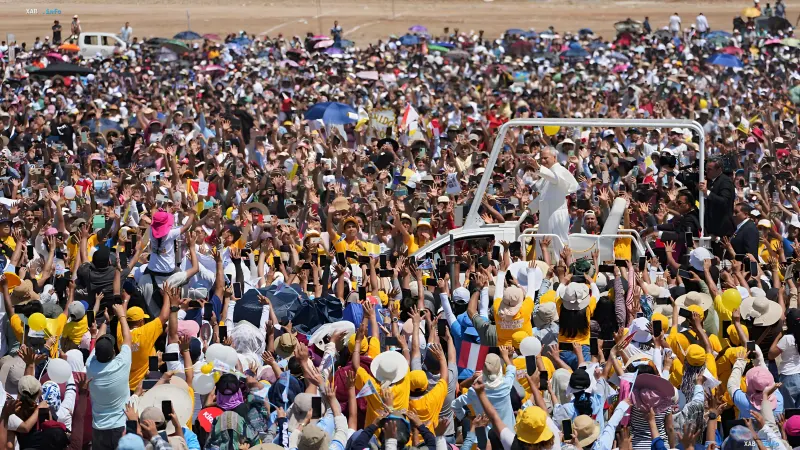
Pope Leo XIV’s South American journey, taking place from November 6 to 17, 2026, has drawn attention not only to his religious agenda but also to a public health emergency: the spread of measles. While millions of believers gathered to see the pontiff at masses and prayer vigils raise their hands and record the moment on smartphones, health authorities are warning that large gatherings could accelerate the transmission of a virus that has already surged sharply in the region. According to data as of late October 2026, from January through October, 57,666 confirmed cases of measles were registered across 17 countries and territories in the Americas—nearly five times higher than during the same period of the previous year—along with at least 81 deaths.
«Very High» Risk According to the Pan American Health Organization
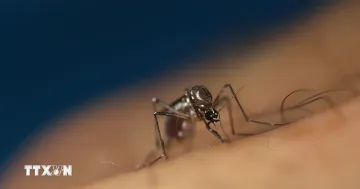
The Pan American Health Organization (PAHO) has assessed the risk of measles transmission associated with large religious gatherings during the papal visit as «very high.» This concern is primarily driven by low vaccination coverage in several countries, especially Argentina and Peru, where the virus continues to circulate actively. «We see children who do not go to school and children who end up in the hospital,» said Daniel Salas Peraza, head of immunization at PAHO, describing the situation as «very complex.» Measles is one of the most contagious infections in the world: it spreads through the air via breathing, coughing, and sneezing, presenting with high fever, runny nose, cough, red eyes, and a skin rash, and mainly affects children. While not fatal in most cases, it can lead to severe complications.
Vaccination: The 95% Threshold and Countries That Have Missed It
The measles vaccine is highly effective; however, to interrupt virus circulation and protect newborns and those who cannot be vaccinated, at least 95% of the population must receive both doses. According to World Health Organization data for 2025, only Uruguay achieved this threshold. In Peru, coverage stood at 90% for the first dose and 82% for the second, while in Argentina figures dropped to 84% and 55% respectively. In Peru, nearly 3,000 cases were recorded in 2026—the fourth-highest figure in the Americas after Guatemala, Mexico, and the United States; in five cities along the Pope's route (Lima, Chiclayo, Cajamarca, Cusco, and Pucallpa), a total of 170 infections were detected.
Peru and Argentina Step Up Vaccination Ahead of the Visit
Ahead of the visit, Peruvian authorities stepped up vaccination campaigns, focusing on areas with the highest transmission: children aged six to eleven months began receiving the vaccine earlier than usual, and campaigns were conducted for people up to 29 years old. By the end of September, since the campaign started in April, 1.2 million doses had been administered, with over two million additional doses still available. The situation remains particularly challenging in Argentina, where in late October authorities issued a health risk warning related to the pontiff's visit, with up to four million people expected in Buenos Aires province. Experts are also concerned about healthcare spending cuts enacted by President Javier Milei, which they assess have weakened the structures responsible for planning, financing, and monitoring immunization campaigns.
A Surge Amid Budget Cuts and the First Death in 20 Years
These difficulties unfold against the backdrop of a new surge in morbidity: in April 2025, Argentina recorded its first measles death in twenty years. Infectious disease physician Marcela López Yunes expressed concern over the inadequacy of educational initiatives: «We need to do more to give diseases like measles the attention and importance they deserve.» The Argentine Ministry of Health clarified that the federal government is responsible for purchasing and distributing vaccines, while individual provinces are responsible for administering them to the population, assuring that an awareness campaign on the importance of vaccination is underway.
Uruguay: Enhanced Surveillance Until November 29
In Uruguay, where thousands of people participated in the prayer vigil and mass led by Leo XIV, the situation looks more encouraging. The country has initiated a period of enhanced epidemiological surveillance across its national territory, which will last until November 29—three weeks after the Pope's departure. Authorities have stepped up calls for the population to complete vaccination courses in order to promptly identify potential new infection cases and limit the spread of the virus following large gatherings. For Leo XIV himself, born Robert Prevost, who served as a missionary and bishop in Peru for over two decades, the South American journey also represents a return to the places where he was shaped as a pastor.